Beginner's Roadmap: Validate Your Micro-Niche Podcast in 30 Days
Feb 11, 2026 • 8 min
You don’t need perfect audio or a logo to find out if your podcast idea will work. You need a fast, brutal way to test whether people actually want what you’re thinking about making.
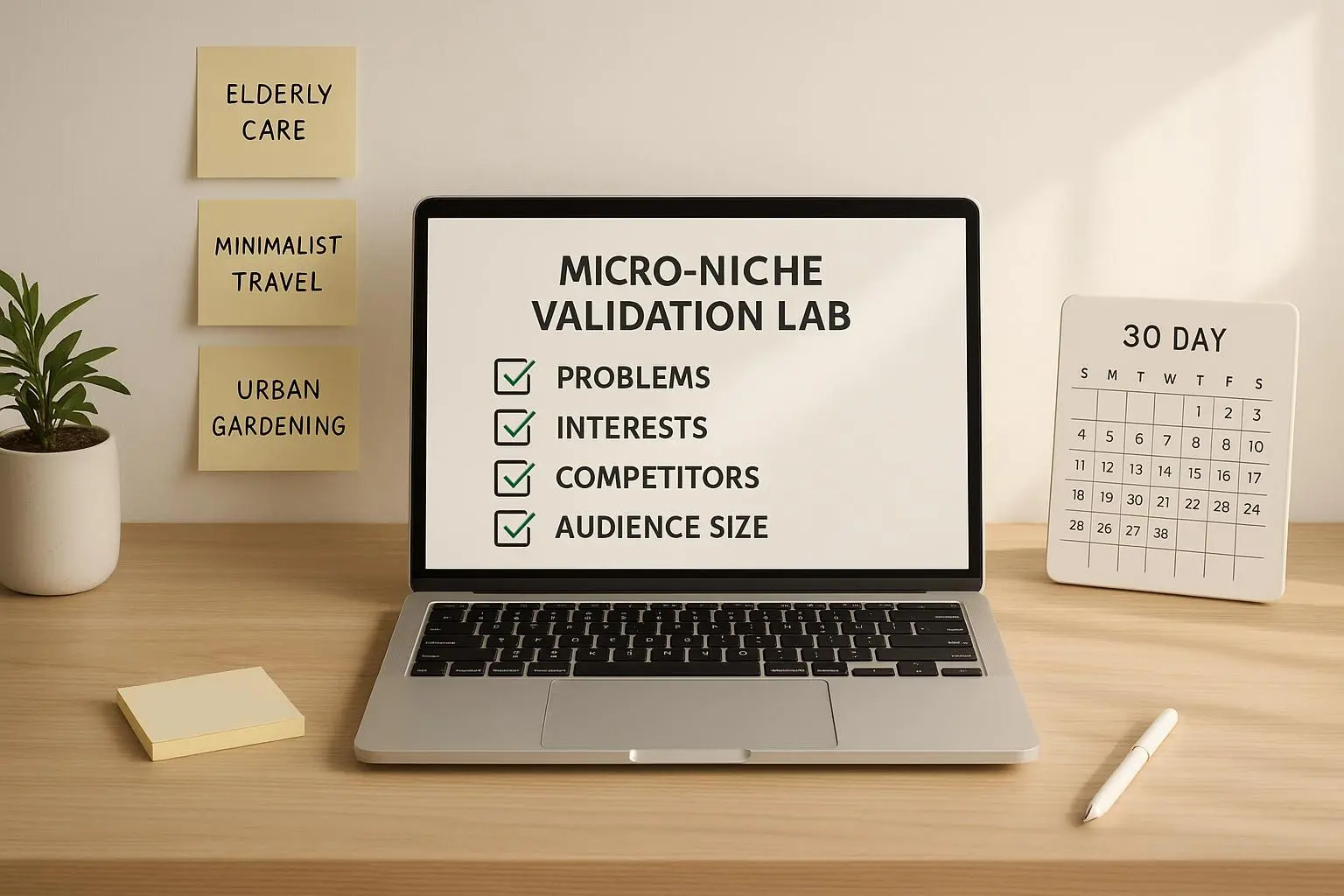
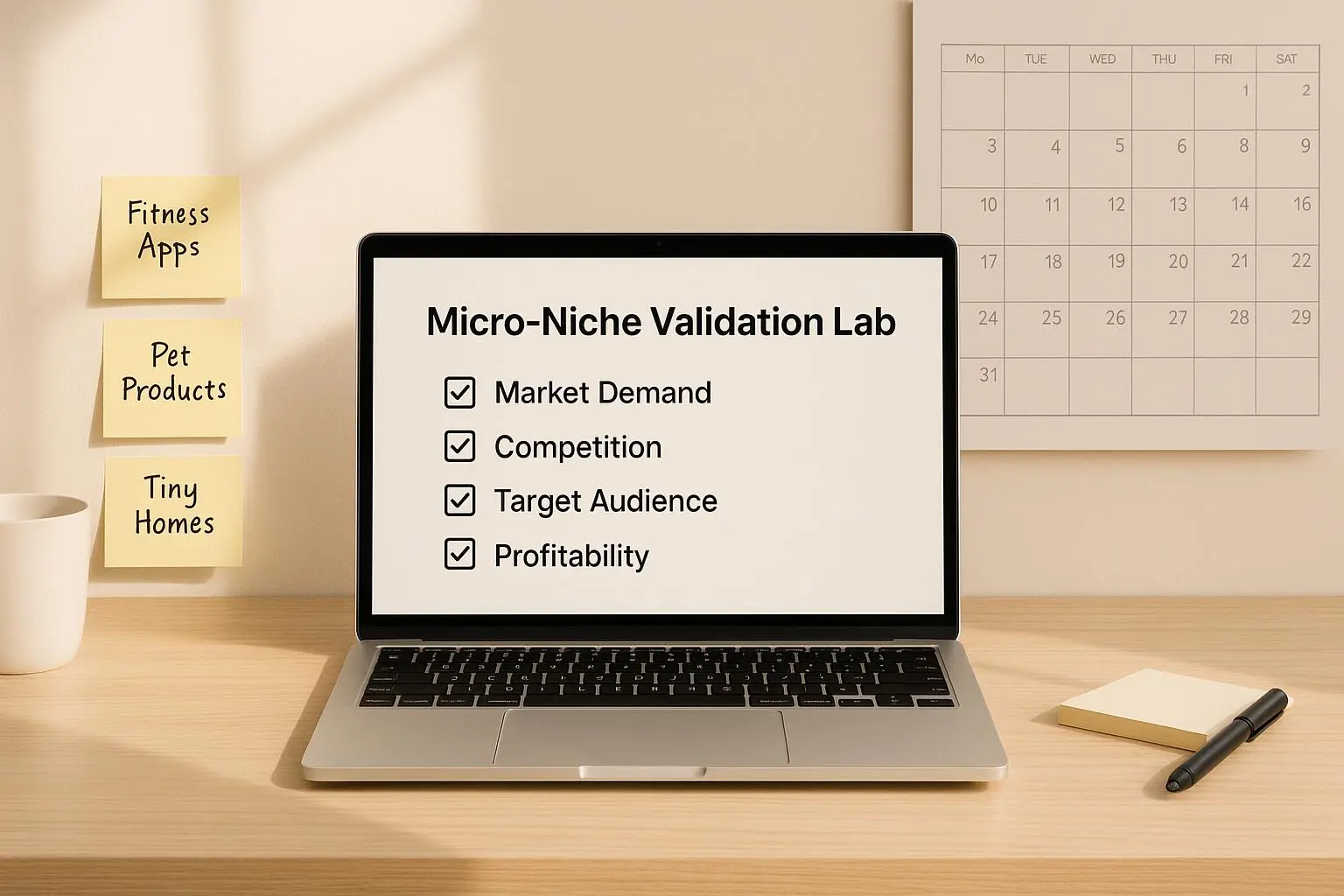
This is a 30-day, seven-experiment roadmap I call the Micro-Niche Validation Lab (MNVL). Do these steps in order. You'll finish with real answers — subscribe rates, conversations, and a monetization signal — not feelings.
Why 30 days? Because long bets tie up time and ego. If an idea can’t get traction with one strong episode and some targeted outreach, you’ll burn months polishing something nobody asked for.
The mindset: think like a lean startup, not a broadcaster
Podcasts are products. Your listeners are customers. Small audiences that love you are more valuable than big audiences that tolerate you.
Here’s the promise: follow the seven experiments and by Day 30 you’ll have a clear Go/No-Go. If you’re green about podcasting, this structure stops you from flailing and gives you measurable checkpoints.
Phase 1 — Research and hypothesis (Days 1–7)
Step 1: The Pain-Point Audit (Days 1–3)
Start by mining conversations where your target people already hang out: Reddit, Discord, niche Facebook groups, industry forums, and Q&A sites.
I look for:
- Problems repeatedly asked and poorly answered
- Emotional language (frustration, "I can't find", "help me")
- Existing solutions that fall short or are out-of-date
Example: instead of “I like gardening,” a useful niche looks like “houseplant owners in small apartments dealing with pests in winter.” That specificity tells you what episodes should solve.
Do this for at least five threads. Save quotes and links. You’ll use them later in messaging and to validate demand.
Micro-moment: on Day 2 I copy-pasted a Reddit thread where 60 people were asking the same pest question — that tiny list of comments became the episode outline the very next day.
Step 2: Competitor Gap Analysis (Days 4–7)
Pick the top 8–10 podcasts in the broader category. Listen to episode titles and read descriptions.
Ask:
- Are they broad or specific?
- Do they ever go as deep as your angle?
- Is there a recurring pattern they miss?
If the top shows are generalist, your micro-niche likely exists. If your angle is covered, either narrow it more or pick a different audience.
Practical metric: mark a show as a “competitor” only if three of its last 10 episodes touch your angle. If less than 2/10 do, that’s a gap you can exploit.
Phase 2 — Rapid prototyping and testing (Days 8–20)
Step 3: Minimum Viable Content (MVC) — record one episode (Days 8–11)
Record one focused, problem-solving episode. Length? 12–20 minutes is ideal for an MVC: long enough to demonstrate value, short enough to produce fast.
Do not record a season. Don’t agonize over music choices. Use tools like Spotify for Podcasters (Anchor) or Descript to get something clean in hours.
Your MVC should:
- Open with a clear promise (“In 12 minutes I’ll show you how to fix X”)
- Solve one specific problem identified earlier
- End with a call to action: a 1-question survey link and an ask to join a small beta group
The goal of the MVC is validation, not perfection.
Step 4: Community Engagement Test (Days 12–15)
Take your MVC and test it where your audience lives.
Create:
- An audiogram (20–60 seconds) with the hook
- A short post that starts a conversation, not a promo
Post to 3–5 communities. Frame it like a question: “Would a weekly show solving X help you? Here’s a short clip — does this hit the mark?”
Track:
- Comments and replies (not just likes)
- Shares and saves
- Threads that continue the conversation
If you get meaningful conversation in at least two places, that’s a strong signal. If you get bans for link-dropping, that’s fine — adjust the approach: engage first, then share.
Quick note from the field: I once posted a pilot clip in a niche forum and got five DM requests for early access before anyone publically responded. That private interest was more valuable than public upvotes.
Step 5: Beta Listener Survey (Days 16–20)
Collect 10–25 beta listeners. Give them a 5-question survey. Focus on three outcomes: clarity, format preference, and the Commitment Question.
The Commitment Question is the litmus test: “If this launched weekly, how likely are you to subscribe and listen to the next five episodes?” Use a 1–5 scale.
Benchmarks:
- If 70% or more answer 4–5, you’re in promising territory.
- If fewer than 40% answer 4–5, you need to pivot or kill it.
Other questions to ask:
- What did you like most?
- What should we keep doing?
- What would make you subscribe?
Use Google Forms or Typeform. Short surveys get better completion rates.
Phase 3 — Decision and strategy (Days 21–30)
Step 6: Monetization Viability Check (Days 21–26)
Even if you’re not launching with ads, check if the niche has spenders.
Look for:
- Products or services the audience buys (tools, memberships, conferences)
- Potential sponsors willing to pay premium CPMs for targeted reach
- Places where you could sell a digital product, course, or paid community
Numbers matter: a niche with 500 highly engaged listeners can be more lucrative than 10,000 casual ones.
Example metric: if you can identify two companies whose ad spend aligns with your niche and they target fewer than 10k people, that's a positive signal.
User insight: some creators land niche sponsors at 500 downloads per episode because the audience is exact-fit for the brand.
Step 7: The 30-Day Go/No-Go Decision (Days 27–30)
Compile your metrics into three scores:
- Engagement Score (community comments, DMs, shares)
- Commitment Score (survey results — target 70% 4–5 on Commitment)
- Viability Score (clear sponsor/product pathways)
If you hit two out of three, move forward but set guardrails: a 90-day content sprint with weekly reviews. If you hit one or zero, iterate the idea or pivot.
Remember: stopping early is powerful. The sunk cost fallacy kills creative projects. If the data says no, thank the idea and move on.
Tools that speed this up (use them smartly)
- Spotify for Podcasters (Anchor): record and distribute quickly.
- Descript: quick edits and transcripts for SEO.
- Headliner: make audiograms for social testing.
- Google Forms: surveys and commitment scoring.
Use the free tiers to validate; upgrade only after you have proof.
Real story — what I learned by validating instead of launching
Three years ago I wanted to start a marketing podcast for indie bookstores. I loved the topic and wrote outlines for an entire season. Before recording, I followed the MNVL: 1 MVC episode, audiograms, and outreach to five indie bookstore groups.
Result: the clip got polite applause but zero follow-through — not a single beta listener said they'd subscribe. One manager privately said, “We'd rather pay for a workshop than listen to a weekly show.” That comment was gold.
Instead of spending months recording, I ran three paid workshops for bookstores over the next six weeks and made more than I would have in a year of podcasting. Later I pivoted the podcast into a short-series companion for paid workshops. The key lesson: validation saved me six months and funded the next right move.
What success looks like (real, measurable signals)
Don’t chase vanity metrics. Look for:
- 10–25 engaged beta listeners who answer your survey
- 70%+ Commitment scores
- Active discussion threads in at least two communities
- At least one clear monetization lead (a sponsor, a product, or a paid service interest)
If you get those, you’ve earned the green light.
Troubleshooting common snags
- “No one replied to my post.” — Try different communities. Change the hook. Post value first, then ask.
- “I got banned.” — Read group rules. Engage for a week before sharing content.
- “Survey responses are low.” — Shorten the survey and offer an incentive (early access, a tip sheet).
- “I have listeners but no sponsors.” — Build a media kit with niche demo stats and pitch directly to 5–10 relevant brands.
Next steps after a Go decision
If you get a Go:
- Commit to a 90-day launch plan with weekly episodes
- Build a simple one-page site and mailing list
- Turn each episode into shareable clips and transcripts
- Use early sponsor conversations to fund production
If you get a No-Go:
- Don’t sulk. Use the data to pivot. Narrow your audience further or pick a different pain point.
- Repeat the 30-day lab with the new hypothesis.
Final thought: niche is not small; it's focused
Micro-niche isn’t a limitation. It’s a strategy. When you serve a very specific problem well, your audience does your marketing for you. The 30-day Lab gives you permission to test without the drama of a full launch.
Start by solving one real problem for a small group. If they care, they'll tell you. If not, you’ll have avoided months of wasted effort.