Bring-A-Friend Method: Safely Using a Trusted Third Dog to Ease New Introductions
Jun 17, 2026 • 9 min
Introducing a new dog into a home is equal parts logistics and emotional triage.
You can do everything “by the book” — neutral park, parallel walks, slow sniffing — and still have fireworks when you get home.
I want to show you a different, underused tool: the Bring-A-Friend Method. It uses a calm, socially stable third dog (the mentor) to model relaxed behavior and reduce pressure. Done right, it short-circuits that tense stare-and-stiffen dance before it starts. Done wrong, it spreads anxiety like wildfire.
This guide gives you practical steps: how to choose the right mentor, how to choreograph meetings, how to read whether the mentor is helping or hurting, and what to do if things go sideways. I’ll also share a real case from my experience where a bored old beagle saved a rocky introduction — and what I learned when a perfectly nice Labrador actually made things worse.
Why a third dog can help (and why it can backfire)
Dogs are social learners. They copy what others do, and they pick up emotions from one another.
If the mentor dog is calm and unimpressed, the resident and the newcomer often mirror that calm. That’s social facilitation in action: the presence of a composed dog increases the chance other dogs act composed too.
But here’s the catch: dogs also catch stress. If your mentor is worried, reactive, or just excited, that energy transfers fast. A good mentor acts like a slow, steady thermostat. A bad mentor is a match in a dry forest.
Think of it like human behavior at a party. If a confident friend breezes in and ignores the awkward person, suddenly that awkwardness feels less important. If a friend panics, everyone panics.
How I learned this the hard way (real story)
A few years ago I volunteered to help a rescue place introduce fosters to resident dogs. We had a newcomer — a skinny, anxious terrier mix — and a resident, a middle-aged Lab with territorial tendencies. Our “mentor” was Ellie, a neighbor’s exuberant three-year-old golden.
We did the neutral-park routine. At first it went well: parallel walks, loose leashes, smiles. Then Ellie saw a squirrel, lunged, and started barking. The terrier froze and bristled. The resident Lab shifted into protect mode. Within seconds we had two dogs on edge.
After everyone cooled off, I swapped mentors. We borrowed Martha, an 11-year-old beagle who moves like molasses. Martha sniffed grass, ignored squirrels, and spent most of the walk with her head down. The terrier relaxed. Barnaby, my resident Lab, relaxed. The difference was striking: a boring, steady mentor beat a loud, excitable one every time.
From that day I stopped assuming “friendly” equals “good mentor.” If the mentor draws attention — playful, excitable, or reactive — they’re the wrong tool.
(Meta-moment: the single detail I still remember is Martha’s tail. It wagged slowly, like a metronome. That small, boring wag said, “This is fine,” and the rest followed.)
Choosing the right mentor dog
This is the single most important decision.
Don’t pick a friend’s dog just because they offered. Screen the mentor like you’d screen a babysitter.
Look for:
- Social stability: calm, tolerant, and non-reactive around strangers and other dogs.
- Neutral energy: the right mentor is “boring” — not attention-seeking, not pushy.
- Experience: dogs that have seen lots of settings, crowds, and introductions.
- Reliable obedience: the handler can call the dog, redirect, and control them instantly.
- Health and safety: current vaccines and up-to-date on parasites. No one needs kennel cough on top of a tense introduction.
Avoid:
- Dogs that are leash-reactive, fearful, or excitable.
- Highly possessive dogs (toys, food, or people).
- Puppies. Puppies are unpredictably energetic and often raise the chaos level.
Pro tip: the best mentor is often a middle-aged or senior dog that is well-socialized. They’re typically unbothered by new faces and more likely to model calm behavior.
Where to start: neutral territory and logistics
Always begin introductions away from the home. Your resident dog may be protective of territory; neutral ground reduces that variable.
Timing and setup:
- Choose a quiet park or empty field—somewhere with room to spread out.
- Three people: one handler per dog. The mentor’s handler should know the dog and how to calm or recall them.
- Use well-fitted harnesses and short leashes (no retractables). Keep leashes loose unless you need to intervene.
- Have treats, water, and a plan for quick separation (two leashes per dog, a pair of slip leads, or crates in your car).
Session length: short. Think 10–30 minutes max for initial sessions. Several short, calm meetings beat one long, tense one.
The choreography: step-by-step
- Parallel walk (the buffer)
- Start with the dogs 10–15 feet apart.
- Walk them in parallel, with the mentor positioned between or slightly ahead of the resident and newcomer.
- Let the mentor set the pace. If they walk loose and sniff, the others tend to follow.
- Decrease distance gradually
- If all dogs remain relaxed, close the gap slowly.
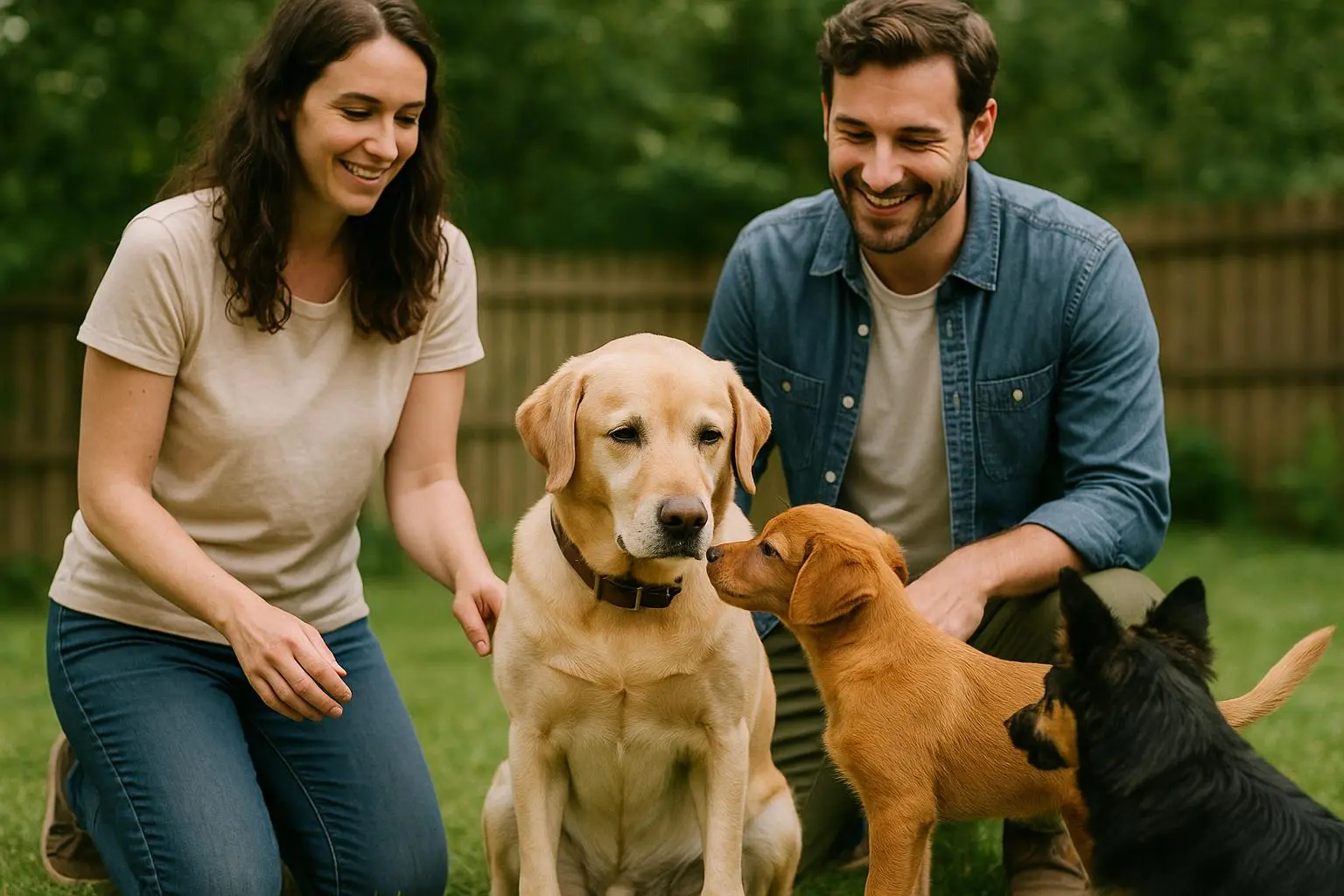
- Let the mentor initiate contact — not by forcing the other dogs into a meet-cute, but by naturally sniffing and moving.
- Reward calm behavior with low-value treats or quiet praise. Don’t overdo treats when dogs are noses-to-noses; resource guarding can pop up.
- The sniffing triangle
- Aim for brief, controlled sniffs. Avoid head-on approaches. Curved approaches are safer and less confrontational.
- If either of the two dogs stiffens, widen the triangle immediately and reset.
- Short supervised interactions
- If things go smoothly, allow 20–30 seconds of free sniffing on loose leashes.
- End on a positive note: a cue, a treat, a calm walk away. Multiple small wins build confidence.
- Rest and repeat
- Take a break between attempts. Let the dogs relax in crates or separate cars, then try another short session.
Reading signals: when the mentor is helping
The mentor is doing their job when:
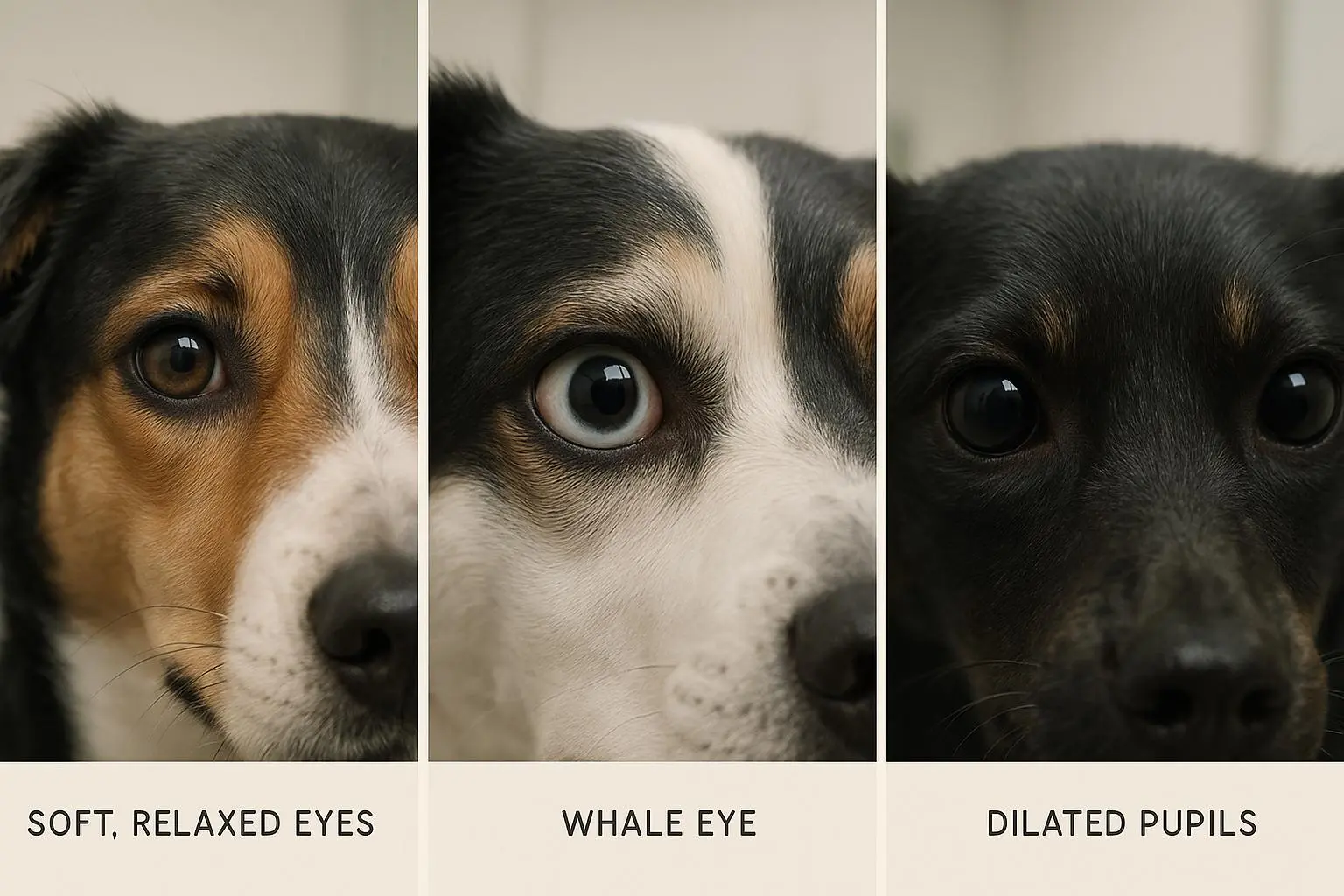
- They stay loose, have soft eyes, and show relaxed sniffing.
- The resident/newcomer mimic that ease: loose bodies, curved approaches, play bows.
- Interactions are brief and reciprocal. No forced wrestling or continuous chasing.
Tiny wins matter. A single relaxed sniff or a look away from tension is progress.
Warning signs: stress contagion and escalation
Signs the mentor is hurting more than helping:
- The mentor tenses, barks, whines, or paces.
- Any of the dogs show stiff bodies, whale eye, raised hackles, prolonged staring, or baring teeth.
- “Gang-up” behavior — two dogs crowding or pinning one dog.
- Resource guarding behaviors appear near a toy, person, or treat.
If you see these, act fast:
- Increase distance immediately.
- Separate and give each dog a calming break.
- Reassess whether the mentor is appropriate.
If the mentor shows stress, swap them out. No apology is worth pushing a stressed dog through an introduction.
Bringing the dogs home safely (transitioning to territory)
Neutral-park success does not automatically translate to home harmony. The house is a different smell map, and territory-related behaviors can trigger.
When you bring dogs home:
- Keep them separated at first. Use baby gates, crates, or separate rooms so they can see and smell without full access.
- Allow short, supervised visits in neutral areas of the house (hallway, backyard) before free access.
- Maintain structure: feed separately, give toys separately, and supervise all interactions for weeks.
- Gradually increase unsupervised time only after a pattern of calm behavior.
If any signs of stress or guarding appear at home, step back. Reintroductions should happen at the dog’s pace, not on your timeline.
Troubleshooting common problems
Problem: The mentor was fine in the yard but became anxious at the park.
- Cause: New environment triggered the mentor’s stress. Mentor dogs are not universally steady.
- Fix: Practice the mentor dog in multiple environments before using them. If unreliable, don’t use them.
Problem: Dogs “gang up” on the newcomer.
- Cause: Social pressure; the mentor may be inadvertently encouraging dominance.
- Fix: Increase distance, end the session, and consider a different mentor or professional help.
Problem: Resident dog is extremely territorial.
- Cause: Strong home-guarding instincts.
- Fix: Focus on scent swapping, barrier-based introductions, and consult a force-free behaviorist before using a mentor.
Problem: Introduction goes well in park but regresses at home.
- Cause: Territory ownership changes dynamic.
- Fix: Slow home integration. Use gates, multiple short supervised sessions, and don’t leave dogs unsupervised until trust is built.
When not to use the Bring-A-Friend Method
This method is powerful but not universal. Don’t use it if:
- Any dog involved is highly aggressive or could cause serious injury.
- The mentor dog is untested in multiple settings.
- You can’t control or recall the mentor immediately.
- There are medical risks (illness, parasites) between dogs.
If you’re unsure, call a certified force-free trainer or behavior consultant. The cost of an hour of professional help is tiny compared to the risk of a serious bite or chronic fear.
Tools that make this easier
You don’t need fancy gadgets, but these make life easier:
- Sturdy harnesses and short leashes for control.
- Slip leads for quick separation.
- Crates or baby gates for staged home introductions.
- A clicker or marker word for rewarding calm behavior.
- A calm mentor dog with a handler who knows how to call them away.
Apps and GPS trackers are helpful only if you intend to spread out the session in a large area. Mostly, your eyes, timing, and calm energy are the best tools.
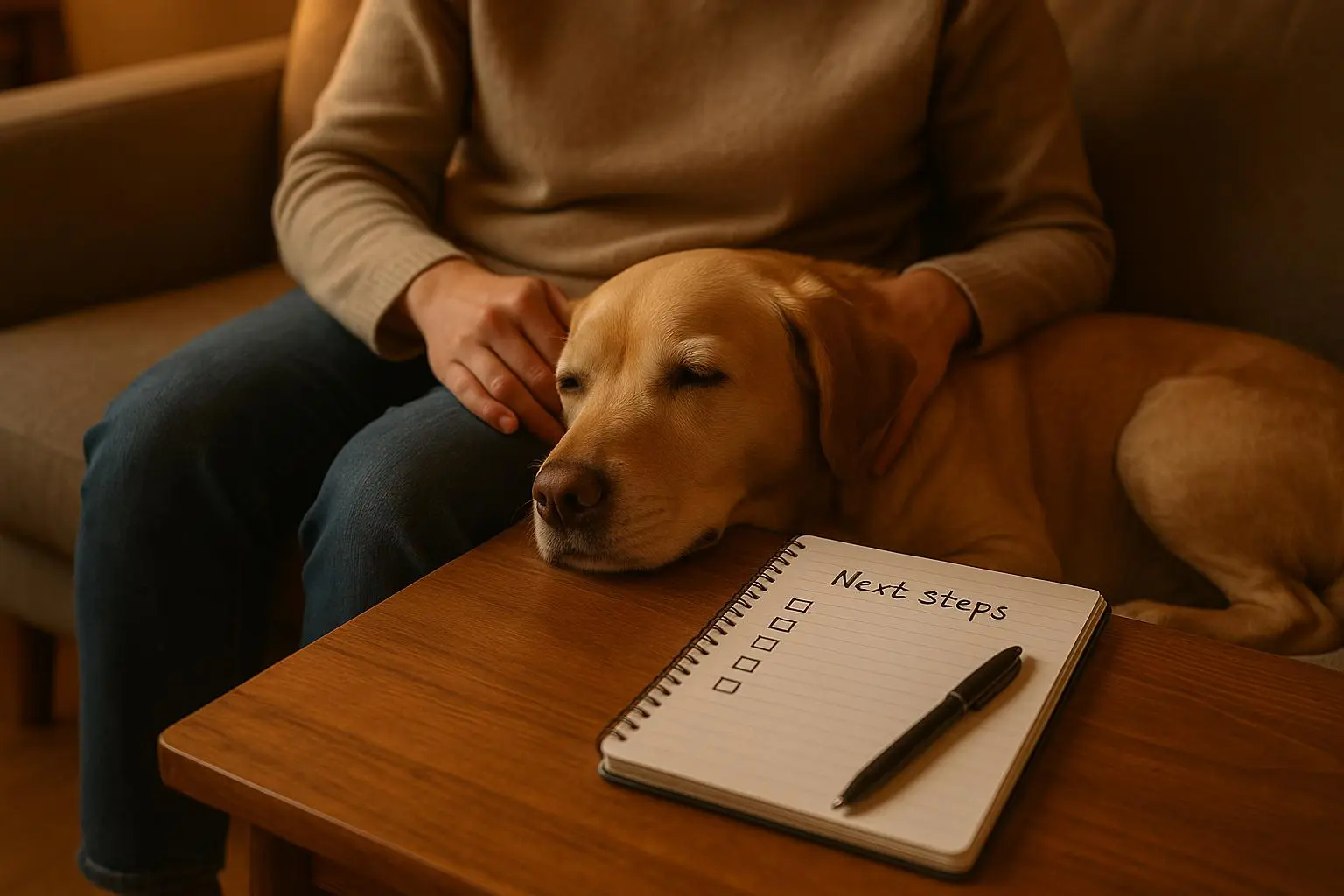
A quick checklist before you start
- Mentor dog vetted: calm, experienced, healthy.
- Handlers briefed and ready with commands.
- Neutral location selected and scouted.
- Leashes, treats, water, and exit routes prepared.
- Exit strategy agreed: who separates whom, where to go.
If any one of those is shaky, postpone.
Final mental model: think like a conductor
When I run introductions I think of myself as a conductor. My job isn’t to make the dogs be friends; it’s to set tempo, reduce crescendo points, and end the concert before it becomes a riot.
The mentor dog is an instrument in the orchestra. In skilled hands, it brings harmony. In unskilled hands, it creates dissonance.
Bring-A-Friend is not a shortcut. It’s a controlled, intentional tool. Used correctly, it shortens the timeline to calm and reduces risk. Used carelessly, it makes a bad situation worse.
If you leave with one takeaway: pick a boring mentor and plan your exits before you need them.