Coach’s Pocket Playbook: 6 Breath Cues for Timeouts
Mar 15, 2026 • 9 min
Timeouts aren’t just about drawing up a play. They’re tiny, high-pressure labs where you either help your team reset or watch the moment slip away. I’ve seen teams fall apart in a six-second huddle, and I’ve watched others lock in on purpose, then execute when it mattered most. The difference came down to one thing: breath.
I’m not here to promise a miracle. But I will tell you what actually worked for me, with real, field-proven cues you can start using tonight. Six cues, each with exact counts, simple hand signals, and scripts you can deliver in real time. Age-appropriate language for youth teams included. And yes, there’s a one-week drill plan to embed these into practice so they’re not a last-second afterthought.
A quick story from my early coaching days is worth a quick detour. I was coaching a junior high basketball team during a tense league game. We were down two with 12 seconds left, and the gym got quiet, like a held breath. I called a timeout and did something I hadn’t practiced enough: I asked the players to breathe with me. We did the Micro-Box Breath 2-3 times. Their shoulders dropped, their eyes lifted, and for those 12 seconds, no one pressed the panic button. We executed a simple, clean out-of-bounds set, scored, and won. It wasn’t a magic trick; it was a tiny reset that mattered. Since then, I’ve built a pocket playbook around that exact feel—the calm that breath can bring when the noise is loud.
Here’s the practical, coach-facing version you can live with.
And a micro-moment you shouldn’t skip: during a timeout, the first breath you give your team is a signal that you’re dialing down the volume of the moment. Inhale, exhale, and the room follows suit. It’s tiny, but it sets the entire tone.
If you’ve ever watched a coach yell through a huddle, you know the moment can swing on tone, not just content. These cues are designed to lower the noise, raise the focus, and give your team something repeatable to lean on when the stakes spike.
Why breath matters in sport
Breath is the bridge between the nervous system and performance. When players feel pressure, their breathing tends to become shallow and quick. That drives a rise in heart rate, a tangle of thoughts, and shaky decisions. By guiding the breath, you engage the parasympathetic system—your body’s way of saying, “Take it down a notch.” That’s where clearer choices, faster reactions, and better execution come from.
There’s solid research backing this up. Breathing exercises calm anxiety, lower perceived effort, and can improve accuracy and reaction time in high-stress tasks. In practice, you don’t need a full-on physiology lecture in the huddle. You need simple, repeatable cues that every player can grasp and use.
Now, let’s get to the six cues. I’ll give you the cue, the counts, the hand signal, a short script you can say, the kid-friendly version, and a quick drill to practice it. Then I’ll show you how to mix them into a one-week plan so they feel natural when a game clock is ticking.
1) Micro-Box Breath (4-4-4-4)
Purpose: Calms the nervous system and sharpens focus fast.
How-To:
- Inhale through the nose for 4 seconds
- Hold for 4 seconds
- Exhale through the nose for 4 seconds
- Hold for 4 seconds
Hand Signal: Draw a square in the air with your finger.
Script: “Let’s reset. Breathe in for four, hold, out for four, hold. One square breath—go!”
Age-Appropriate Language:
- Younger players: “Imagine drawing a square with your breath. In, hold, out, hold—like tracing the corners.”
Practice Drill:
- Start practice with 1 minute of square breaths.
- Use during drills as a quick reset any time you sense tension rising.
Micro-moment: That little two-second hold at the top of the inhale is where the “quiet” lands. It gives your brain a moment to orient before the next action.
Why it works in the huddle: It’s non-threatening, quick, and gives everyone something tangible to do that isn’t shouting or waving arms.
2) Extended Exhale (1:2 ratio)
Purpose: Activates the parasympathetic nervous system and reduces lingering anxiety.
How-To:
- Inhale for 3 seconds
- Exhale for 6 seconds
Hand Signal: Hold up three fingers, then six, and gesture “out” with your hand.
Script: “Breathe in for three, out for six. Let the stress leave with your breath.”
Age-Appropriate Language:
- Younger players: “Breathe in like smelling a flower, blow out like you’re blowing out a candle—twice as long!”
Practice Drill:
- Pair with stretching or cooldown.
- Use during timeouts after high-intensity plays or after a mistake.
Micro-moment: When you ease the exhale, you dampen the adrenaline that’s sitting in their chests. They’re not just calmer; they’re closer to thinking before reacting.
Why it works: A longer exhale nudges the body toward rest rather than rescue, which is exactly what you want when the pace spikes.
3) 2-Count Nasal Reset
Purpose: Quick reset for athletes who are over-breathing or panicking.
How-To:
- Inhale through the nose for 2 seconds
- Exhale through the nose for 2 seconds
Hand Signal: Tap your nose twice, then gesture “in” and “out.”
Script: “Nose in, nose out—two counts each. Let’s reset together.”
Age-Appropriate Language:
- Younger players: “Sniff in, sniff out—two counts. Like a bunny breathing!”
Practice Drill:
- Use during quick breaks or after mistakes.
- Practice in pairs, with athletes mirroring each other.
Micro-moment: The nasal reset is like rebooting a laptop in a game where every second counts. It’s simple, precise, and surprisingly effective.
Why it works: It clips the cycle of rapid, shallow breaths that feed panic and replaces it with a controlled tempo.
4) Coach-Led Paired-Sigh
Purpose: Releases tension and builds team cohesion.
How-To:
- Inhale deeply through the nose
- Exhale with a loud sigh through the mouth
Hand Signal: Place hand on chest, then gesture “out” with a sigh.
Script: “Big breath in, big sigh out—let’s release the pressure together.”
Age-Appropriate Language:
- Younger players: “Take a big breath, then let it out with a big sigh—like you’re letting go of a heavy backpack.”
Practice Drill:
- Use at the end of practice or after a tough drill.
- Have athletes sigh in unison to synchronize their state.
Micro-moment: A big, audible sigh from the group can break the “noise” in a tight huddle and shift the mood from tense to connected.
Why it works: It’s a bonding moment as much as a breath cue. People mirror energy, and a shared sigh is a small, powerful cue for unity.
Important: This cue should be done with coaching oversight to ensure no one strains or misuses the sigh.
5) Tactical Valsalva-Safe Bracing Breath
Purpose: Prepares athletes for explosive effort without over-pressurizing.
How-To:
- Inhale deeply through the nose
- Hold for 2 seconds while bracing the core (not straining)
- Exhale slowly through the mouth
Hand Signal: Place hand on belly, then gesture “hold” and “out.”
Script: “Big breath in, hold for two, brace your core, then let it out slow.”
Age-Appropriate Language:
- Younger players: “Breathe in, tummy tight like you’re lifting something heavy, then breathe out slowly.”
Practice Drill:
- Use before sprints, jumps, or heavy moves.
- Practice with bodyweight squats or planks.
Safety note: Avoid asking players to bear down to the point of discomfort. The goal is controlled bracing, not a max Valsalva maneuver.
Micro-moment: The moment you cue “brace,” you’re signaling readiness for the next play without flooding the system with adrenaline.
Why it works: It primes the torso for stability and controlled power, a useful edge for late-game stops or fast breaks.
6) Silent Tactile Anchor
Purpose: Grounds athletes in the present and reduces distraction.
How-To:
- Place one hand on the belly or a specific tactile spot (coach can touch shoulder or chest if appropriate)
- Breathe deeply, feeling the rise and fall of the chest or abdomen
Hand Signal: Touch the anchor spot and then gesture “in” and “out.”
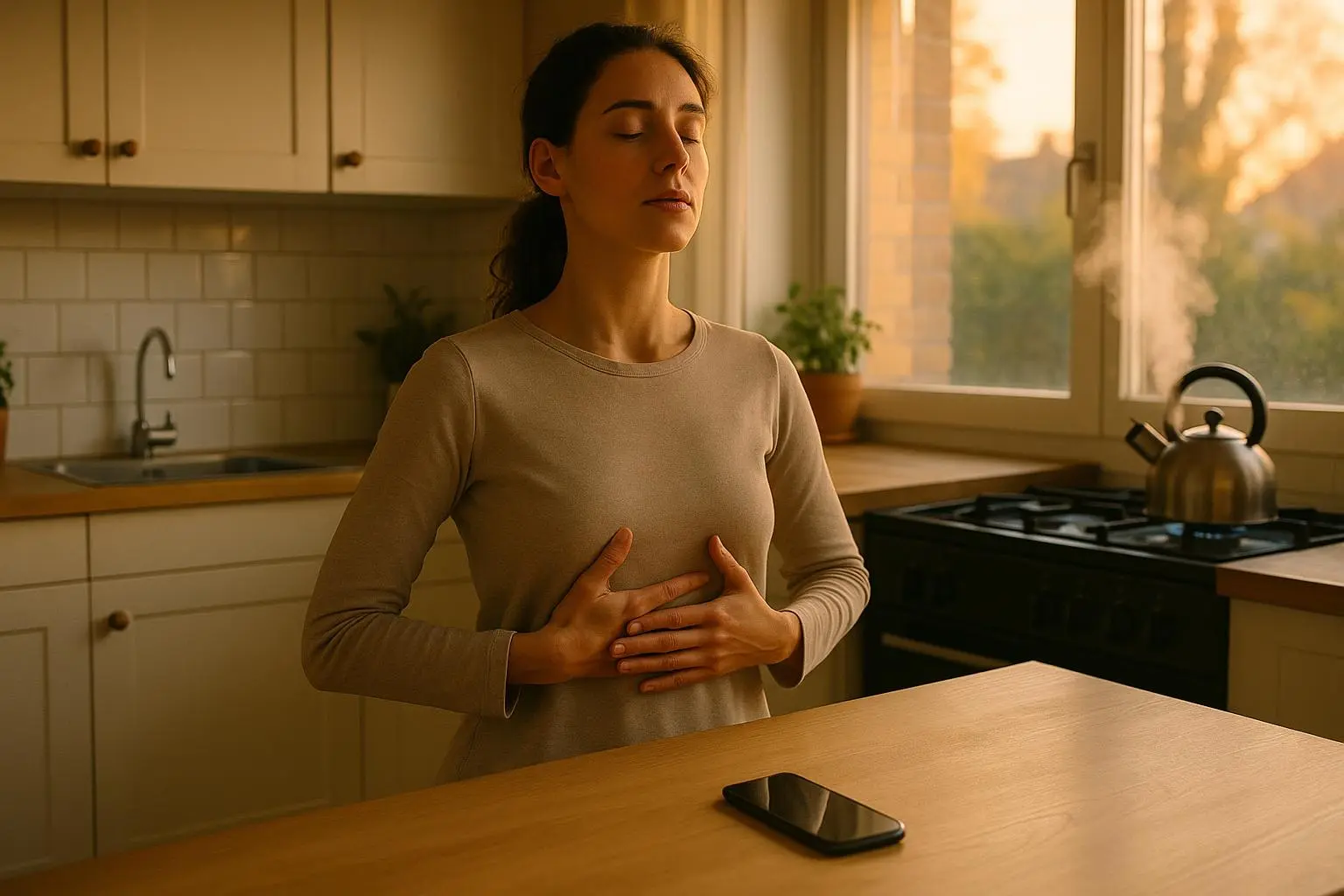
Script: “Hand on belly, breathe deep. Feel your breath—this is your anchor.”
Age-Appropriate Language:
- Younger players: “Put your hand on your belly, breathe in, feel it rise; breathe out, feel it fall. This is your anchor.”
Practice Drill:
- Use during quiet moments or before competition.
- Practice with eyes closed or in dim light to heighten the sensory focus.
Micro-moment: The tactile anchor is a physical cue in a sea of stimuli. Touch is reliable; breath is the brain’s best friend. Together they quiet the chaos.
Why it works: It anchors players physically and mentally, creating a stable platform to launch from when play resumes.
One-Week Drill Plan to Embed Breath Cues
To make these cues second nature, weave them into your regular practice. Here’s a simple, progressive plan you can run next week:
- Day 1: Introduce each cue (2 minutes per cue). Demonstrate hand signals and practice a few cycles with each cue.
- Day 2: Review cues and practice during short breaks in drills. Start alternating cues to remove predictability.
- Day 3: Integrate cues into simulated game situations (e.g., after turnover, before a defensive stand). Use a stopwatch to time the breath cycles.
- Day 4: Practice cues during a controlled scrimmage. Coaches deliver cues during timeouts and breaks, not during every possession.
- Day 5: Review and refine. Pair athletes who catch on quickly with those who need more support; offer age-appropriate tweaks.
- Day 6: Incorporate cues into game-day warm-ups and pregame routines.
- Day 7: All cues in a 10-minute practice sprint to test how they hold up under real pressure.
If you’re coaching mixed ages, remember to simplify language for younger players and add a bit more autonomy for older athletes. The goal is consistency, not perfection.
Real-world voices (and what I learned from them)
coaches and athletes, like any field, share mixed experiences. Here’s a compact read on what people say and what it taught me:
- Coach_Mike_Bball (Reddit): “I started using breathwork with my high school team last season. It’s amazing how much calmer they are during timeouts. The ‘extended exhale’ is a game-changer after a bad call.” — The takeaway: simple cues, repeated, yield real calm under pressure.
- Sarah_Volleyball (Twitter): “As a volleyball player, I used to get so anxious during close games. My coach taught us the micro-box, and it really helps me refocus.” — The micro-box creates a quick, repeatable reset that doesn’t derail momentum.
- Anonymous_YouthCoach (Forum): “I coach 8-year-olds. The ‘smell the flowers, blow out the candles’ cue is a hit—simple and effective.” — The best cues for the youngest athletes blend imagery with breath; keep it short and playful.
- David_Soccer (Review Site): “Breathwork cues have improved our team’s free throw percentage.” — Breath work isn’t just for basketball; it crosses sports when applied consistently.
One thread that always pops up: some parents and players push back, especially if they don’t feel immediate results. That’s a reminder to make practice a journey, not a one-off fix. Breathwork compounds over time, and the payoff shows up in decision-making, not just in a single game.
Micro aside: in a quiet corner of the gym, I’ve watched a shy freshman start to lead a time-out with a simple 4-count inhale-exhale. He wasn’t trying to be a hero; he was learning a new self-regulation tool that let a chaotic moment settle into something manageable. That moment reminded me that breath is a skill—like shooting form or footwork—worth teaching early and reinforcing often.
A quick note on safety and inclusivity
Breathwork is generally safe for most athletes, but it’s important to teach the mechanics properly. The Valsalva cue must be delivered with a clear warning and oversight, especially for younger athletes or anyone with a history of breathing issues or cardiovascular concerns. If in doubt, consult with a sports medicine professional or a licensed breath-work consultant who understands the demands of youth sports.
Also, language matters. Age-appropriate phrasing is non-negotiable for engagement and safety. If a cue isn’t landing with a particular group, swap the script and imagery until it does.
Final tip: make it part of the culture
The real power of these cues isn’t the individual breath technique; it’s the shared practice. When your team uses a consistent, predictable reset, you replace chaos with cohesion. Your players start to trust the process, and trust compounds over a season.
If you want a quick win, start with Micro-Box Breath in the very next practice. Then add one cue per week. Keep it visible: a small poster in the locker room or a one-line reminder on the whiteboard before drills. The more you normalize these breaths, the more your athletes will instinctively lean on them when the pressure spikes.
I’ve seen enough teams to know the pattern: calm breath, clean decision, crisp execution. It’s not magic. It’s practice, intentional rhythm, and a coach’s willingness to steady the room when it would be easier to raise the volume.