Emotional Scoring with Free Loops: 9 Plug-and-Play Stacks for Podcast Scenes
Apr 15, 2026 • 8 min
If you want listeners to feel, not just hear, your story—music is the fast lane. But writing original music or buying expensive libraries isn’t always an option. So I started doing something simpler: assemble three to four free loops, nudge them with a little EQ and reverb, and suddenly a flat scene has emotional shape.
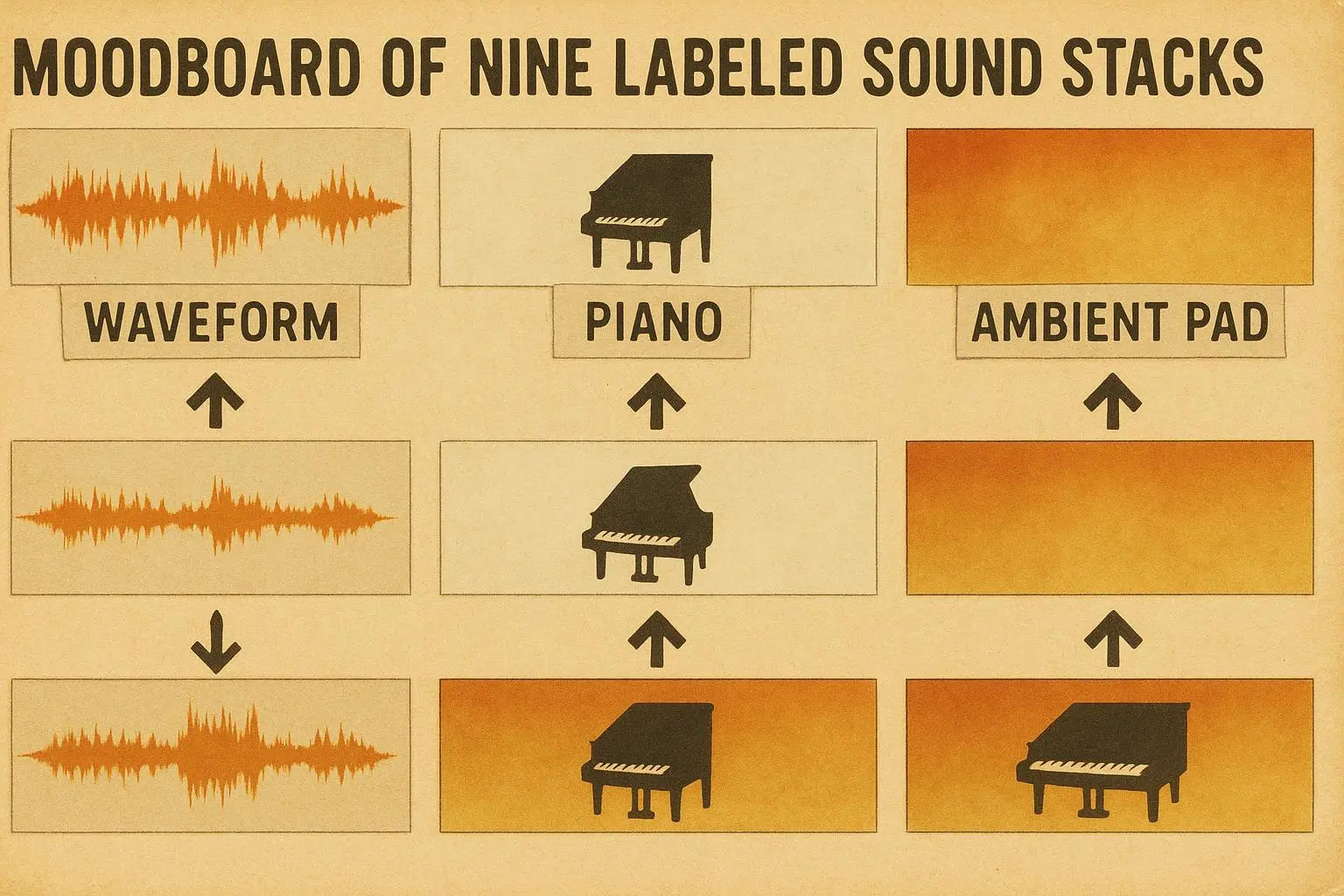
This post gives you nine ready-to-use stacks you can drop into an episode today. Each stack lists the kinds of free assets to look for, quick layering instructions, tempo/mix presets, and the moments they work best in. No music degree required—just an editor you can drag files into and a willingness to tweak.
Why this works: humans process timbre and texture faster than harmony. A low drone + a texture + one transient tells the brain "pay attention" or "remember this" almost instantly. Use that.
Quick rules before you start
- Keep music under dialogue: aim for peaks around -18dB to -24dB RMS so speech stays clear.
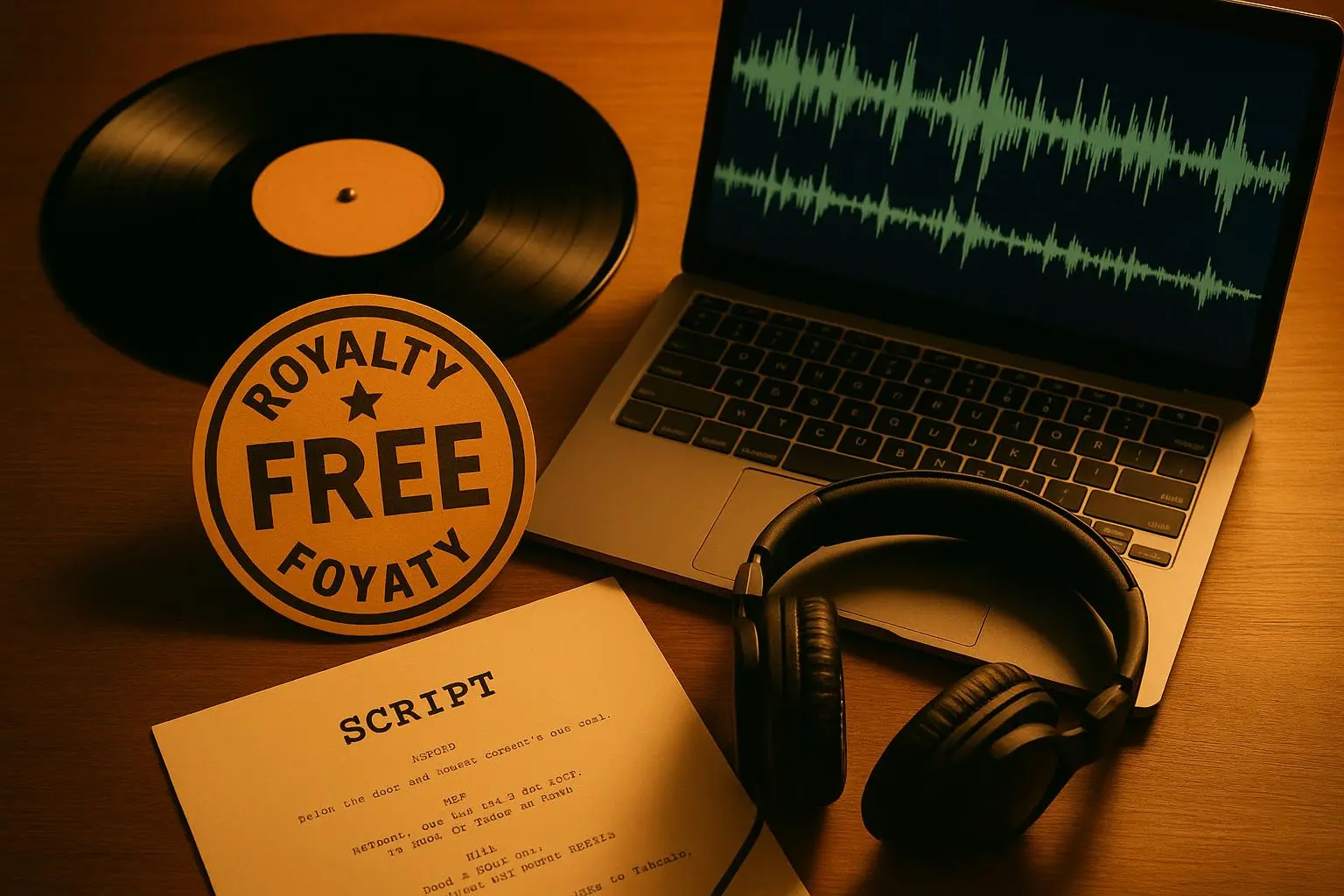
- Check licenses. Many free files are fine for commercial use, but some require attribution or ban commercial use. Don’t assume.
- Small changes = big differences. Pitch +1/-1 semitone, add a 1–2s reverb tail, or low-pass a texture and it stops sounding generic.
- If a stack sounds muddy, high-pass the texture at 200–400 Hz and pull 300–600 Hz from the drone.
Now, the stacks. Each is short, practical, and built so you can swap resources from Freesound, Looperman, SampleFocus, or the free pages of commercial sites.
Stack 1 — The Reveal (Anticipation / Unveiling)
Emotion: curiosity to payoff.
Assets to source:
- Low sine or sub drone (sustained)
- High shimmer texture (metallic or glassy)
- Reversed cymbal or swell transient
Layering:
- Drone at -20 dB, low-pass at 4 kHz to keep it warm.
- Texture at -24 dB, add a 60% wet reverb with 2s decay.
- Play the reversed cymbal once at the exact reveal; push to -10 dB for impact and roll off highs at 8 kHz.
Tempo/mix:
- Tempo isn't strict; think 80–120 BPM feel.
- Use an automation curve: drone fades in 2–3 seconds before reveal, transient hits on the reveal.
When to use:
- A character drops a bombshell.
- An archive tape rewrites a story.
Why it works:
- Low drone primes the listener; the transient gives closure. Simple.
Stack 2 — Tension Build (Suspense / Foreshadowing)
Emotion: unease that grows.
Assets:
- Sparse, slow piano loop (minor key)
- Distant, textured drone (filtered)
- Intermittent creaks or mechanical clicks (very quiet)
Layering:
- Piano at -22 dB with slow attack and 20% reverb.
- Drone under at -18 dB, heavily EQ’d (cut 200–400 Hz if muddy).
- Place clicks every 10–20 seconds; pan them slightly left/right for spatial clutter.
Tempo/mix:
- 60–80 BPM. Keep dynamics tight—automate a subtle increase in level over 30–60 seconds.
When to use:
- Before a reveal that should feel dangerous.
- Closing lines that leave questions open.
Pro tip: high-pass the piano at 120 Hz so it doesn’t compete with voice.
Stack 3 — Nostalgic Flashback (Warmth & Distance)
Emotion: bittersweet memory.
Assets:
- Warm analog pad or detuned synth (soft)
- Lo-fi piano or toy piano loop
- Vinyl crackle or distant playground field recording
Layering:
- Pad at -24 dB, add tape saturation plugin lightly.
- Piano at -20 dB, add a chorus or subtle tremolo for "old" feeling.
- Crackle at -30 to -35 dB; barely audible—more felt than heard.
Tempo/mix:
- 80–95 BPM. Slightly slow the piano (time-stretch -3% to -6%) to create distance.
When to use:
- Child memories, letters read aloud, reflective beats.
Micro-moment: once I layered a toy piano loop with a 0.8s slapback delay and a playground sample at -35 dB. The editor insisted I bring that mix up a notch. Listeners said in DMs it felt like "opening a dusty photo album." That tiny crackle did most of the work.
Stack 4 — Emotional Climax (Heartfelt Moment)
Emotion: release, catharsis.
Assets:
- Warm pad or choir hit
- Gentle percussion (soft brushed snare or bongos)
- Sustained piano or string hit for the peak
Layering:
- Build pad from -28 dB up to -18 dB across the scene.
- Add percussion at -24 dB synced to spoken cadence.
- Use the piano/string hit to punctuate—bring to -12 dB then ride back.
Tempo/mix:
- 90–110 BPM. Use sidechain ducking if music fights speech: duck the pad 3–6 dB when voice is present.
When to use:
- Confessions, reconciliations, or the moment a character decides to change.
Why sidechaining helps: it maintains impact while preserving clarity—music breathes around the voice.
Stack 5 — Motivational Rise (Triumph & Momentum)
Emotion: hopeful build.
Assets:
- Bright piano loop (arpeggiated)
- Uplifting rhythmic loop or shakers
- Layered synth stabs or small brass hits
Layering:
- Piano at -20 dB, add a high-pass at 80 Hz to keep clarity.
- Rhythmic loop at -18 dB, lightly compressed.
- Brass/synth hits at -14 dB for the peak; place sparingly.
Tempo/mix:
- 100–120 BPM. Gradual crescendo: volume automation rising 3–4 dB over 20–40 seconds.
When to use:
- Montage of progress, "against all odds" sequences, intros that need energy.
Practical note: a single loop with a little reverb and an EQ can go from cheap to cinematic fast.
Stack 6 — Haunting Introspection (Melancholy / Regret)
Emotion: inward, heavy.
Assets:
- Sparse, minor-key piano loop with long decay
- Sub bass or low cello-like drone
- Distant, slow-moving ambient texture
Layering:
- Piano at -22 dB; add a long verb tail (2.5–3.5s) to blur the edges.
- Sub-bass at -24 dB, low-pass at 200–300 Hz—feel it more than hear it.
- Texture at -26 dB, low-pass at 2 kHz to stay warm.
Tempo/mix:
- 70–90 BPM. Keep dynamics subtle—don’t swamp the voice.
When to use:
- Soliloquies, regretful flashbacks, end-of-act contemplation.
Personal story (100–200 words): I once scored an episode about a late father with nothing but a cheap mic and free loops. I grabbed a fragile piano loop from a free site, a low drone, and a storm field recording. I pitched the piano down a semitone and added a 3s reverb. At mix, I pushed the drone to -26 dB and placed the storm at -32 dB so it never dominated. When the host read the last letter, silence would have worked—but listeners messaged that the music "felt like the right kind of ache." The episode had the most downloads of our season. The lesson: small, specific choices—pitching, reverb length, level—create intimacy. That’s cheaper and faster than composing an original score, and often just as moving.
Stack 7 — Light‑Hearted Relief (Comic or Warm Transition)
Emotion: airiness, smile.
Assets:
- Upbeat, bright synth or plucky guitar loop
- Light percussion (soft snaps or rimshots)
- Short whimsical flourish (xylophone or glockenspiel)
Layering:
- Synth/guitar at -20 dB, keep highs bright.
- Percussion at -24 dB, pan lightly for width.
- Flourish at -14 dB for transitions.
Tempo/mix:
- 110–130 BPM. Keep it short—20–30 second beds work well.
When to use:
- Post-joke pickup, small wins, transitions into lighter segments.
Why brevity matters: upbeat loops get tiresome fast. Use them like candy—small doses.
Stack 8 — Cinematic Transition (Scene Change / Location Shift)
Emotion: sweep, passage.
Assets:
- Big pad or cinematic swell
- Impact FX (whoosh or soft hit)
- Reverse swell or riser
Layering:
- Pad at -28 dB as a bed.
- Use riser leading to an impact; impact at -12 to -8 dB for a clean cue.
- Automate pad down after the impact to reveal the new scene.
Tempo/mix:
- Slow tempo feel, 60–80 BPM. The impact timing is everything—align to an edit cut.
When to use:
- Time jumps, act breaks, or when you want to signal "we’ve moved."
Pro tip: bake the impact into your edit—don’t rely on the host to pause. Sync the hit and cut for crispness.
Stack 9 — Childhood Memory / Bittersweet Flashback
Emotion: innocence with a twinge.
Assets:
- Lo-fi toy piano or celesta loop
- Distant ambient playground or radio static
- Soft tape hiss or subtle percussion (hand clap, very soft)
Layering:
- Toy piano at -22 dB with small chorus.
- Playground field at -32 dB, low-pass at 1.5 kHz to make it feel far away.
- Hiss at -35 dB; it's atmospheric, not present.
Tempo/mix:
- 70–90 BPM. Time-stretch the toy piano slightly slower for breathing.
When to use:
- Scenes about childhood, nostalgia, or lost innocence.
Why this stack works: pairing a high-register innocent sound with a distant, filtered field recording creates contrast—our brains read it as "memory."
Practical mixing tips that actually save time
- Ducking: set a fast sidechain so music ducks when dialogue hits. It’s cleaner than constant hand automation.
- EQ checklist: cut 200–500 Hz on pads to prevent muddiness; boost 3–6 kHz on transient elements for presence; high-pass textures at 200–400 Hz.
- Reverb: short for texture (0.6–1.2s), long for memory/space (1.8–3.5s). Use different reverb types for foreground vs. background.
- Levels: set a reference voice level (-16 to -20 LUFS for spoken-word). Mix music to sit under that.
- Mono check: many listeners use mono devices. Check your stacked mix in mono to avoid phase surprises.
Licensing and where to find assets
Free doesn’t mean license-free. Here’s a quick map:
- Freesound.org: lots of great textures and field recordings. Check CC license—some require attribution, some disallow commercial use.
- Looperman: user-submitted loops, usually free for commercial use but read each user’s note.
- SampleFocus: tagged mood and instrument loops; licensing varies.
- Free sections of commercial sites (Bensound, Soundstripe trials): often safe but read T&Cs.
Always download the license file or screenshot the permissions. If you ever monetize a big episode, that screenshot may save you from a takedown.
Tools that make this painless
- Desktop DAWs: Audacity (free) is good for quick EQ and fades; Reaper gives pro features at a low cost.
- Mobile: Ferrite for iOS is the fastest way I’ve found to tweak EQ on the go.
- Utility: Online Tone Generator for custom pure drones if you can’t find the exact frequency you want.
Common mistakes and how to avoid them
- Mistake: leaving textures full-spectrum. Fix: high-pass or low-pass filter to make space.
- Mistake: using the same transition sound across episodes. Fix: pitch-shift and add reverb—instant uniqueness.
- Mistake: music louder than voice. Fix: set a voice reference and mix to it.
- Mistake: ignoring licensing. Fix: save license docs and attribute when required.
User insight note: Several producers I worked with spent hours finding "the right" loop. Invest that time once—curate a small personal library of 20 favorites tagged by mood, then reuse and tweak. It saves hours later.
Quick workflow for dropping a stack into an episode (5–10 minutes)
- Choose the stack that matches your scene.
- Download 3–4 candidate assets (don’t overthink).
- Import to your DAW. Set the voice track as reference (-18 LUFS).
- Lay drone/pad, set to -24 to -20 dB.
- Add texture and transient. EQ to avoid masking voice.
- Automate volume for rises or cuts.
- Listen in mono and on earbuds. Adjust.
If it still sounds wrong, swap one element. Often one bad loop ruins the whole mix.
Final thoughts
You don’t need a composer to make people feel. With intention, three small assets and basic mixing moves can transform narration into experience.
Start by building a tiny, curated folder of assets for each emotion: reveal, tension, nostalgia, release. Test them in one episode. Iterate. You’ll learn which textures work for your show—and more importantly, listeners will feel scenes the way you intend.
If you want, I can expand any of these stacks into a step-by-step tutorial with exact download links and screenshots showing which EQ cuts to use. Or I can make a printable cheat sheet you stash next to your editor.