Forensic-Proof Freelancer Compliance: How Agencies Produce Verifiable Evidence of Secure Handling
Sep 7, 2026 • 9 min
A few years ago, I ran a mid-size creative agency that relied heavily on freelancers for sensitive legal briefs and client-ready documents. We had NDAs, airtight contracts, and a long wish list of “we should probably do this” security measures. Then came the client audit that changed everything. They didn’t want to see our NDA; they wanted a walk-through of how every freelancer touched, stored, and disposed of the documents. In other words: they wanted forensic-proof evidence that our process protected client data end-to-end.
This post is my attempt to distill what we learned into something you can actually implement—without turning your entire operation into a security theater. It’s a practical, field-tested guide to collecting verifiable artifacts from contractors, plus a repeatable process you can scale across projects. Think of it as a system you can hand to procurement, legal, and IT so audits don’t feel like a witch hunt.
And yes, I’m going to share a real story from my own experience, and I’ll sprinkle a few tiny details that stuck with me—like the moment I realized how a single hashed file can become a courtroom-ready breadcrumb.
Why this matters beyond “doing the right thing”
If you’re reading this, you’re probably juggling speed and security. You want freelancers to move fast, deliver great work, and not become your weakest link. Here’s the heart of it:
- Data privacy rules aren’t optional anymore. GDPR, CCPA, and sector-specific laws mean you must demonstrate how data was accessed, used, and disposed of—down to the timestamp and the exact tool used.
- A signature isn’t enough. An NDA can say “protect data,” but it doesn’t prove you did protect it. Your auditors want artifacts—things you can point to and reproduce.
- Your reputation rides on it. A breach involving a contractor can ruin a brand faster than a misfiled spreadsheet can. Forensic-proof evidence lowers the odds of this happening and shortens the path to remediation if something does go wrong.
A quick aside I learned in the trenches: early on, we treated “secure handling” like a policy document, not a daily habit. Then a contractor casually copied a file to a personal drive to show a colleague, and the audit trail finally became the star of the show. We needed a system that made that kind of move not just possible, but detectable before it caused harm.
That moment taught me a simple truth: the only thing louder than a policy is a reproducible, auditable trail.
How I actually built a verifiable framework
If you’re starting from scratch, you’ll want a lightweight, scalable framework that still looks solid under scrutiny. Here’s a practical path I’ve seen succeed across multiple agencies.
1) Define clear expectations upfront
Before any work begins, bake in explicit, testable rules about data access, handling, storage, and deletion. This isn’t a bureaucratic exercise; it’s a guardrail for everyone.
- Approved transfer methods: encrypted portals, SFTP, or secure email with end-to-end encryption.
- Access controls: MFA, least privilege, time-bounded access for freelance accounts.
- Local storage rules: no unencrypted copies on personal devices; no syncing to unapproved cloud services.
- Deletion and retention: specify how long drafts stay, when deletion should occur, and how you verify it.
A concrete example: we required freelancers to use a designated secure portal for all document uploads and a VPN when accessing client environments. We also mandated that any deletion be followed by a signed deletion receipt and a short screen-recording of the removal process.
2) Collect verifiable artifacts as evidence
This is the core of forensic-proof compliance. You want artifacts that are concrete, timestamped, tamper-evident, and easy to audit.
I group them into five primary categories. Each category includes a practical, producer-friendly way to obtain it from freelancers.
Packet Captures (network activity during sensitive work)
- Purpose: prove data moved only through approved channels (e.g., HTTPS, SFTP) and to approved endpoints.
- How to collect: freelancers can run lightweight packet capture during a defined window with Wireshark or a similar tool, focusing on a specific project session. The goal isn’t to invade privacy but to demonstrate secure transmission boundaries.
- Practical takeaway: your test should show that the freelancer did not leak data to personal cloud storage or unapproved hosts.
Signed Deletion Receipts
- Purpose: confirm that once a project ends, all copies are securely deleted from devices and cloud storage.
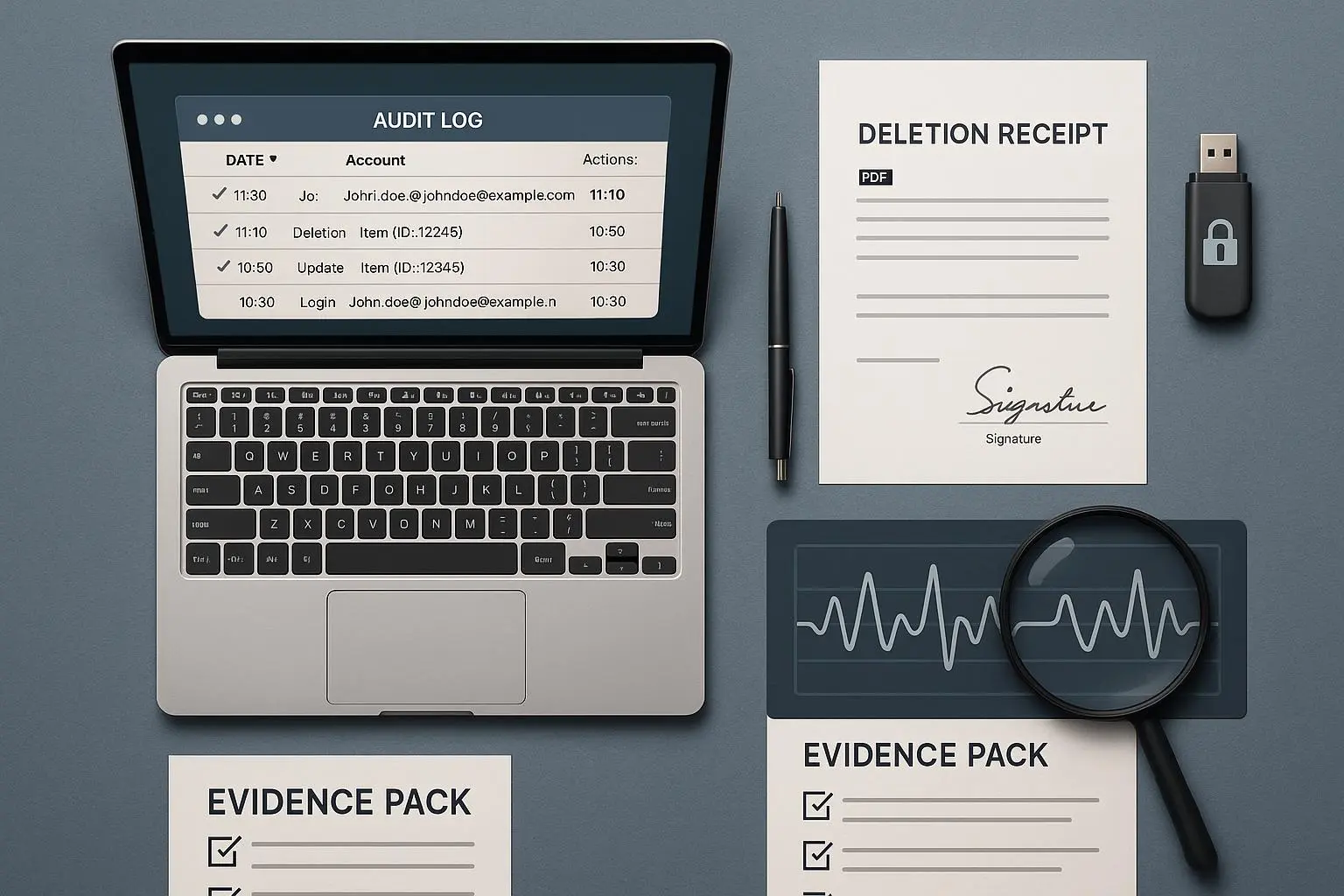
- How to collect: require a signed, digitally verifiable deletion receipt that includes the file list, deletion method, timestamps, and the signer’s identity.
- Practical takeaway: a signed receipt with a timestamp is more actionable than a generic statement of deletion.
Immutable Redaction Logs
- Purpose: document what was redacted, when, and by whom, without exposing the redacted content.
- How to collect: use a redaction tool that generates an immutable log (blockchain-based or cryptographically signed). Keep a separate, redacted copy for client delivery.
- Practical takeaway: this protects sensitive elements and provides a trustworthy audit trail.
Hash Chains for Before/After Files
- Purpose: prove integrity across edits and transfers.
- How to collect: generate cryptographic hashes (SHA-256, for example) for origin files and final outputs, linking them in a chain so each state is verifiable.
- Practical takeaway: even if someone tampers with a file midstream, the hash chain will reveal the inconsistency.
Email Audit Trails
- Purpose: capture metadata about sensitive communications and file transfers.
- How to collect: use an auditable, secure email platform or export mail metadata and subject to preserve context (without exposing actual content in insecure channels).
- Practical takeaway: a clean trail of who touched what, when, and through which channel.
A quick 30-60 second aside that sticks: I remember staring at a firewall log showing a freelancer connected to a staging server at 2:03 a.m. with an encrypted tunnel. The packet captures later confirmed that this session only touched the staging endpoint and nothing else. It wasn’t dramatic, but it was the moment I realized: secure handling isn’t about dramatic alerts; it’s about precise, replayable evidence you can show a regulator or client.
3) Build reproducible test procedures for contractors
Assume you’re training a new freelancer, not auditing an old one. Your test procedures should be simple enough to execute in an afternoon, repeatable, and clearly linked to your acceptance criteria.
Data Deletion Test
- Give the freelancer a dummy file and require a delete action with a signed receipt and a short screen recording of the process. Include a hash of the file before and after deletion to show it’s gone and not recoverable.
Secure Transfer Test
- Ask the freelancer to upload a test file to your secure portal, produce a hash chain for the file pre- and post-transfer, and attach a brief network log showing a secure connection.
Access Control Test
- Grant a time-limited access token for a sandbox project. After a defined window, ensure the token is revoked and show an audit log verifying revocation.
Redaction Test
- Provide a document with PII and request redaction using an approved tool that outputs an immutable redaction log. Deliver the redacted file to you with the log intact.
Acceptance criteria should be explicit: every required artifact must exist, be verifiable, and align with your protocol. A deletion receipt without a timestamp? Rejected. A hash chain where a value doesn’t match? Re-run the step and escalate.
4) Create an evidence pack template
Think of this as your project’s DNA kit—everything you need to litigate or defend a decision in court or in front of a regulatory body.
Core agreements
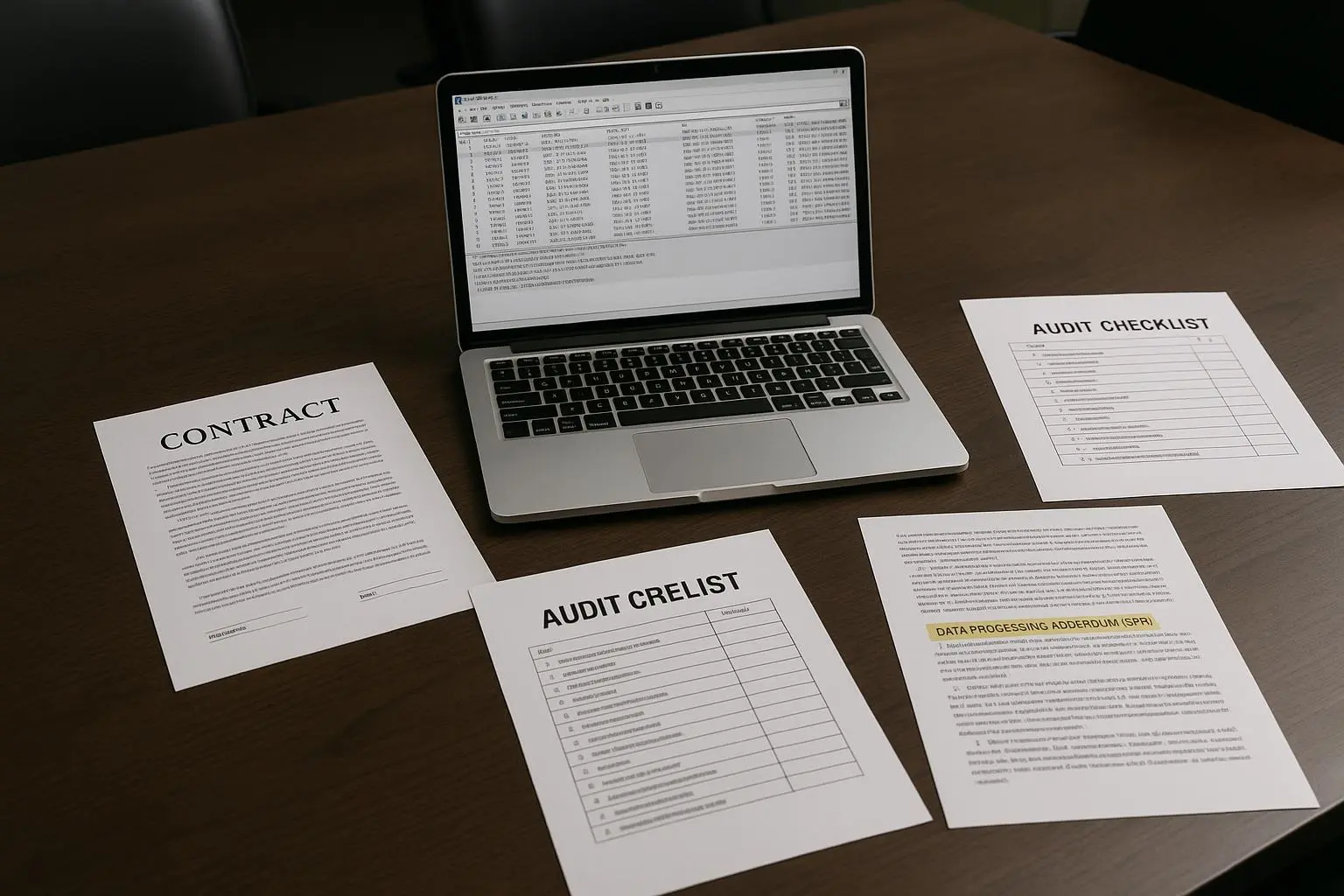
- Signed contractor agreement, NDAs, data handling addenda.
Onboarding proofs
- Security training completion, access provisioning records, MFA setup snapshots.
Evidence artifacts
- Packet captures, deletion receipts, immutable redaction logs, hash chains, and email audit artifacts.
Test results
- Step-by-step results from reproducible tests, including screenshots and timestamps.
Communication logs
- Relevant secure messaging records and channel metadata.
Compliance statements
- A short, freelancer-signed statement confirming understanding and adherence to your handling protocols.
If you’re buying time for procurement or legal, put a single, shareable link to the evidence pack in your contract—no searching needed.
5) Practice, iterate, automate (where it makes sense)
Automation isn’t a luxury here; it’s a survival tool. When you can automate, you win back time for meaningful work and reduce human error.
- Automated checks: hash verification scripts that run on file completion and flag mismatches automatically.
- Secure portal logs: configure your portal to export consistent event logs in a standard format (JSON is a good default).
- Evidence pack compiler: a lightweight script or template that pulls artifacts into a single organized folder with a timestamp and project ID.
The goal isn’t to remove humans from the loop; it’s to remove ambiguity. If you’re relying on memory to prove someone did something, you’re already on the back foot.
Best practices I learned the hard way
- Train freelancers, not just teams. Clear expectations and simple tools reduce friction. If a freelancer feels like you’re asking for a data dump rather than a secure pattern, adoption tanks.
- Use the right tools, not the loudest tools. A tool that’s easy to use for a non-technical contractor (and still credible to auditors) is worth far more than the flashiest, hardest-to-osmane option.
- Start small. You don’t need a full forensic lab to begin. Pick two artifact types (hash chains and deletion receipts) to prove the concept, then scale.
- Document why, not just what. It’s easy to say “we collect packet captures,” but auditors want context: why this data, how it’s stored, who can access it, and how long it’s kept.
- Be transparent with freelancers. Explain the why behind each artifact. If they understand the risk framework, they’ll be more cooperative and accurate in their reporting.
A micro insight I carry forward: the value of a clean, credible digital trail isn’t just for audits. It’s a real-time risk management tool. When you catch a misstep early—and you have a reproducible path to verify the misstep—your response is faster, calmer, and more effective.
The evidence pack in practice: a worked example
We’ll walk through a single project to show how these pieces fit together. It’s not a Hollywood scene—more like a ticking clock: precise, quiet, and effective.
- Project: Legal brief for a major client
- Freelancer: Independent contractor across Europe
- Data sensitivity: High (PII placeholders, client strategies, confidential notes)
What we required and captured:
- Packet capture window during data transfer to the secure portal (1 hour)
- Hash chain recorded for the draft before edits and the final version (SHA-256)
- Immutable redaction log for any PII redaction, with timestamps and signer
- Signed deletion receipt upon project closure
- Email audit artifacts from the secure portal and a separate secure email channel for final handoff
How it played out:
- The freelancer delivered a clean final draft with a verifiable hash chain showing a direct lineage from pre-edited to final version.
- The deletion receipt timestamp aligned with project closure, and the screen recording demonstrated a clean wipe of local copies.
- The immutable redaction log proved what was redacted, when, and by whom, without exposing the original sensitive content.
- The packet capture confirmed data never exited the approved gateway and that no unapproved endpoints were contacted.
Auditors: impressed with the concrete chain of custody. The client asked for a few additional checks for the next phase, which we integrated into the standard test suite. Quick wins came from standardizing the evidence pack and ensuring all artifacts live in a centralized, access-controlled repository.
Overcoming common objections
It’s too expensive.
- Not if you start with the two most impactful artifacts (hash chains and deletion receipts). You’ll see savings in audit time and risk reduction that pay for themselves over a few projects.
It’s too time-consuming for freelancers.
- The upfront work pays off later. Build simple templates and train freelancers once. A well-designed portal with guided steps makes it feel like a minor inconvenience rather than a big ask.
It’s only for large clients.
- Regulatory risk doesn’t disappear for small clients; it just scales differently. The cost of non-compliance can be far higher than implementing a scaled-down version now.
It’s a security theater.
- If you keep it practical, it isn’t theater. It’s a real, auditable evidence trail that proves you did what you promised to do.
How do we store all this?
- Centralize. A secure, access-controlled evidence repository with clear retention schedules makes retrieval fast during audits and easy to defend in court.
Where to start today
- Pick two artifacts to start (hash chains and deletion receipts). Build a one-page test procedure for freelancers and a simple evidence pack template.
- Decide on a secure portal for data transfers and a basic packet-capture window you’re comfortable with.
- Create a short onboarding doc for freelancers explaining the why and how of the process.
- Schedule a quarterly sanity check: a mini-audit to verify artifacts are being generated and stored correctly.
- Iterate. Add immutability logs and email audit trails as you gain confidence.
This isn’t a “set it and forget it” thing. It’s a living practice that strengthens with every project, every auditor, and every client briefing that demands better accountability.
Final thoughts
Verifiable evidence of secure handling isn’t just about avoiding trouble. It’s about building trust with clients, protecting sensitive information, and turning contractors into true partners in security. When you have a reproducible process—packet captures, signed deletion receipts, immutable redaction logs, hash chains, and robust email audits—you’re not simply reacting to risk; you’re actively reducing it.
If you want a head start, I’ve included an evidence-pack template concept you can adapt to your own workflows. It won’t solve everything overnight, but it will dramatically raise the bar for governance, risk, and compliance—and it will make audits far less painful.
If you’re curious about practical tooling, I’ve seen teams succeed with a lean stack: a secure portal for artifacts, lightweight packet-capture during defined sessions, hash-generation scripts, and a simple immutable log workflow. The goal isn’t to overspecify the process; it’s to create a repeatable, credible trail that stands up under scrutiny and keeps your clients confident in your data-handling discipline.
And if you’ve got a similar story—a moment that changed how you approach freelancer data handling—I’d love to hear it. The best lessons often come from the trenches, not the manuals.