Grace Token Pitfalls: Troubleshooting Common Mistakes and Fixes
Jan 28, 2026 • 7 min
Grace Tokens—time-locked releases, governance waiting windows, or vesting cliffs—sound simple on paper. In practice they're where launch-day optimism meets edge-case chaos. Misconfigured time units, lagging indexers, gas-busting execution steps, and even classic re-entrancy mistakes have turned tidy tokenomics into multi-day headaches.
This guide walks through the mistakes I actually see in audits and on community threads, why they happen, and what to do right now to fix them. Read fast if you're triaging an incident; read slow if you're designing a system and want to avoid ever triaging one.
Why grace periods matter (and why they're fragile)
At their core, grace mechanisms buy time: for review, for emergency intervention, for market cooling. They reduce risk. But they add complexity. Every additional dependency—block time, off‑chain indexers, oracles, gas estimators—is another place the system can misalign.
Here’s the blunt truth: the on-chain state is the only source of truth. Everything else is a convenience layer that can lie, lag, or break.
The usual suspects (and quick fixes)
Below are four failure modes I keep seeing. For each: what goes wrong, a concrete fix, and a one-line test you can run now.
1) Time unit confusion: seconds vs. blocks vs. human days
What goes wrong
- Developer writes "365" expecting days, but the contract interprets the number as blocks.
- Tests pass on a private chain with unusual block times and fail in production.
Concrete fix
- Always make the unit explicit in code and UI. Use named constants (e.g., GRACE_PERIOD_SECONDS) or helper functions like toSeconds(days).
- If you need block-based logic, convert explicitly: expectedSeconds = blocks * averageBlockTimeSeconds, and document the assumed average.
- Add runtime sanity checks: when initializing the contract, verify that the input falls within an acceptable min/max range (e.g., not less than 1 hour, not more than 10 years).
One-line test
- Query the contract for the release timestamp and compare it to now ± an acceptable margin (using block.timestamp on a testnet).
Why this matters: I once saw a team lock liquidity for “365” and discover after launch that they’d used blocks, not days. Investors were effectively locked for years longer than intended; governance had to push an emergency patch.
2) Off-chain UIs that lie: indexer drift and bad UX
What goes wrong
- The dashboard says "Claimable" because a subgraph processed a block, but the contract still requires 48 more hours.
- Users spam claim() and get reverted transactions—angry Discord, lost trust.
Concrete fix
- Always show a clear “source of truth” badge: link an on-chain query (etherscan/tx link) or show the exact on-chain timestamp required for release.
- Implement a reconciliation layer: if the subgraph is N blocks behind, warn users and grey out the claim action.
- Build a small contract view function that returns a boolean and a release timestamp. Use that for UI checks instead of derived data.
One-line test
- Fetch the contract's releaseTimestamp via a direct RPC call and compare to your UI calendar logic.
Why this matters: A developer friend told me they fixed an angry helpdesk after two days of "my dashboard lies." The fix was so simple—botched subgraph indexing—but the community trust cost weeks.
3) Gas and congestion: the invisible extra delay
What goes wrong
- Execution transaction runs out of gas or is priced too low during a congestion spike.
- A governance proposal passes, but execution times out and the next window is hours later.
Concrete fix
- Estimate gas against peak historical windows, not the mean. Use services like GasNow or built-in gas oracles to set dynamic upper bounds.
- Implement an automatic re-queue: if execution fails within X blocks after a successful vote, a guardian or a keeper retries with incrementally higher gas.
- Consider using a relay/keeper system (e.g., Gelato, Chainlink Keepers) to guarantee execution without trusting a single proposer.
One-line test
- Simulate the final execution in a sandbox (Tenderly, Hardhat fork) using the highest gas price seen in the last 30 days.
Why this matters: In one governance drama I watched, a 90% approval was useless because the proposer mispriced gas. The community had to wait for the next governance window—time they didn't expect to lose.
4) Re-entrancy and state order mistakes
What goes wrong
- Contract sends tokens or calls external contracts before marking internal state as released.
- Malicious contracts re-enter and manipulate state mid-flow.
Concrete fix
- Follow Checks-Effects-Interactions: update on-chain state first, then call external contracts.
- Use re-entrancy guards (e.g., OpenZeppelin's ReentrancyGuard) and make state-modifying functions non-reentrant.
- Write explicit unit tests that mock malicious contracts attempting re-entrancy during release.
One-line test
- In unit tests, call release() from a contract that calls back into your release() and assert it reverts.
Why this matters: Modern audits flag this immediately, but old codebases or hurried patches sometimes reintroduce it. An audit praise I read said a team "finally nailed CEI"—and it saved them from a potential exploit.
A short, real story (100–200 words)
When I worked on a token vesting rollout, we assumed blocks were fine for our grace logic—faster dev, simpler math. Two weeks after mainnet launch, the UI started showing unlocks while users' transactions reverted. The indexer said "ready," the contract disagreed, and support tickets piled up. I spent an ugly day tracing logs: our private testnet had a 2-second block time; mainnet averaged 12. We had multiplied the cliff by block count, not seconds. We patched the contract with a migration that converted blocks to timestamps and compensated affected users. The lesson stuck: never abstract away the unit. Document it, test it across networks, and communicate clearly to users when anything depends on block cadence.
Micro-moment: I still remember the tiny comment left in the old contract—"TODO: units?"—and how that one line cost us a weekend and a community update.
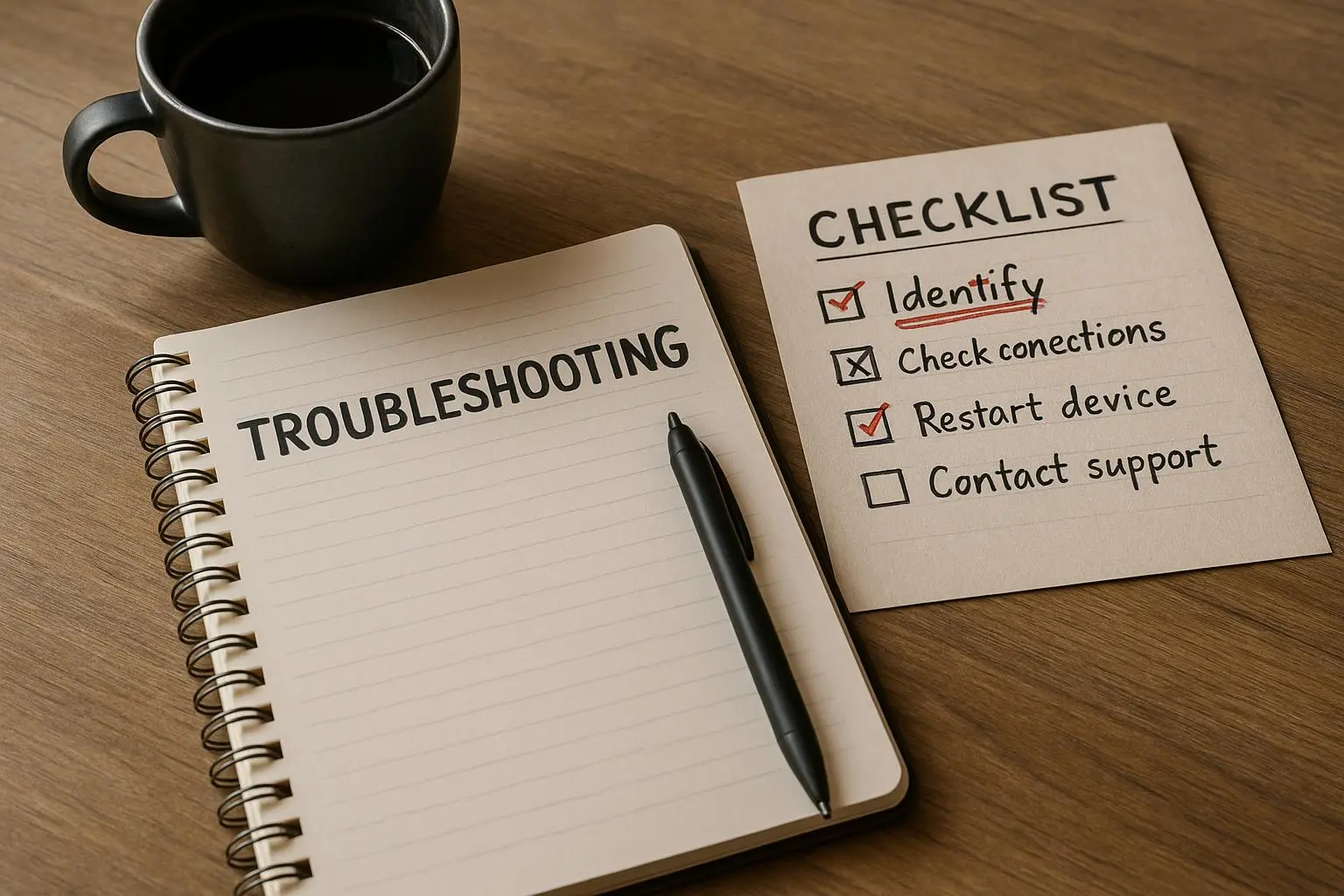
Fast triage checklist (run this now if something's stuck)
- Is the on-chain releaseTimestamp <= current block.timestamp? Call it directly.
- Is your UI relying on a subgraph or database? Confirm its last processed block.
- Did the last execution tx revert? Pull the tx hash and decode the revert reason.
- Is gas price during execution in the top 95th percentile of recent gas prices?
- Does the release function update state before external calls? (Look for CEI violations)
- Are there external deps (oracle, external contract) in the critical path? Ping them.
If any of these checks fail, pause user-facing notifications and publish a single, clear status message: what happened, what you're doing, and an ETA.
Quick-correct scripts and patterns
Convert ambiguous durations to seconds at initialization:
- durationSeconds = inputDays _ 24 _ 60 * 60
- require(durationSeconds >= MIN_GRACE && durationSeconds <= MAX_GRACE)
UI pattern: always show both "UI estimate" and "Contract truth" with timestamps and block numbers. Example text:
- "UI: unlocks Oct 30 — Contract: unlocks Oct 31 (source: contract.releaseTimestamp)"
Execution retry pattern:
- On execution failure, emit ExecutionFailed(proposalId, reason)
- Keeper listens and retries with incrementGas(gas * 1.2) up to N times
Re-entrancy safe release:
- isReleased = true;
- emit Released(account);
- safeTransfer(account, amount);
These are simple, but they reduce a lot of pain.
Testing strategy: beyond the happy path
- Boundary tests: claim at t=release-1, t=release, t=release+1.
- Network fork tests: run the execution step on a mainnet fork with simulated high gas prices.
- Malicious mocks: write contracts that try to re-enter on external calls.
- Indexer lag simulation: intentionally delay subgraph processing and ensure UI warns users.
If you use continuous integration, include a nightly "release simulation" that runs through the entire flow on a fork with randomized gas and block times.
Communication plays during an incident
- Post one message: what happened, who’s affected, next steps, ETA. Do not spam with contradictory updates.
- Show receipts: tx hashes, logs, and the contract’s releaseTimestamp.
- Offer remediation: if users were harmed (e.g., locked tokens), explain compensation or migration steps.
People tolerate downtime better than uncertainty.
Final thoughts: design for failure
Grace mechanisms are about safety, but they only help if they're predictable. Build in explicit units, make the on-chain state the truth, design execution for worst-case gas, and never let off-chain services be the only source of actionability.
If you take one thing from this: add a releaseTimestamp getter and wire it into your UI today. It’s the single smallest change that eliminates 50% of the confusion I’ve seen in the wild.