Invisible Commute Calm: Six Low-Visibility Breath Patterns
Apr 8, 2026 • 9 min
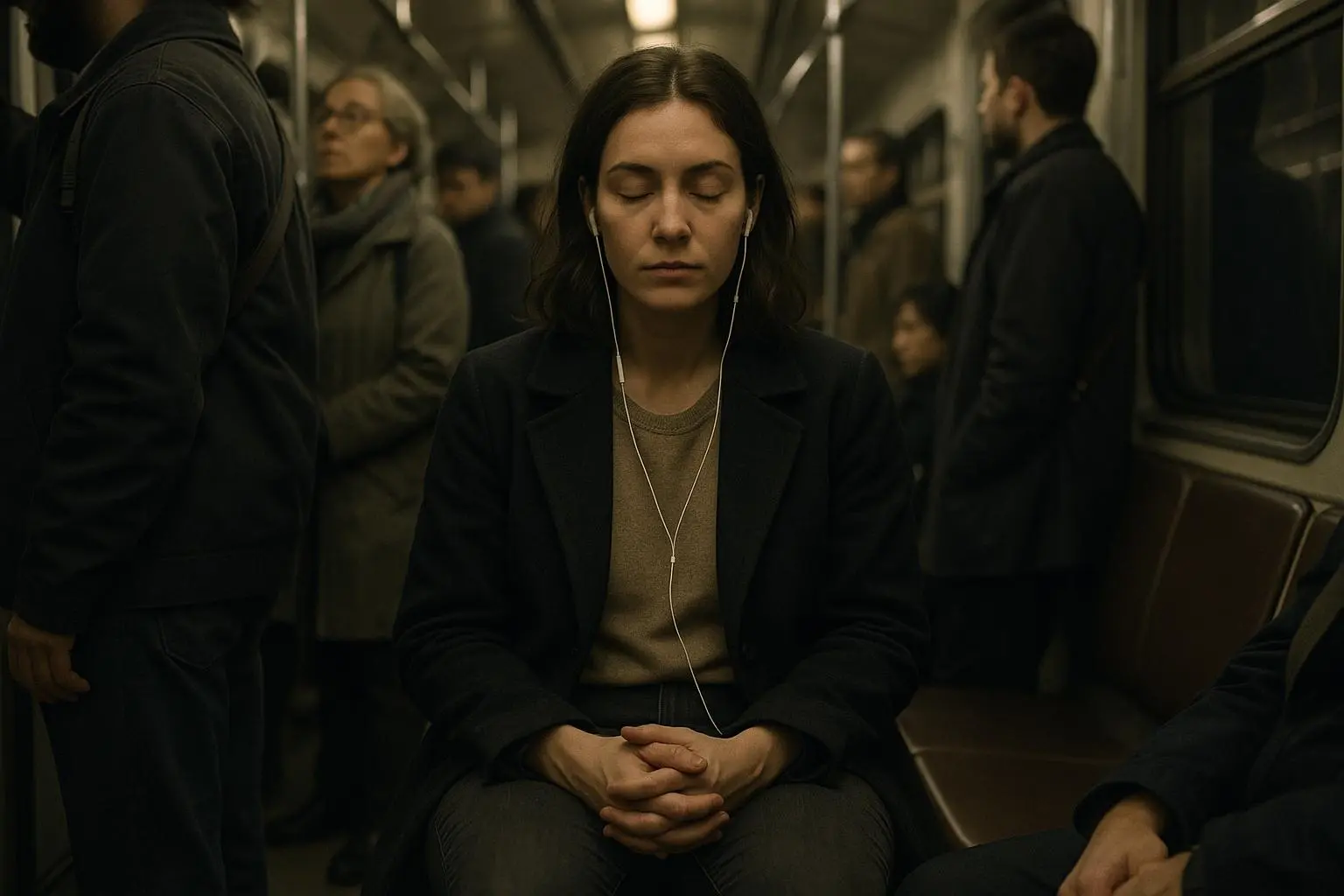
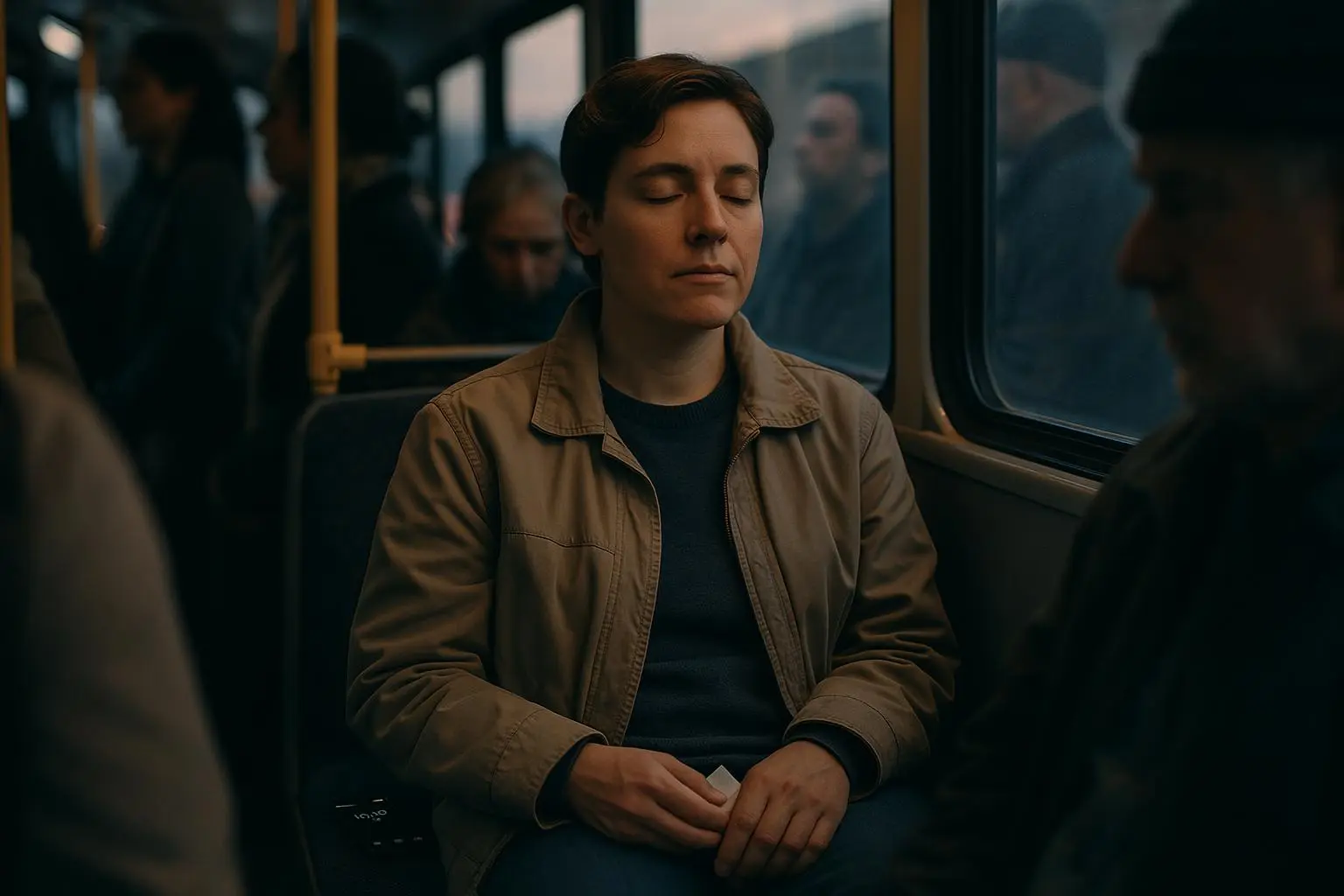
You know that sideways panic—your chest tightens, the car fills up, and the brain starts narrating worst‑case scenarios? I do. I used to skip morning trains because the thought of being boxed in felt like walking into a pressure cooker. Then I started practicing breathing that looked like nothing at all.
This guide teaches six discreet breath patterns you can actually use when people are shoulder-to-shoulder. I’ll give you exact shortened counts, covert anchors (phone tuck, lap hand), tiny mental scripts that snap you out of catastrophic thinking, a printable wallet‑card layout you can recreate in 2 minutes, and a 7‑day graded exposure plan so the techniques stick.
Yes—there’s science behind this. And yes—you’ll still look like you’re scrolling.
Why low‑visibility breathing works
Quick physiology: the exhale is where the parasympathetic nervous system gets poked. Slow, slightly longer exhales increase vagal tone and lower heart rate; you don’t need a full yoga breath to get the effect—small, consistent shifts do the trick[1][2].
But here’s the real barrier: shame and visibility. People stop doing breathing exercises in public because they think they’ll look weird. So I built these patterns around everyday actions that hide the mechanics. The goal isn’t breath purity; it’s reliable nervous‑system downregulation you can do without announcing it.
How to use this guide
- Start with the pattern that feels easiest. You don’t need to master all six at once.
- Pair the breath with the listed covert anchor (or invent your own).
- Use the mental scripts when thoughts start spiraling—they’re micro-cues, not motivational speeches.
- Follow the 7‑day exposure plan to transfer the skill from practice to real commutes.
Now the patterns.
Six low‑visibility breath patterns you can do on a crowded train
I’ve written them with very specific shortened counts. If anything feels like hyperventilation, shorten the exhale and slow down overall. The counts are suggestions—your comfort matters more than adherence.
1) 4‑7‑8 Anchor (Modified)
- Shortened count: Inhale 3 — Hold 5 — Exhale 6.
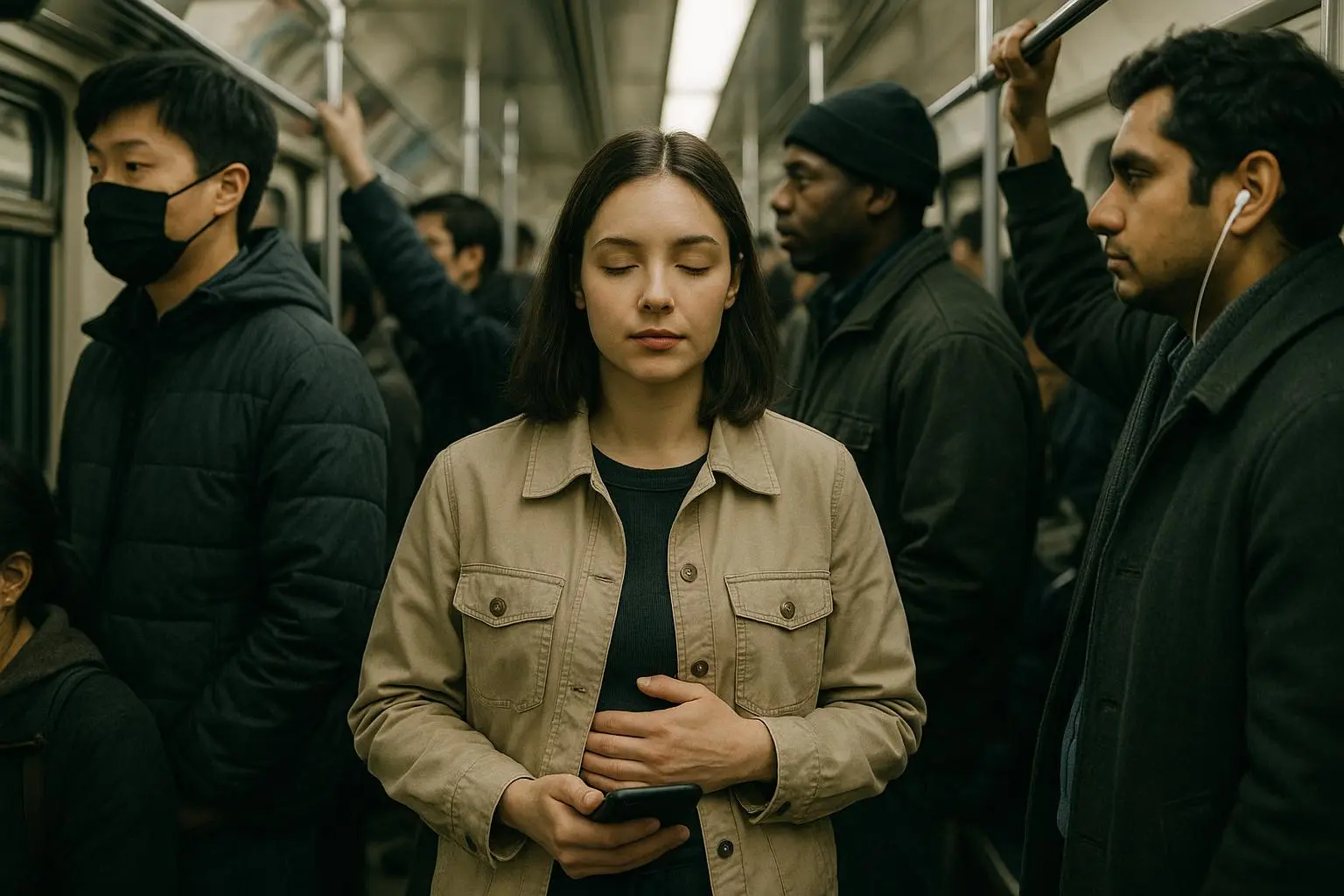
- Covert anchor: The Phone Tuck. Hold your phone in one hand at hip level, elbow tucked. That small pressure at your palm is your anchor.
- Mental script: “Grounded. Temporary. Breath steady.”
- Use when: You’re standing and want something that feels decisive but quiet.
Why it works: the hold gives a pause to interrupt rushing thoughts; the slightly longer exhale nudges vagal tone. Trim counts if the hold makes you lightheaded.
2) Box Breathing Lite
- Shortened count: Inhale 3 — Hold 3 — Exhale 3 — Hold 3.
- Covert anchor: Lap Hand. If seated, rest palms on your lap; subtly clench then relax one finger at each phase to mark rhythm.
- Mental script: “Square. Center. Repeat.”
- Use when: You’re seated or want a rhythmic pattern that’s easy to rehearse in your head.
The rhythm feels structured, which helps the mind stop darting to worst-case scenarios.
3) Exhale Focus (Power Exhale)
- Shortened count: Inhale 2 — Exhale 6.
- Covert anchor: Bag Strap. Hold your bag strap and tighten slightly on the exhale, relax on the inhale.
- Mental script: “Release. Let go.”
- Use when: You need quick downregulation in a bumpy, loud car.
Longer exhales are the main driver here; keep the inhale easy and passive.
4) Shoulder Drop
- Shortened count: Inhale 4 (tense shoulders briefly) — Exhale 4 (drop shoulders).
- Covert anchor: Head/Window Lean. If standing, rest your head lightly against the window or a pole—your shoulder drop looks like adjusting posture.
- Mental script: “Out with tension. In with ease.”
- Use when: You hold tension in neck and shoulders. The visible shoulder drop looks like shifting stance, not breathwork.
This couples breath to a visible relaxation cue—useful if mental scripts alone aren’t enough.
5) Micro‑Pause
- Shortened count: Inhale 2 — Micro‑pause 1 — Exhale 3 — Micro‑pause 1.
- Covert anchor: Tongue Press. Press the tip of your tongue lightly against the back of your front teeth during the micro‑pauses.
- Mental script: “Stop. Reset.”
- Use when: The train is packed tight and you can’t move chest much. The tongue press is internal and invisible.
This is the most stealthy technique. It’s small, but it gives your autonomic system a signal to settle.
6) Hand‑Trace Rhythm
- Shortened count: Inhale 4 — Exhale 4.
- Covert anchor: Phone Edge Trace. While holding a phone, use your thumb to trace the case edge during inhale, trace back on exhale. Looks like idle scrolling.
- Mental script: “Feel the edge. Feel the breath.”
- Use when: You want tactile feedback to distract catastrophic thoughts.
Tactile feedback grounds attention and makes the rhythm easier to maintain.
Tiny aside: a micro‑moment that stuck with me
On a crowded morning, a commuter three people away absentmindedly tapped their shoe in time with the train. That tiny rhythm changed my breathing without anyone noticing. Rhythm is disarming.
What to watch out for (safety notes)
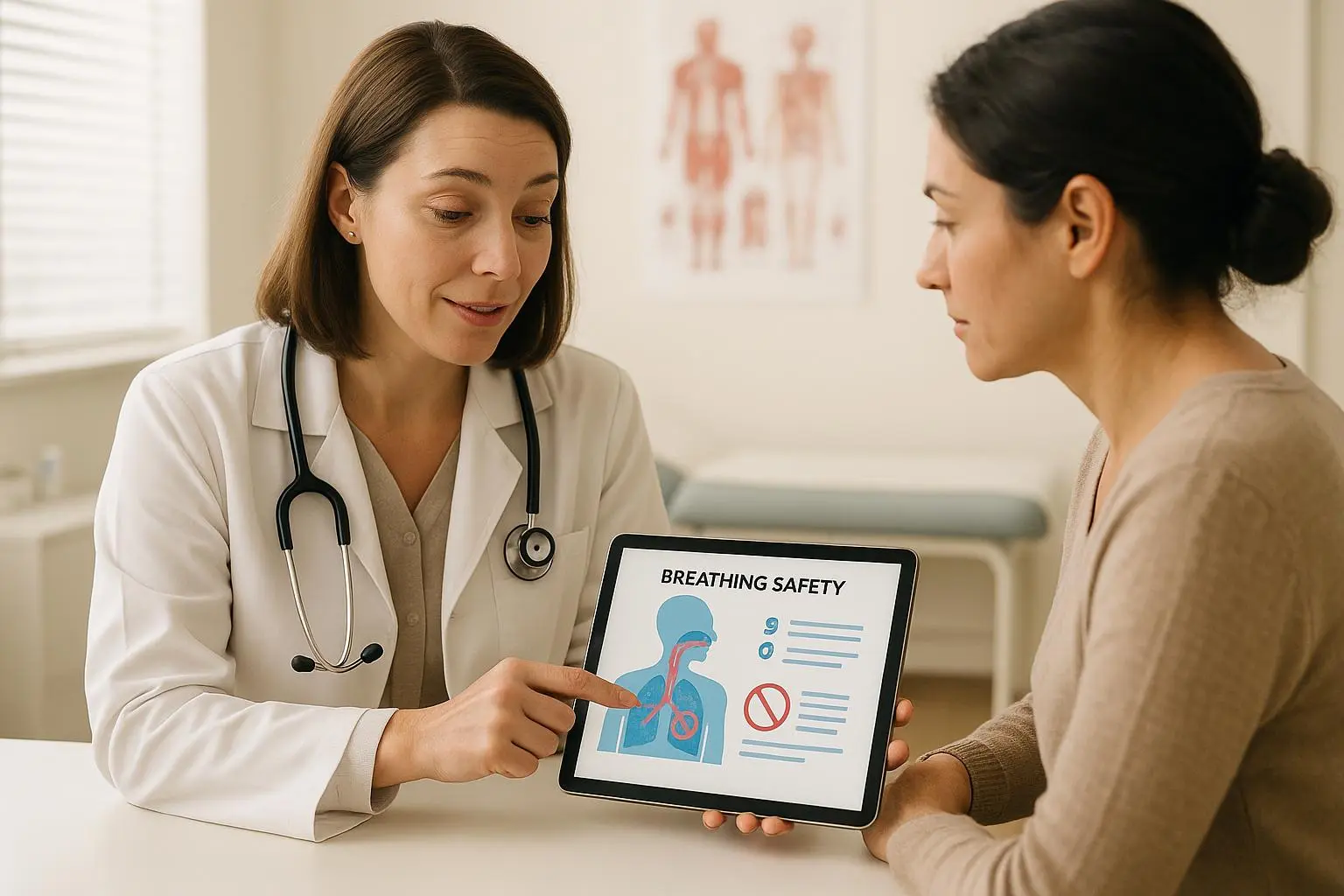
- If you feel lightheaded, slow all counts and breathe through your nose. Shorten holds and shorten exhales temporarily.
- If you have respiratory or cardiac conditions, check with a clinician before trying breath holds.
- These techniques are tools, not cures. If transit panic is frequent or severe, combine this with therapy (CBT, exposure work) or meds as advised by a professional.
Mental scripts: short phrases that stop catastrophic loops
Scripts need to be tiny. They’re not pep talks; they’re cognitive taps that interrupt the “what if” cascade.
Try these:
- “Temporary. I can ride this out.”
- “One breath, one choice.”
- “This is safe enough right now.”
- “Spot the next stop—focus there.”
Keep scripts to five words or fewer. Say them inside your head like a click.
Covert body anchors: make the movement look normal
Anchors turn breath into action so it doesn’t read as “I’m breathing weird.” Common anchors:
- Phone tuck (elbow against side)
- Lap hand (resting, slight finger movement)
- Bag strap grip (adjusting weight)
- Head/window lean (posture shift)
- Phone edge trace (thumb movement)
- Tongue press (totally internal)
Pick the anchor that already appears in your commuting routine. If you always hold your rail, use that.
7‑Day graded exposure plan (practical and realistic)
This borrows from exposure therapy—gradual practice where you go a little further each day.
Day 1 — Quiet room at home: Master one pattern and anchor. 5 minutes total. Day 2 — Short walk near home: Practice while moving. 7 minutes. Day 3 — Bus stop or station bench: Stand in public and practice 5–10 cycles. Day 4 — Off‑peak transit: Sit and use Lap Hand or Hand‑Trace for 10 minutes. Day 5 — Mid‑peak transit: Stand and try Micro‑Pause once every 5–10 minutes. Day 6 — Peak transit (short ride): Use Hand‑Trace or Exhale Focus when crowded. Keep sessions to when you feel manageable. Day 7 — Peak transit (commute time): Cycle through your favorite two patterns as needed.
Tips:
- Keep sessions short. Small wins build trust.
- If a step spikes anxiety too much, pause and repeat the prior day.
- Log one metric: Did anxiety drop by 10–20% on that ride? Track with a simple 0–10 pre/post score.
How I tested this (real story, 140 words)
A few years ago, I forced myself onto a 7:30 AM train I’d been avoiding. I sat and did a practiced Box Breathing Lite—lap hand anchor—while pretending to check emails. Ten minutes in, a wall of people shuffled in; my chest tightened. I switched to Micro‑Pause with the tongue press and whispered script “Stop. Reset.” The panic peak plateaued instead of spiking, and by the time my stop came, my heart rate felt two notches lower. That week I repeated the routine, nudging from off‑peak to peak rides. After seven days, the commute didn’t feel safe, but it felt manageable. The outcome wasn’t dramatic: no vanishing anxiety. It was quieter: two to three fewer minutes of heart-racing, and the urge to exit early disappeared.
Quick printable wallet card layout (recreate in 2 minutes)
Front: Title + your top two patterns (counts + anchor) Back: 7‑day plan + two scripts + emergency mini‑plan (“Get off at next stop if >8/10 anxiety”)
Make it business-card size. Laminate with clear tape if you want durability.
Troubleshooting: what to do if a pattern backfires
- If you feel dizzy: stop, breathe normally, focus on a slower exhale (4 seconds) without holds.
- If mental scripts don’t land: use a stronger sensory anchor (squeeze a stress ball in your bag, chew gum).
- If people notice you: shrug it off. Most people are absorbed in their own world.
When to combine breathwork with other tools
Breathing is fast, portable, and cheap, but it’s not the whole toolkit.
- Headphones + an SOS meditation (Headspace/Calm) help when you can’t use hands.
- CBT thought records and a therapist if panic is recurrent.
- Graded exposure with a clinician for severe agoraphobia.
Apps like Breathwrk have haptic timing that can keep your hands free while you follow a pattern discreetly.
Final note: practice the stealth, not the spectacle
The point is not to execute perfect breath mechanics—it's to consistently dampen the panic response without making the commute awkward. Your first tries will feel clumsy. That’s normal. Practice at home, then on quiet rides, then push the boundary.
Remember: the best breath pattern is the one you actually use.
References
Footnotes
-
Brown, R. P., & Gerbarg, P. L. (2013). Sudarshan Kriya Yogic Breathing in the Treatment of Stress, Anxiety, and Depression: Part I—Neurophysiologic Model. Journal of Alternative and Complementary Medicine. Retrieved from https://doi.org/10.1089/acm.2013.0006 ↩
-
Gerritsen, R. J. S., & Band, G. P. H. (2018). Breath of Life: The Respiratory Vagal Stimulation Model of Contemplative Practice. Frontiers in Human Neuroscience. Retrieved from https://www.frontiersin.org/articles/10.3389/fnhum.2018.00397/full ↩