Microportioning at Home: Use a Kitchen Scale to Cut 10% Calories Without Stress
Mar 9, 2026 • 9 min
If you’ve tried to shrink your pet’s waistline with “a little less food” and ended up with a hungrier, cranky pet, you’re not alone. I’ve been there. I watched my beagle mix, Milo, beg at the same bowl every afternoon, his ribs finally visible only when the sunlight hit him just right. I switched to a kitchen scale, ditching cups and guesses, and watched a quiet, steady shift happen—not in a week, but over a couple of months. That’s when the science of microportioning clicked for me: precise, weight-based feeding beats volume every time.
Here’s the practical, no-drumpf version of how to do this at home. No hype, just the steps I used with Milo and a handful of clients who wanted sustainable results without turning mealtime into a stress test.
A quick moment I’m not going to forget: I pulled Milo’s bowl toward the scale, accidentally knocked the bowl, and watched the scale read a ridiculous 0.0 for a second before I remembered to tare. The alarm of a tiny misstep? It didn’t derail us. It reminded me that accuracy matters, but so does gentleness with your pet’s routine. Now that little moment sits in my memory as a reminder to start with a clean tare and a patient pace.
And a micro-moment before we dive in: I learned to set the scale on a low, stable surface, because the first morning Milo tried to move the whole setup with his wagging tail. That small detail—stabilizing the board, keeping the bowl separate, letting him sniff and settle—made mornings smoother and more predictable for both of us.
Why 10%? Because it’s a safe, doable deficit that doesn’t trigger panic or misery. Veterinary guidance often leans toward gradual changes. A 10% cut is enough to create a deficit, without sending your pet into a survival mode or triggering a grocery-store-binge behavior after a single deconstructed meal.
How this thing actually works, in practical terms
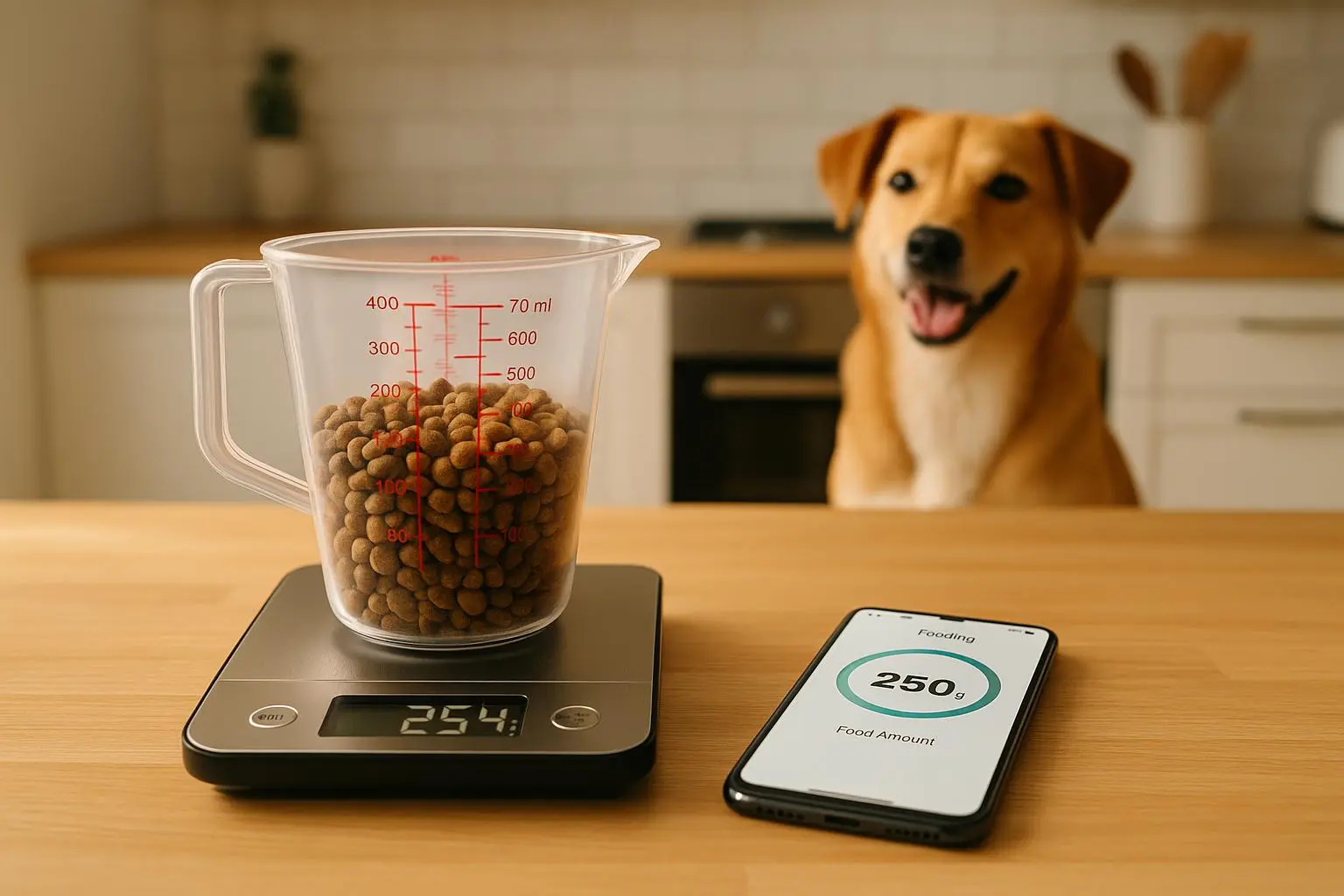
I’m not here to sell you a gadget; I’m here to help you stop guessing. The core tool is simple: a digital kitchen scale that measures in grams (and yes, you’ll tare, not scoop). The recipe below is built to translate that precision into daily routine.
Section 1: Why a scale beats a cup in the long haul
- Consistency across kibble types. Different foods have different densities. A cup of one brand can weigh far more or less than a cup of another. A scale measures true weight, not guesswork. This matters more when you’re shaving off tiny amounts.
- Precision for small adjustments. If your dog eats 200 grams a day, a 10% reduction is 20 grams. A cup can be off by a lot more than 20 grams depending on how you pack it or the kibble size. The scale makes those 20 grams a real target.
- Treats and toppers matter. Those extra nibbles can derail a plan fast. Weigh them separately and subtract from the daily total. The scale helps you keep the total honest.
Section 2: Getting started—pick the right scale and set it up
What to look for in a scale:
- Capacity big enough for days’ worth of food, not just a sprinkle. Think 1–2 pounds minimum (or more, if you’re weighing for larger dogs).
- Readability in grams and ounces. You want quick conversions at a glance.
- A tare function. You place the bowl on the scale, hit tare, and you’re ready to portion.
- Easy cleaning. Removable bowls or flat surfaces wipe down fast after messy meals.
- Reliability. The only thing worse than a pet that’s hungry is a scale that drifts or dies mid-week.
One practical tip I picked up from a mix of owners and veterinarians: pick a scale you won’t mind leaving on the counter for the long haul. If you hide it away, you’ll forget to weigh, and the habit dies before it begins.
Section 3: Step-by-step guide to a 10% reduction
Step 1: Establish the baseline
- Find your current total daily intake in grams. If Milo is on 210 grams per day, that’s your baseline.
Step 2: Calculate the 10% reduction
- Multiply baseline by 0.90. 210 grams × 0.90 = 189 grams. That’s your new daily target.
Step 3: Split into meals
- If you feed once daily, you’re at 189 grams per meal.
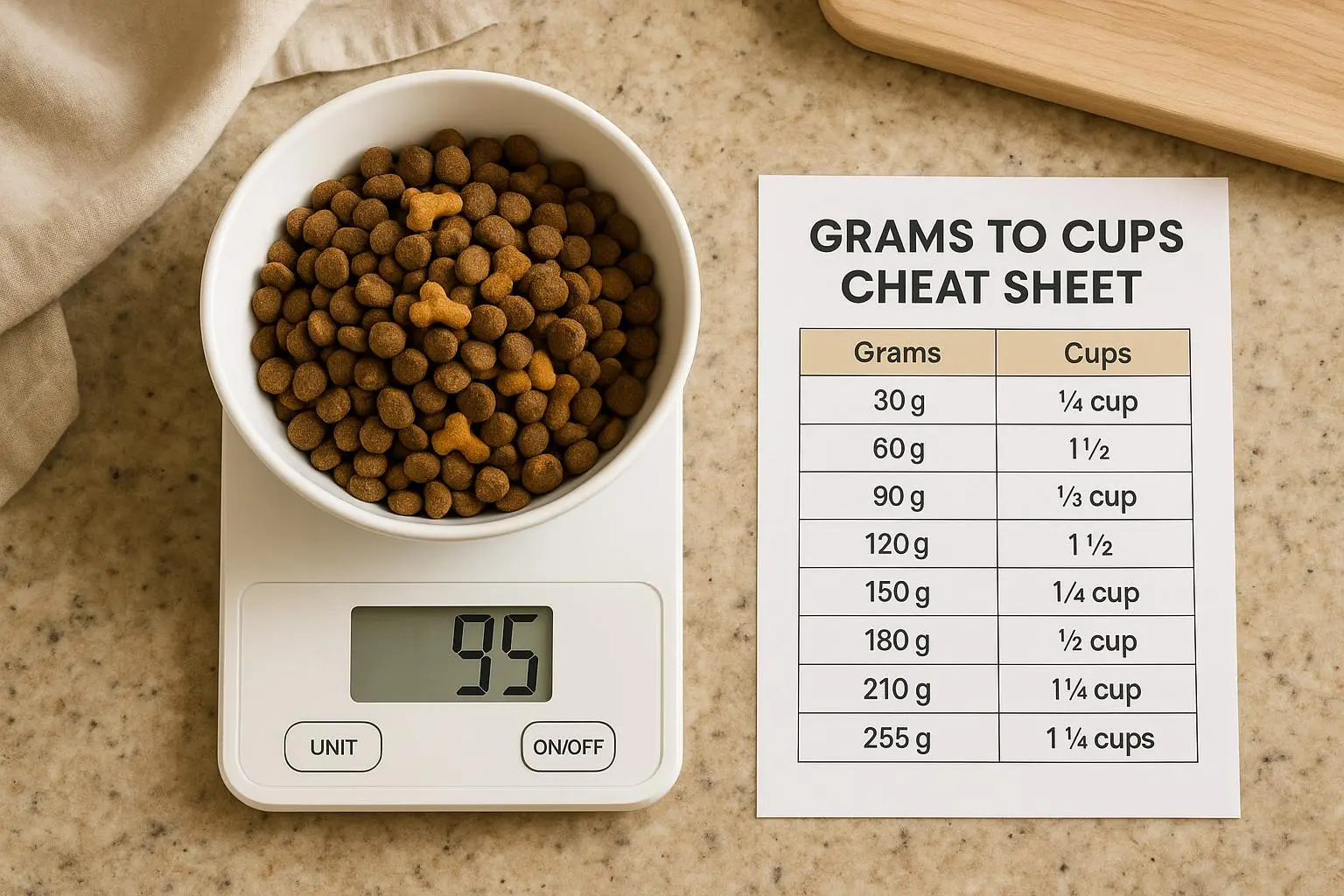
- If you split into two meals, 189 ÷ 2 = 94.5 grams per meal. Round to 94 or 95 grams for practicality.
Step 4: Account for treats and toppers
- Weigh treats separately. If your dog gets 20 grams of treats, subtract that from the kibble target. Your new kibble allowance might be 169 grams (189 − 20 = 169) for the day, divided across meals.
Step 5: Monitor and adjust
- Weigh weekly for the first 4–8 weeks, then monthly. Expect slow, steady changes—most pets lose weight gradually over 8–12 weeks on this approach. If you stall, revisit baseline accuracy, activity, and vet input.
Section 4: A cheatsheet you can actually print and tape to the pantry
Conversion cheatsheet for popular kibbles
- This is not a universal truth; it’s a quick reference, because brands vary.
- The important thing is to use the bag’s stated grams-per-cup or grams-per-serving and compute your baseline from there.
Templates:
- A simple gram-to-cup sticker for your storage bins helps a lot. One line you can print: “Current weight: _ g | Target daily: _ g | 10% less: _ g | Meals: _”
- Keep a small pocket notebook or a note on your phone with the day’s numbers. The human brain loves a quick checkmark.
Daily templates and logs
- A two-column meal plan is enough: Meal 1 grams, Meal 2 grams, Treats/toppers (grams), Total daily grams, Notes.
- The more you log, the more you spot patterns: days with higher activity, days with bigger appetites, days when treats sneak in.
Section 5: Treats and toppers—the hidden calories you must manage
- Treats should be counted as part of the daily total, not in addition to it.
- For training treats, weigh them in batches and divide by the number of treats to get per-treat weight.
- For toppers (like wet food or peanut butter), weigh the topper and subtract its grams from the main kibble total.
A practical example
- Baseline: 200 g per day
- 10% cut: 180 g per day
- Treats: 15 g
- New kibble amount: 165 g per day
- If you feed twice daily: 82.5 g per meal (round to 83 g)
Field notes from real owners
- A Reddit user named KibbleKing reported a big wake-up call: their “scoop” was actually about 1.8 cups, not 1.5, and the extra 0.3 cups a day added up to hundreds of extra calories weekly. The scale finally gave them a true number to work with.
- Another owner, HappyPawsOwner, found that a scale made a 10% cut painless and steady, helping their cat stop begging and reach the target weight in four months.
- A cautionary tale from BusyMomofTwo highlights the time cost: in a rush, the scoop seems faster. The trade-off is friction—bags labeled with gram guidance would help a lot.
- If you worry about reliability, ScaleSkeptic’s note about drift is real. Invest in a scale that isn’t a throwaway.
Section 6: Practical tools and resources that actually help
- Printable gram-to-cup conversion stickers for your containers. These let you see the math at a glance, reducing daily friction.
- A simple log you can keep on the fridge or in a notes app. The habit grows with you.
- Apps and devices that support weight management for pets (see linked tools in research references). They won’t replace your scale, but they can keep you honest and motivated.
Section 7: Troubleshooting common challenges
- The kibble settles in storage, causing inconsistent portions
- Solution: Stir before scooping, then weigh. Settling can make a visually identical scoop weigh different amounts.
- Your pet seems hungrier on a reduced portion
- Solution: Spread meals across more frequent, smaller portions. If hunger persists after 1–2 weeks, check with your vet.
- Weighing equipment is finicky or drains batteries
- Solution: Use a scale with a reliable battery option; replace batteries regularly. A cheap scale that drifts defeats precision.
- Mixed diets (kibble + toppers) make math feel heavy
- Solution: Weigh the topper separately, then subtract from the day’s total. If it’s too complicated, simplify toppers or choose a consistent topper you can measure easily.
The bottom line
Microportioning isn’t about starving your pet or turning every meal into a calculation session. It’s about gaining control with a small, precise change. A 10% calorie reduction, tracked with a kitchen scale, creates a sustainable deficit that supports weight loss and long-term health without turning mealtime into a battleground.
When you do this, you’re not just cutting calories. You’re building a habit that honors your pet’s needs and your sanity. You’re choosing repeatable precision over heroic efforts. And you’re giving your pet a better chance at a longer, healthier life—one gram at a time.