Onboarding That Converts: Welcome Sequences for Paid Members
Feb 25, 2026 • 9 min
You know the feeling: someone buys your membership, you celebrate internally, and then... silence. No login, no profile photo, no event attendance. They didn't churn because your content sucked. They churned because they never knew what to do next.
Here's how to fix that. Practical steps, email copy you can paste, a real onboarding week you can run on day one, plus a community checklist and retention triggers that actually help people, not guilt-trip them into staying.
Why most onboarding fails (and what actually matters)
Most programs throw everything at new members and hope something sticks. That creates cognitive overload. Members open one email, see ten links, and close it. Decision paralysis is a retention killer.
What matters instead:
- A clear first action in the first 24 hours
- A fast, tangible win inside 72 hours
- A real human or community connection within the first week
- Ongoing, helpful nudges that solve problems—not guilt them
I learned this the hard way. Years ago I helped launch a paid community for indie makers. Our sign-ups looked great, but three weeks in we saw 40% inactivity. We switched to a “one win, one connection” model: ask them to complete one profile field and join a 20-minute intro hangout. In two months, time-to-first-action dropped from 6 days to 18 hours and our 90-day retention improved by 22%. Clear, immediate value beats feature dumps every time.
Micro-moment: I still remember the first profile we nudged—just a one-line “What I’m building” field. Someone wrote “a calendar app for tired product managers.” That one line led to a collab and a paid referral. Small actions unlock surprisingly big outcomes.
The five-phase onboarding framework (short and usable)
Think of onboarding like a short funnel with five stages:
- Sign-up — first touch, confirmation, set tone
- Kick-off — guide to one important action
- Education — short content that teaches usage
- Adoption — nudges toward regular habits
- Retention — celebrate wins, ask for feedback, prepare renewals
Each stage has one measurable goal. Sign-up goal: sign-in within 24 hours. Kick-off goal: complete profile or setup. Education goal: consume a foundational resource. Adoption goal: perform a repeatable action (post, attend, use). Retention goal: renewal intent or satisfaction score above target.
The first 7 days: the money period
Your onboarding should be planned around the first week. Here’s a tactical day-by-day that I recommend—you can adapt to a SaaS product, content membership, or community.
Day 0 (immediate after payment)
- Trigger: Payment confirmation + welcome email (see template below)
- Goal: Make them feel seen and give one clear next step
Day 1
- Trigger: Welcome email with “first win” link
- Goal: Member does one simple thing (complete profile, access welcome guide)
Day 3
- Trigger: Deliver the Quick Win resource (checklist, template, video)
- Goal: Member experiences value before they’ve invested time
Day 5
- Trigger: Invite to an orientation or community event
- Goal: Member has one social touchpoint—buddy intro, breakout room, or small-group session
Day 7
- Trigger: Check-in + suggested next steps based on their behavior
- Goal: Solidify habit: sign up for next event or set a calendar reminder for recurring usage
Keep messages short. One primary CTA per email. Secondary resources are optional links, not demands.
Email templates you can use (copy-paste ready)
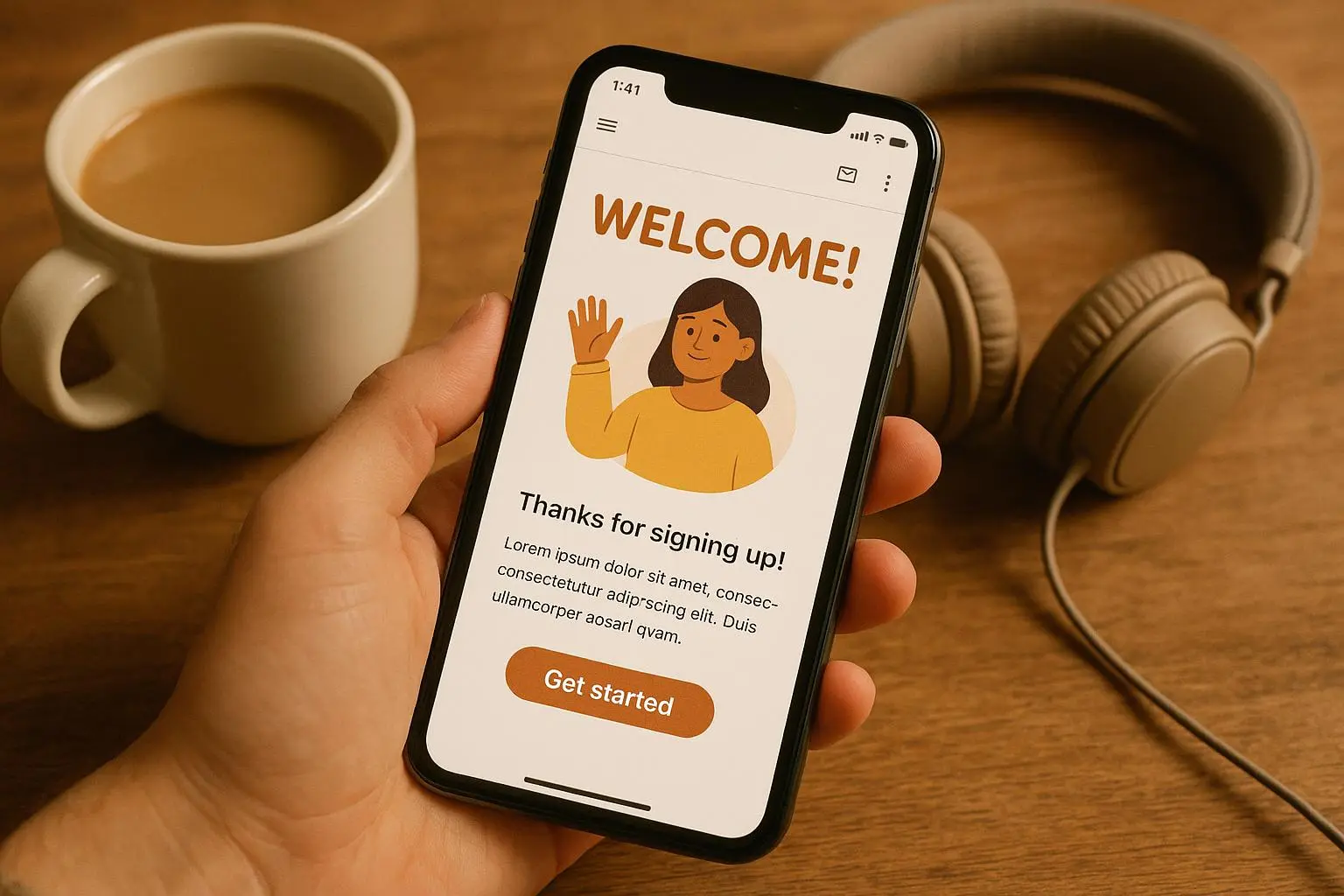
Welcome Email — Send right away Subject: Your [Membership Name] access is ready — here’s what to do first Hi [First Name], Thanks for joining [Membership Name]. I’m genuinely glad you’re here. Do one thing now: Complete your profile so we can introduce you to the right people — [Complete profile link] If you want a fast win, open “Getting Started” → [Link to guide]. It takes 7 minutes and gets you set up. If anything’s unclear, reply to this email. I read every message. — [Your name], [role]. Photo + Calendly link (optional)
Value Delivery — Day 3 Subject: Your exclusive starter kit: get a quick win Hi [First Name], Here’s the resource members tell us most often “saved them hours”: [Resource Title — link] Why it matters: it helps you [specific outcome]. If you try it, tell me one thing that changed for you. Tip: Bookmark this for quick reference. Warmly, [Your name]
Community Invitation — Day 5 Subject: Meet three people who can help with X Hi [First Name], People join [Membership Name] for the network. This week we’re doing small-group sessions on [topic] — you’ll meet peers and an expert. RSVP here: [event link] If you prefer, reply and I’ll introduce you to one member with shared interests. See you there, [Your name]
Each email is short, human, and single-minded. That’s intentional.
Quick wins to deliver in the first 72 hours
Deliver something they can use immediately. Examples:
- A one-page checklist that sets up a baseline (e.g., “Your first 3 actions to see results”)
- A template that does real work for them (email template, campaign scaffold, one-pager)
- A 5–8 minute video walkthrough that shows the core benefit
- A tool or plug-in that unlocks one feature
Measure time-to-first-win (TFFW). If TFFW > 72 hours, your sequence needs pruning.
Community orientation checklist (use at your next webinar)
Before orientation
- Send agenda and speaker bios 48 hours before
- Include Zoom/Discord links and simple instructions for joining
During orientation (30–45 minutes)
- 0–5 min: Warm welcome from leadership (human, <5 minutes)
- 5–15 min: What success looks like here (real member outcomes)
- 15–25 min: Two short member stories (concrete results)
- 25–35 min: Speed networking in breakout rooms (3–4 people)
- 35–45 min: Live resource walkthrough + next steps
After orientation
- Send recording + “first three next steps” email
- Introduce new members to a buddy or micro-group
- Add them to a focused channel or thread per interest
The goal: no one should leave orientation thinking “now what?” Clear next steps are the antidote.
Personalization that doesn’t cost the earth
You don’t need a full-time personalization engineer to make onboarding feel human. Do this first:
- Segment by persona at sign-up (beginner vs advanced)
- Use conditional email paths: did they click X? Send related Y
- Track a couple of signals: opened welcome, attended orientation, downloaded resource
- Automate small human touches: if they didn’t attend orientation, send a recorded clip and a personal note offering a 10-minute call
Tools like ActiveCampaign, ConvertKit, Intercom, or Mixpanel make this straightforward. Don’t attempt hyper-personalization until you’ve nailed basic behaviors—watch for the signals that predict retention and focus your automation there.
Retention triggers that actually help
Nudges should solve problems, not manufacture urgency. Useful triggers:
- 14-day inactivity check-in: “We missed you. Anything blocking you?” Offer a specific help option (schedule a quick call).
- Milestone celebration: “You completed your first course! Here’s a next-step suggestion.” Include social recognition.
- Value-realization nudge: If a member hasn’t used your most valuable resource, explain why it matters in concrete terms and show exactly where to click.
- Early renewal outreach: Start 60 days before renewal with impact summary (events, resources used, connections made) rather than last-minute discounts.
- Feedback loop: Short pulse surveys after key events; follow up on suggestions with visible changes.
These raise lifetime value because they remove friction—not because they guilt people into staying.
What to measure (and what to ignore)
Measure the things that predict long-term retention, not vanity metrics.
Track:
- Time to first meaningful action (TFFW)
- Percentage who attend orientation in first 14 days
- Resource utilization (which items are actually used)
- Community participation (posts, replies, DMs)
- Renewal rate and NPS or CSAT at renewal time
Ignore raw email open rates as your north star. They’re signals, not outcomes. Correlate opens and clicks to actual behavior. If you see high opens but low TFFW, the content isn’t translating to action.
A short story: a small change with a big lift
We ran a split test in a niche coaching membership. Version A was a long welcome email with five suggested actions and links. Version B had a single action: schedule a 20-minute onboarding call or click “I’ll skip this” (two options only).
Result: Version B doubled the percent of members who completed a meaningful action in 48 hours (from 28% to 56%). The 90-day retention moved up 14% in the B cohort. The coaching call itself was often five minutes—mostly to point them to the most relevant resource—but that five minutes removed choice paralysis.
Lesson: Give people permission to skip. Offer a single, useful path and a clearly labeled opt-out. You’ll get more people down the path that matters.
Common mistakes to avoid
- Overloading the first email with everything you offer
- Making the orientation optional without giving a clear reason to attend
- Treating personalization like a buzzword instead of a behavior-driven plan
- Starting renewal conversations too late
- Using urgency language when you can deliver tangible value
Fix these and you’ll shave churn off the top of your funnel.
Tools and quick stack suggestions
If you want a lean, practical stack:
- Email automation: ConvertKit or ActiveCampaign
- In-app messaging / product tours: Intercom
- Analytics: Mixpanel for behavior tracking
- Community: Slack or Discord (Slack if you need professional look; Discord for lower friction)
- Quick videos: Loom
Integrate them, but don’t over-automate human touches. The best onboarding mixes automation with a few real human moments.
How to start improving tomorrow
- Measure your time-to-first-action.
- Rewrite your welcome email to include one clear CTA.
- Build a 5–8 minute “first win” resource and put it behind that CTA.
- Schedule a weekly 30-minute orientation and force an intro path to it for new members.
- Set up a 14-day inactivity trigger that offers specific help.
Small, focused changes compound. You don’t need a full rewrite—pick one bottleneck and fix it.
Final thought: be a guide, not a gatekeeper
Onboarding should be about clearing paths, not building hurdles. When you give members a fast win, a clear next step, and one human connection in their first week, they’re far more likely to stay, participate, and tell their friends.
Go implement one of these today—make the first action obvious, and then watch how many people follow it.