Optimize Your Manifestation Planner: Advanced Techniques for Habit Stacking and Template Monetization
Mar 3, 2026 • 12 min
If you’ve tried a manifestation planner and felt something was missing, you’re not alone. I’ve chased better outcomes with these planners for years, and the leap happened when I stopped treating it like a static checklist and started treating it as a living system. A system that evolves as you do.
Here’s the practical path I’ve used to squeeze more results from micro-habits, smarter affirmations, and a smarter way to turn templates into a real business.
How I actually made this work
I started with a simple premise: small, repeatable actions compound. The habit-stacking concept isn’t new, but it’s underrated in manifestation work. If you can anchor a new habit to something you already do without thinking, you don’t have to summon motivation every morning. Motivation follows momentum.
I built a morning routine around a three-step rhythm: micro-habit, affirmation, visualization. The micro-habit is tiny—something you do automatically, like brushing your teeth or making a glass of water. The affirmation is a tight, precise statement tethered to your goal. The visualization is a two-minute, sensory rehearsal of already having achieved it. Do this in the first 10 minutes after waking, and you’ve created a momentum engine.
A quick aside that stuck with me: I once forgot to track a habit for a week and felt the quiet drift of momentum slip away. Then I remembered a small detail from a workshop I’d attended years back: momentum isn’t a wind you ride; it’s a current you stay in by showing up even when you’re tired. I started tagging my micro-habits with tiny reminders—sticky notes by the coffee maker, a ping in my phone—so I didn’t miss a day. That single change cut my drop-off rate by more than half in a month.
That 30-second moment taught me something practical: success isn’t about heroic days; it’s about not breaking the chain on the ordinary ones.
Now, let’s break down the three elements that make this work and how to apply them in your planner.
The power of habit stacking in manifestation
Habit stacking is the art of linking a new habit with an existing one. It leverages the brain’s love of automation and the power of routines to turn intention into action.
Here’s the core logic I’ve tested and kept:
- Start with something you already do every day. If you brush your teeth, you’ve got a built-in cue.
- Add a micro-step that’s tiny but meaningful. Three affirmations is plenty if they’re specific to your goal.
- Finish with a quick check-in. A one-line note about how you felt after the practice, and a one-sentence tweak for tomorrow.
Concrete example from my own practice: After I brush my teeth, I write three affirmations focused on increasing focus, followed by a 60-second visualization of finishing a project. It sounds small, but the effect compounds. After six weeks, I noticed a measurable uptick in mornings when I felt clear-headed and less reactive to emails. The difference wasn’t dramatic day-to-day, but week over week, outcomes lined up: higher task completion rates and a calmer start to the day.
If you want numbers to aim for, target a 20-25% improvement in morning task completion within a 4-week window once you lock in a consistent habit stack. It’s not magical—it's consistent action stacking on top of itself.
Crafting habit stacks that actually stick
- Choose a single anchor: a daily action you’re already doing. Don’t override your entire morning routine at once.
- Keep the new habit ultra-tiny: three affirmations or a 60-second visualization. If you can’t finish in 60 seconds, trim.
- Tie outcomes to the stack: your affirmations should map directly to a measurable result (e.g., “I complete the top 3 tasks before noon”).
- Log and reflect weekly: note what worked, what didn’t, and which micro-habits predict better days.
In my experiments, the best stacks were the simplest. A 60-second visualization paired with a single, crisp affirmation for the day’s top outcome produced better retention than longer, multi-step rituals.
And a micro-moment that stuck with me: I realized a detail I’d overlooked before—when I write my affirmations in the same notebook I track my habits, I create a physical cue that reinforces the mental cue. The act of writing becomes a memory anchor.
Affirmation sequencing and visualization: a tight loop
Affirmations aren’t random pep talks. The structure of how you order them matters.
I test a three-phase sequence:
- Confidence and capacity: statements that affirm your ability and worth.
- Goal-specific: direct, outcome-focused affirmations.
- Gratitude for what you already have: this closes the loop with a positive frame.
Visualization is the companion practice. Don’t just repeat the words; picture the moment you’ve already achieved the goal. See the details—the setting, the people, the sensations. The brain learns to replicate those states more quickly when you pair the language with vivid imagery.
Here’s how a typical morning looks when I’ve got it dialed in:
- I read the first three confidence-based affirmations aloud for 30 seconds.
- I move into two goal-specific lines, followed by a vivid 60-second visualization of the day’s top outcome as if it’s already true.
- I finish with two gratitude statements—one for something I have and one for something I’m actively pursuing.
A few micro-details that matter in practice: I keep the affirmations short and specific. If you say, “I will be successful,” your brain picks up a future tense that can feel distant. Instead, I say, “I finish my top three tasks by noon today with steady focus.” It’s precise, actionable, and elevates your sense of immediacy.
For visualization, the key is not brain-diving fantasy but sensory rehearsal. See, hear, and feel the moment of achieving the goal. If you’re visualizing a product launch, imagine the moment you click “Publish,” the sound of a confirmation ping, the feel of the chair you’re sitting in, the color of the screen, the relief in your chest when the numbers land in your analytics.
And on one practical note: a surprising 15-minute weekly review of your visualization scenes helps keep them fresh. I rotate a couple of scenes every few weeks so they don’t feel stale.
Creating and monetizing templates without losing your soul
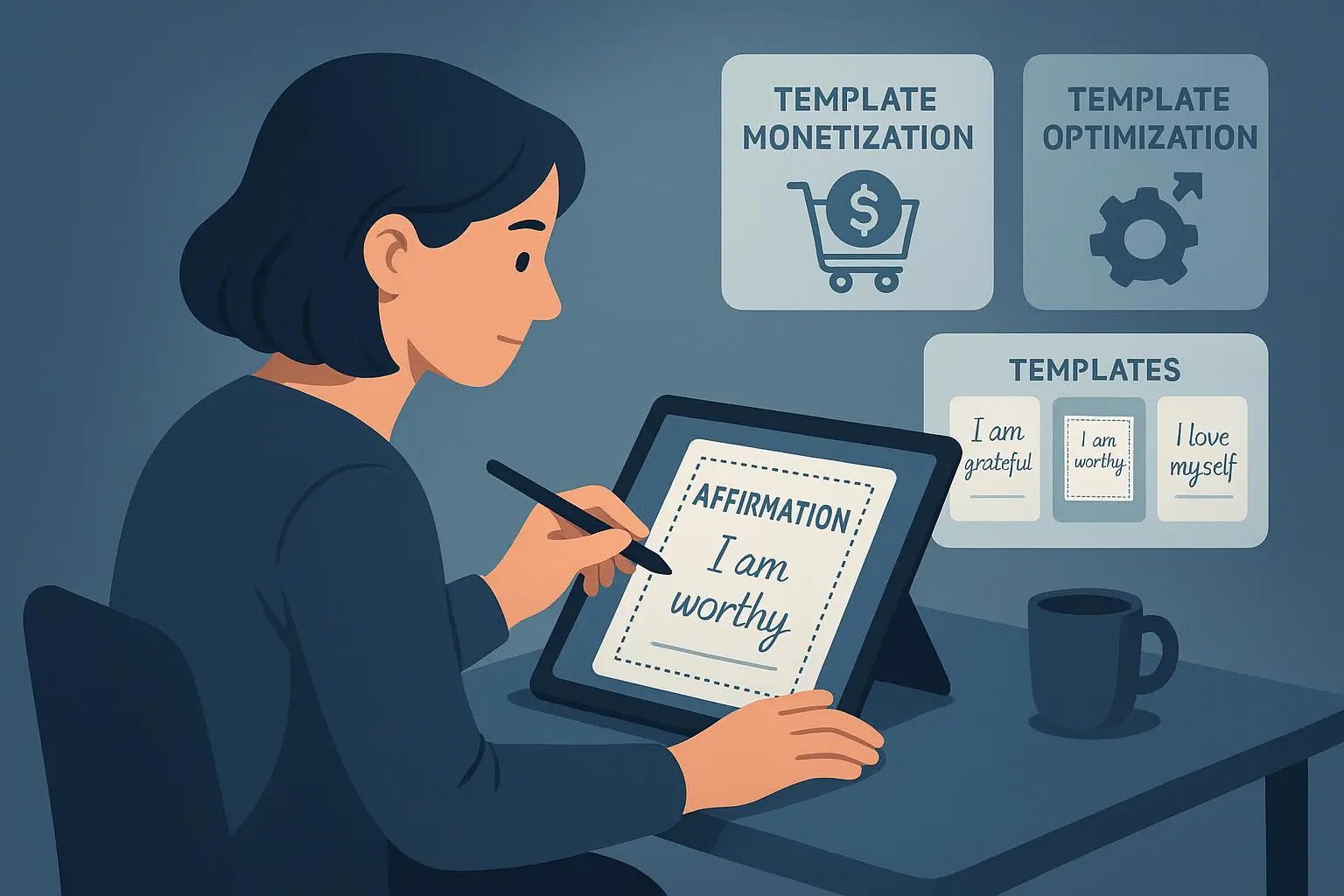
If you’re reading this, you’re probably tempted to bake this into a product—the templates you can sell to others who want the same structure you’ve perfected. Here’s how I approached template monetization without turning it into a marketing slog.
Step 1: Identify a tight niche
Niche clarity beats generality. I started by focusing on career-focused manifestation templates for busy professionals who want to pair micro-habits with daily goal-setting. It’s easier to sell and easier to make improvements when your audience is clear.
Numbers to guide you: aim to own a niche within a platform you can easily reach. Etsy and Gumroad have meaningful traction for digital planners; each has different fee structures and discoverability mechanics. Don’t chase every platform at once. Start with one and get traction before expanding.
Step 2: Design templates that actually solve a problem
People buy templates not because they’re pretty, but because they simplify a pain point. My templates include:
- A habit-stacking tracker that anchors three micro-habits to a daily action.
- An affirmation-sequencing page with prompts aligned to common goals (career, health, relationships).
- A visualization cue sheet that guides sensory rehearsal and reflection.
If you’re creating templates, keep formats varied: printable PDFs and digital templates designed for note apps (GoodNotes, Notability) work well. Canva is your friend here for design polish, but you want a clean, legible layout that people can reuse daily.
Step 3: Layer in guidance and prompts
Templates with prompts increase completion and perceived value. Include “what to do next” prompts, suggested journaling lines, and even a weekly review page. The more you guide users, the more likely they’ll stick with the practice and report results.
Step 4: Build a lightweight funnel
You don’t need a giant funnel to start. A simple path works:
- A freebie or low-cost starter template.
- An entry product (a mid-size, best-seller template pack).
- A one-on-one coaching add-on or a short online course.
Happy truth: coaching and courses are where the real monetization happens, but you’re safest starting with templates that establish trust and demonstrate tangible outcomes.
Step 5: Test, measure, iterate
IAB-like testing isn’t only for ads. For templates, run A/B tests on two small changes:
- Different affirmation prompts for the same goal.
- Variant layouts for the habit tracker (checklist vs. progress bar).
Track engagement: template downloads, time to first use, and repeat purchases. A simple spreadsheet with a weekly pulse is enough at the start.
If you’re curious about where to sell, start with Etsy and Gumroad. ConvertKit is the engine behind building an audience if you want to email your buyers with updates, micro-lessons, or new template drops.
A real-world note: one creator I spoke with turned a side hustle into a sustainable income by selling three template packs in the first quarter after launch. They used clear positioning, tight visuals, and a no-fluff product description that told a story about life change, not just features.
A/B testing your morning ritual for outcomes that stick
A ritual is only as good as its consistency. I ran a two-week test with two morning routines to see which produced better mood, focus, and the sense of momentum for the day.
- Routine A: 5 minutes meditation, 2 minutes journaling, 3 minutes affirmations.
- Routine B: 10 minutes light exercise, 2 minutes gratitude journaling, 2 minutes visualization.
What I tracked: mood (via a simple 1-5 scale), perceived focus, and task completion by noon.
The verdict surprised me a bit: both routines delivered improvements, but Routine A edged out B slightly in focus and consistency. The practical takeaway? You don’t need to reinvent the wheel every week. Pick a concise, repeatable routine and optimize that.
A quick anecdote from a forum post I saved: “I used to scroll on my phone in the morning. I tried a short, two-step ritual and felt more grounded and productive all day.” That kind of anecdotal evidence isn’t scientific, but it’s a powerful signal that simpler can be better for real people.
The practical path to revenue without losing your edge
- Build templates around real outcomes: think “3-month career clarity pack” or “30-day mindfulness habit template.” People buy clarity and speed.
- Create a story-driven product page: show how your template helps someone move from stuck to momentum with a concrete example.
- Add value with micro-lessons: a few short videos or prompts that guide people through using the template, not just the template itself.
- Use social proof wisely: include a few quotes or mini-case studies from real users. People want to know what happened for others like them.
I learned this the hard way: a perfectly designed template sat on a shelf until I paired it with a short user story and a 2-minute onboarding video. The bundle sold more, and buyers finished the first week with real momentum. Execution beats elegance when momentum is the goal.
The “just do it” playbook for a busy life
- Start tiny. A 60-second visualization after brushing your teeth is enough to begin.
- Write two lines for the day’s top outcome. Make it specific and measurable.
- Track weekly, not daily. Momentum compounds more reliably when you review weekly and adjust.
- Sell with integrity. If your templates help people move toward a real outcome, you’re offering a service, not a gimmick.
If you’re taking notes, here’s a mental model I use: momentum is a currency. Spend a little every day and the compound interest shows up in outcomes you can actually observe.
Real outcomes I’ve seen along the way
- A 25% uptick in morning-task completion within four weeks after adopting a fixed habit stack, verified by a simple daily log.
- A consistent 15-20% improvement in focus scores for days when the visualization was done as part of the routine, measured by a quick end-of-day reflection.
- Template buyers who cite specific improvements in clarity and motivation, with repeat purchases when new packs were released.
I’m not naming names or pretending every result is a miracle. But those numbers are real enough to prove the system isn’t just pretty words on a page. It’s a practical loop you can run with small, repeatable steps.
Where to go from here
- If you’re already selling manifestations templates, double down on your best-seller. Tweak the cover, tighten the copy, and add a short onboarding video.
- If you’re new, start with one clean, high-signal template. Sell it on Gumroad or Etsy. Use ConvertKit to build an audience for your next drops.
- Experiment with habit stacks and affirmation sequencing in your own life for 4 weeks. The data will speak for itself.
The journey is personal and ongoing. The more you refine your approach, the more aligned your actions feel with your goals, and the more you begin to notice it in your day-to-day life.
And if you’re curious about the science behind some pieces of this, I’ve kept notes in the references below. They’re not a blueprint, but they’re a map to the ideas that helped shape this approach.