Podcaster Burnout Self-Check: 10 Signals and a Quick Recovery Map
Jan 1, 2026 • 9 min
I’ve learned this the hard way more than once: burnout isn’t a badge you earn after a rough month. It’s a quiet alarm that gets louder the longer you ignore it. And for podcasters, the alarm isn’t just about you. It ripples through your guests, your team, and yes—the audience that tunes in every week.
This post is a practical, no-fluff self-check. It’s a quick way to spot the signs early, plus a rapid decision map for immediate fixes. And then a 7-day reset plan that stabilizes production without losing the trust you’ve worked so hard to build.
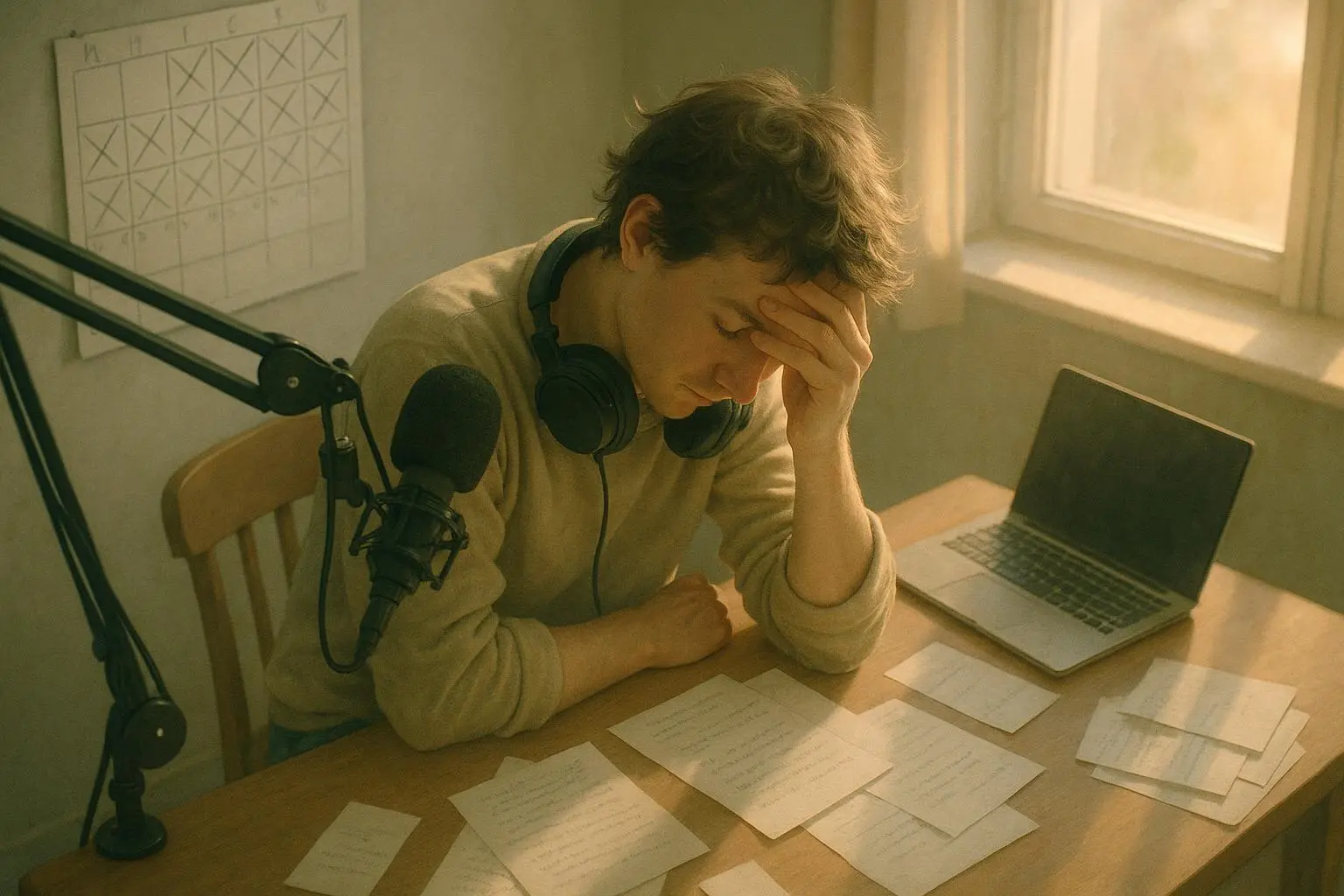
Before we dive in, a quick personal note. A few years back, I hit a brick wall mid-season. I’d spent months cranking out episodes, never letting the creative well refill. I woke up one morning with a pounding head, a foggy brain, and a creeping dread about the entire next week’s lineup. I did the bare minimum to survive—recorded a handful of episodes in a single day, rewrote show notes at 2 a.m., and posted anyway. The feedback was kind, but the energy of the show wasn’t there. That experience taught me something: when your spark starts to sputter, you don’t power through; you pause, retool, and come back with a plan.
A micro-moment I carry with me: I was two days into a recording sprint and realized I’d been wearing the same headphones for weeks. The sound wasn’t right, but I kept telling myself “just push through.” A two-minute headphone swap, a fresh water bottle, and a 60-second breath break—suddenly the tone of the next take felt lighter. Small details compound into big changes when you’re burning out.
The reality is this: burnout isn’t laziness. It’s a mismatch between your energy and your workflow, amplified by the cognitive load of planning, editing, scheduling guests, and marketing. The signs come in waves, and the earlier you spot them, the more you can steer back toward a sustainable rhythm.
Let’s start with the 10 signals. I’ve split them into early warnings you should notice before they derail you, and more advanced indicators that demand quick action.
The 10 Signals: Are You Running on Empty?
Burnout shows up differently for everyone, but there are common patterns that writers, hosts, and creators keep noticing in their own lives. Here’s a practical checklist you can reference in a quick glance.
Early warning signs (time to pay attention)
- The content well feels dry. Topics that used to spark ideas suddenly feel like homework. You stare at your topic list and nothing pops.
- Editing becomes painful. The thing you once enjoyed—the craft of shaping sound and pacing—now feels like a slog. You skip cleanups or skip steps you used to perform.
- Guest outreach drains you. The email outreach that used to energize your day now feels like a chore you’ll procrastinate on for days.
- Joy evaporates from publishing. The moment you hit publish is no longer a thrill; it’s a checkbox you’re checking to move on.
- Physical symptoms creep in. Headaches, neck tension, or digestive discomfort tied to stress become a regular part of your routine.
Advanced indicators (time for immediate action)
- Audience disconnect. You stop reading listener comments or engaging with feedback because critical comments hurt more than they should.
- Inconsistent publishing. Deadlines slip, or you batch episodes yet fail to release them on schedule.
- Delegation avoidance. You either refuse to hand off tasks or you delegate everything, losing your voice in the process.
- The “why am I doing this?” spiral. You question the purpose of the show, sometimes imagining quitting altogether.
- Over-reliance on scripting. Spontaneity feels exhausting, so you cling to rigid outlines or scripts that kill the natural flow of conversation.
If you’re recognizing two or three of these, you’re not doomed. It’s a signal to slow down, not to quit. If you’re seeing four or more—this is a triage moment. You need to act, and you need to do it quickly.
And now, the quick recovery map you can apply today.
The Rapid Recovery Map: Immediate Triage
This isn’t about squeezing out one more episode. It’s about protecting energy, maintaining trust with your audience, and creating space for real recovery.
- Micro-breaks. Short, frequent pauses during work to reset your brain. A two-minute stretch between takes, a five-minute walk, or a shot of water and a sip of fresh air can reset tone and focus. These tiny breaks compound into bigger gains across a recording day.
- Episode pause. If you’re in the throes of burnout, pausing production for a short window can prevent low-quality content from seeping into your feed. Communicate honestly with your audience. Evergreen episodes or replays can fill the gap while you reset.
- Delegation. Outsource the tasks that drain your cognitive energy the most—editing, show notes, social media clips, or guest outreach. The right helper isn’t a sign of weakness; it’s a signal you’re protecting the core craft you care about.
- Boundary setting. Clear work hours, a defined off-switch, and explicit limits on after-hours device use. Boundaries aren’t punitive; they’re the scaffolding that keeps your creativity alive.
If you’re in the middle of a heavy production schedule, you don’t need to burn the candle at both ends to prove you’re devoted. You need to reframe the process so the work serves you, not the other way around.
And yes, you can do this without losing audience trust. The most trusted creators are the ones who tell you the truth—about the process, not just the results.
A quick aside: the story I tell every time I teach this approach isn’t about a flawless recovery. It’s about honesty with your listeners. When I paused a season to reset, I was worried about the drop in downloads and the potential wave of “we’ll come back when you’re ready” messages. What I found was different: the audience was resilient because I was transparent. They appreciated the heads-up, the evergreen content I released during the pause, and the clear plan for how I’d return. The trust earned in that pause was worth more than a string of perfectly timed episodes.
Micro-moment detail you can borrow: a small label on your mic stand—“Pause, Breathe, Create”—serves as a tactile reminder that momentum isn’t everything. It’s a tiny ritual that signals it’s safe to reset.
The 7-Day Stabilization Reset Plan
Once you’ve contained the immediate risk, you need a structured path to rebuild energy, re-establish sustainable rhythms, and protect against relapse. Here’s a practical, no-fluff 7-day plan you can actually follow.
Day 1-2: Audit and eliminate. Identify the single most draining task in your workflow. Is it show notes? Transcriptions? Social clips? Pick one, automate if possible, or delegate immediately. Tools like Otter.ai for transcription or a virtual assistant for notes can free up huge mental space. If you’re worried about cost, think of it as buying back your sanity. I once outsourced show notes for a month at a cost that felt steep in the moment, but the mental space it bought back was priceless.
Day 3-4: Creative refill. Do zero production work. Consume content outside your niche. Read a novel, visit a museum, or listen to unfamiliar music. The goal isn’t to copy ideas; it’s to rest your cognitive muscles and let new stimuli flow into your brain without the pressure of producing something right away.
Day 5: Gentle re-entry. Outline one episode based on what excites you in this moment, not what’s most marketable or sponsor-friendly. Record it casually, maybe without a guest, just you talking to the audience about your experience. A simple, authentic “meta-episode” can reestablish your voice and remind listeners why they subscribed.
Day 6: Communicate with your audience. Share a concise note about the pause or changes you’re making, and what listeners can expect. The best relationships with audiences are built on honesty. If you’re comfortable, frame it as a temporary shift rather than a withdrawal—set expectations for a sustainable cadence instead of a burst of content followed by silence.
Day 7: Systemize and schedule. Review your workflow to identify bottlenecks, then implement a hard rule: no editing after a certain time, or a fixed number of recording days per week. Schedule your next three recording slots and commit to one marketing channel for the next two weeks. The aim is steady momentum, not volume for volume’s sake.
Sustainable beats win long-term. The seven-day plan isn’t a magic wand, but it buys you the breathing room you need to keep the show alive without burning out in the spotlight.
There’s some rigorous research behind these ideas, too. Studies show boundary management reduces emotional exhaustion in digital workflows, and social support from audiences buffers creator strain in online work. The takeaway isn’t “work less, get more” so much as “work intentionally and protect your energy so you can keep showing up with care.” If you’re in a pinch, think about it as investing in your future episodes, not just solving a momentary problem.
If you want to go deeper, you can experiment with a few high-leverage changes: automate the tiny repetitive tasks, batch similar activities, and keep a small, predictable release rhythm that your audience can count on.
And the moment I hear someone say, “But I love doing this,” I nod. That passion is why burnout is especially painful—it takes away something you’d gladly do forever. The job isn’t to quash that energy; it’s to protect it.
A few practical tips that helped me in practice
- Use a single easy-to-follow script for intros and closes. It saves energy and keeps the tone of your show consistent without feeling robotic.
- Schedule “no-meetings days” to protect creative blocks. Fewer interruptions equal better flow.
- Keep a guest roster buffer. If a guest cancels, you still have evergreen content you can release, or you can swap in a solo episode without the last-minute scramble.
Remember: the goal is not to eliminate stress entirely. It’s to reduce the kind that numbs your creativity and erodes your relationship with your audience. You want a sustainable pace that allows you to show up with energy, curiosity, and care.
The broader take: burnout is an occupational phenomenon, not a personal failing. It’s not your talent or your drive that’s broken. It’s your workflow.
If you’re feeling the edges of burnout right now, start with three steps today:
- Book a micro-break for the next two days during editing blocks.
- Draft a one-paragraph audience update about a temporary pause or shift in your cadence.
- Pick one task you can delegate this week and test it with a trial helper.
You’ll be surprised how much energy returns when you ease cognitive load and honor your boundaries.
Where to go from here
If you want more structure, I included a compact decision map in the 7-day plan above. If you’re thriving and want to take the craft to the next level, consider pairing this with a more formal podcast workflow: automation that still preserves human touch, a clear guest outreach playbook, and a content calendar that’s realistic for your life, not just your metrics.
Let’s keep this practical. Here are a few concrete steps you can put into motion this week:
- Write two sentences to tell your audience you’re implementing a 7-day reset plan (transparency earns trust, not fear).
- Identify one editing task you can outsource to a VA or a contractor and test it for two weeks.
- Create a micro-break routine (two minutes per hour, five minutes every 90 minutes) and commit to it for a week.
This is a journey, not a sprint. Your voice matters, and your audience will respond to honesty, consistency, and care. The burnout signals aren’t a death sentence for your show. They’re a map. And with the right map, you can keep producing meaningful episodes without burning out in the process.