Tethering Tactically: Gentle Supervision to Prevent Accidents
Feb 23, 2026 • 9 min
If you’ve ever come home to a chewed-up shoe, a puddle in the bedroom, or a puppy that panics in a crate, you know management matters more than motivation. Tethering—done right—is a low-stress, practical alternative to crating that keeps your pup close, safe, and learning.
This isn't about tying a dog to a tree for hours. This is tactical, evidence-backed supervision: the leash anchored in a safe place while you cook, work, or eat—so you can interrupt problems before they become habits.
Here’s how to set it up safely, when to use it (and when not to), and a step-by-step plan to move your puppy from tethered supervision to earned freedom.
Why tether at all? The behavioral logic
Behavioral science is simple: it's easier to prevent a mistake than to fix the habit it creates. If a puppy can practice counter-surfing or peeing in a corner, they will. Remove the opportunity, and you remove the rehearsal.
When tethered near you, a puppy learns quietly: "When I sniff the floor, human takes me out." You can redirect chewing to a toy, praise a calm down, or take a quick potty break before an accident happens. Over time those small interruptions become the new, correct routine.
AVSAB and canine behavior researchers emphasize supervised socialization and environmental management as foundations for confident, well-adjusted dogs[1][2].
A quick story: what actually happened in my kitchen
When I brought home my second rescue—an overstimulated, 7-month-old terrier mix—crates triggered a full-on panic. He'd freeze, choke on his leash, and whine for hours. I switched to a kitchen tether as a test.
First day: he paced, then settled when I moved around and ignored the whining. I set a 20-minute timer, kept treats within reach, and clicked/tossed a toy when he lay down. After four days he slept through a 30-minute pot of coffee without barking. Two weeks later we had zero accidents in the house.
The result: calmer puppy, fewer panic behaviors, and a household that felt like it could breathe again. It bought me the windows to teach bladder cues and impulse control without traumatizing him.
The tiniest detail that stuck with me
Micro-moment: the click of my kitchen timer became a calm cue. He learned the sound meant “settle now, reward soon.” Tiny, repeatable signals matter.
Safety first: the hardware that won’t fail you
If you skip anything, make it this: never use weak or dangerous gear.
- Use a short, non-retractable leash or lightweight coated cable—4 to 6 feet is a good starting point.
- Attach one end to a well-fitted harness, not a choke or prong collar. Harnesses distribute pressure and reduce injury risk.
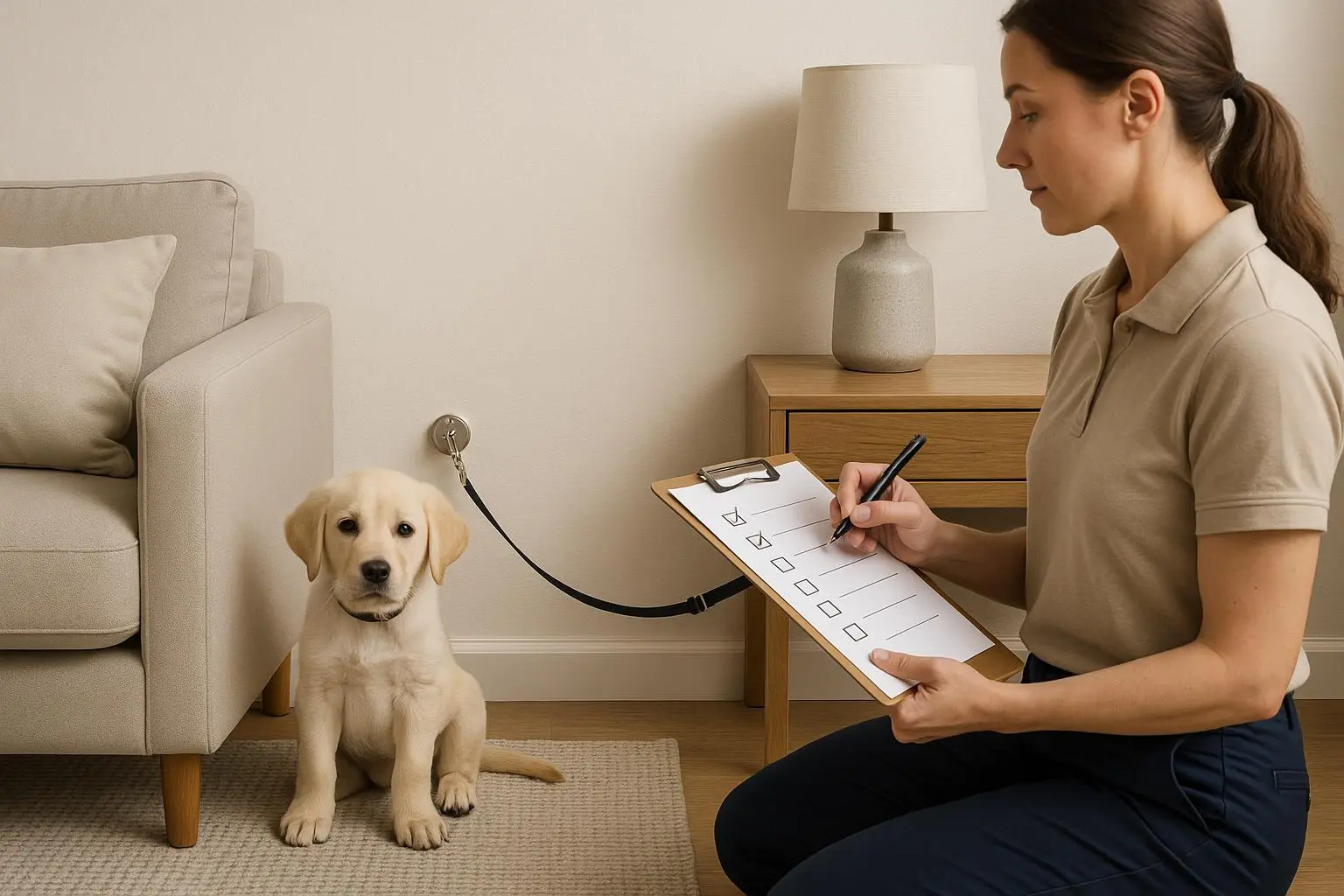
- Anchor to something immovable: a properly installed low eye-bolt in a wall stud, a bolted island, or heavy furniture that won’t tip. Never attach to door handles, light furniture, or anything that can move.
- Add swivels if possible to reduce twisting and tangles.
- Avoid chains, rope that can fray, or anything with sharp edges.
Invest in good hardware. A cheap tether that breaks is worse than no tether at all.
Choosing the right spot
Location is everything. You want proximity, visibility, and no hazards.
- High-traffic rooms where you spend time (kitchen, living room, home office).
- Away from stairs, electrical cords, trash cans, plants, and radiators.
- Avoid tethering on porches, near pools, or in extreme temperatures.
- Remove small objects and anything the puppy could loop around—a leash should never be able to reach a table leg that could cause strangulation.
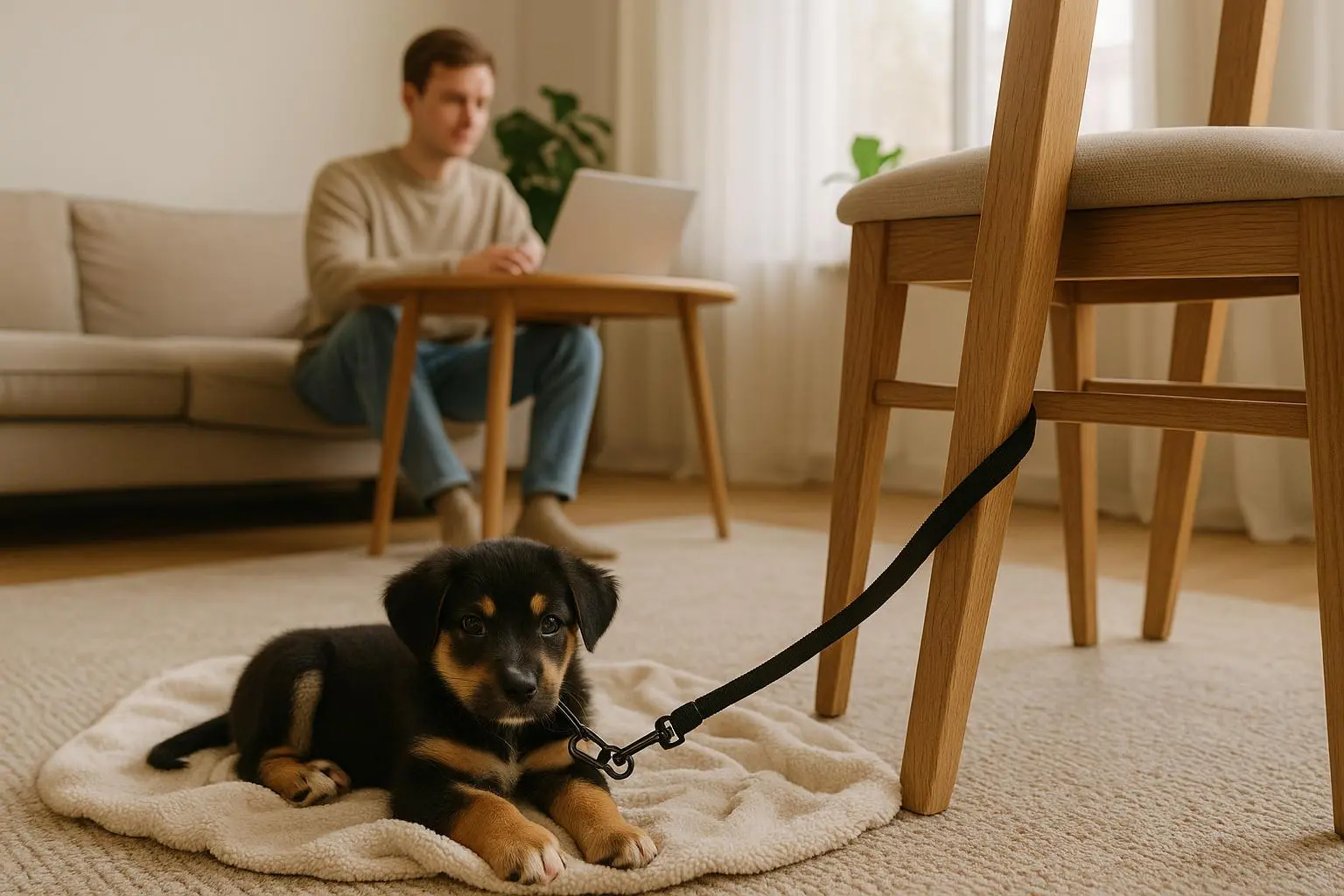
If you work from home, tether to a desk leg you sit at. If you’re cooking, anchor near the kitchen island where you can glance over.
Supervision rules that keep the tether low-stress
Tethering is active management, not a babysitter substitute.
- Never leave a tethered dog unattended. Ever.
- Tether only when you can visually monitor the dog and be within earshot.
- If you need to step away (bathroom, quick errand), either bring the dog with you, place them in an x-pen/crate, or have another adult supervise.
- Teach household members and visitors to follow the script (more on that later): no touching the tethered dog without the lead human’s permission.
- Use a timer. It’s easy to forget 20 minutes becomes an hour.
Remember: the tether exists to prevent rehearsal of bad habits. If you can't supervise, management should be passive (pen, crate).
How long is too long? Duration rules that make sense
Puppy bladder and attention spans guide duration.
- Rule of thumb for bladder control: a puppy can typically hold for 'age in months + 1 hour'. But tethering sessions should be shorter.
- Use the 15–30 minute focused window for most tether sessions. For a sleepy, calm puppy, 45 minutes might be okay. For a high-energy pup, 5–10 minutes can be more realistic.
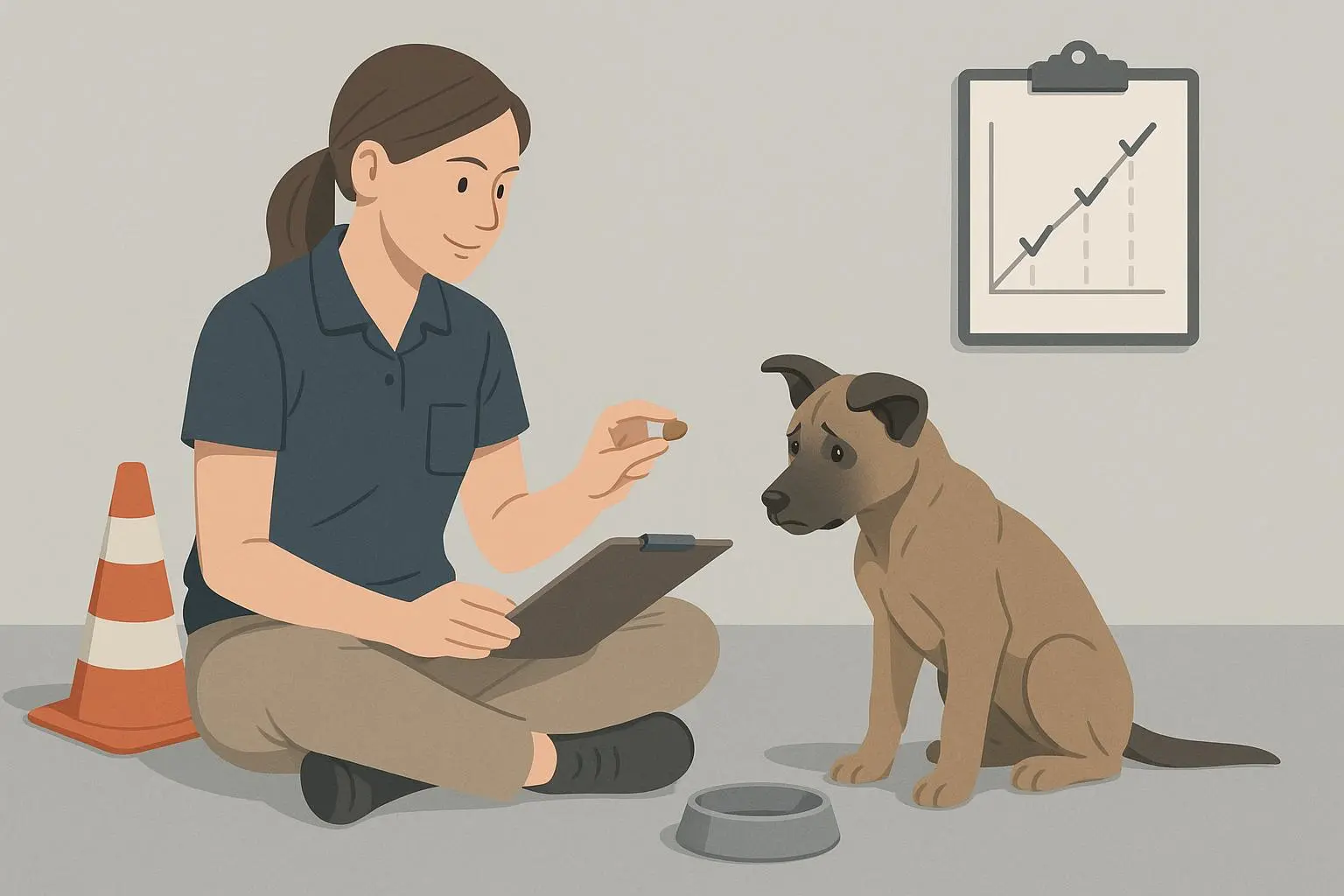
- After a tether session: a potty break, short training (3–5 minutes), and a play/reward. This closes the loop: calm while tethered → reward + break → repeat.
- If the puppy is visibly anxious, barking, or chewing the tether, end the session immediately and switch to an alternate management strategy.
Consistency matters more than marathon tethering.
Step-by-step transition plan: tether to trusted freedom
Goal: freedom earned through consistent success.
Phase 0 — Prep (day 0)
- Puppy-proof the area for untethered sessions.
- Gather tether gear, treats, toys, water.
- Install secure anchor(s).
Phase 1 — Close proximity (weeks 1–3)
- Tether within 3 feet of you for 15–30 minute sessions.
- Reward calmness immediately: treat, short training, or potty break.
- Use a timer and keep sessions predictable.
Phase 2 — Distance and short freedom (weeks 4–6)
- Increase tether length to 6 feet or move the anchor so pup is in the room but not glued to you.
- Introduce 2–5 minutes of unsupervised freedom in a puppy-proofed zone immediately after successful tether sessions.
- If you see success for several days, slowly increase untethered time by 1–2 minutes each day.
Phase 3 — Expand and test (weeks 7+)
- Combine longer untethered periods with mental enrichment and supervised recall.
- Use the tether as a reset: if mistakes happen during freedom, return to tethered sessions for 24–48 hours.
- Gradually phase out tethering as the puppy reliably performs (no accidents, no destructive chewing) during expanded freedom.
Consistency and short, clear wins beat long, inconsistent sessions.
What to do when things go wrong
Tethers tangle, dogs chew, and people forget. Here's how to respond fast.
- If your puppy chews the tether: immediately end the session. Don’t chase or scold—redirect to a toy and resume with a fresh tether later that day.
- If the tether tangles around the puppy: calmly unclip and end the session. Check for injuries.
- If the puppy panics: pick them up (if size/skill allow), place them in a secure pen with a familiar bed, and use a calm voice. Reassess location and gear.
- If you forget and the session runs long: apologize to the puppy—yes, really—then end the session and provide a calm activity. Set stronger boundary checks (alarms, secondary caregiver).
If accidents or safety incidents repeat, stop tethering and consult a trainer or vet.
Scripts to use (so visitors and sitters don’t mess it up)
Say this once and paste it into texts for sitters.
- Visitor script: “Please ignore [Name]. He’s tethered and learning to settle. Don’t pet or look at him until I say he’s calm.”
- Dog walker/sitter script: “When inside, [Name] is tethered to the kitchen island unless actively supervised. Never leave him tethered alone. If you must step away, put him in his pen.”
- Emergency script: “If he starts panicking or the tether tangles, unclip calmly and place him in the pen. Call me immediately.”
Clear, short, and repeated lines reduce confusion and accidental escapes.
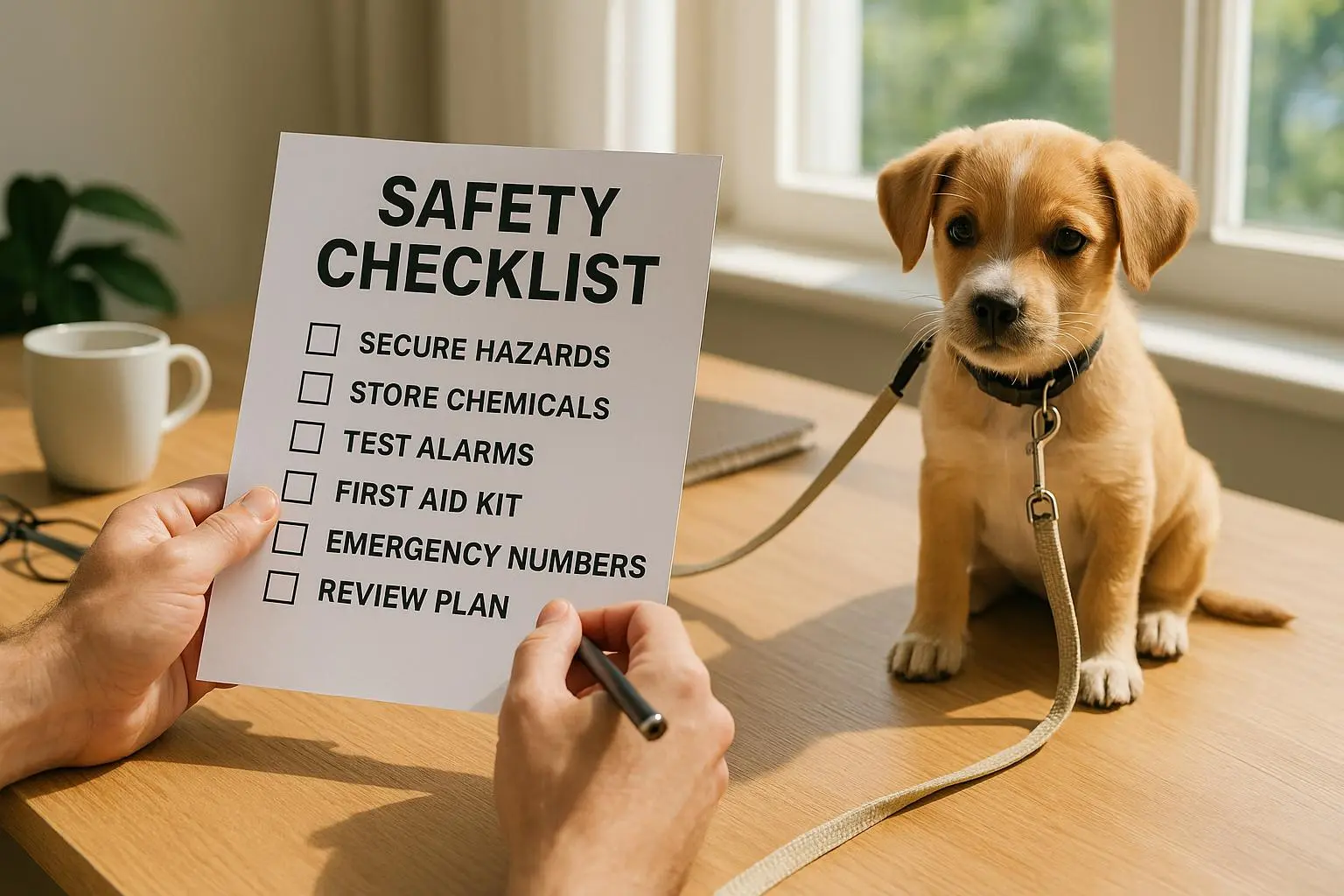
Tethering safety checklist
Print this and put it on the fridge.
- Anchor is immovable and low-mounted
- Leash/hardware in good condition (no frays or weak clips)
- Harness fits comfortably (no choke collars)
- Length appropriate (no reach to hazards)
- Electrical cords, toxic plants, and small objects removed
- Water and shade/shelter available
- Visual supervision available for the entire session
- Timer set for session end
- Visitor/sitter scripts provided
If any box is unchecked, don’t tether.
Breed, age, and personality considerations
Not all pups respond the same.
- High-drive breeds (border collies, huskies) often need intense exercise before tethering; otherwise it becomes a challenge rather than management.
- Very anxious dogs may panic when tethered. Start with the harness and short sessions, or skip tethering in favor of a pen.
- Older rescues with leash reactivity need a careful, gradual introduction—start with the leash in a quiet room, reward heavily for calm.
- Large-breed puppies need sturdier anchors and hardware rated for their strength.
Adjust duration and expectations based on the dog, not the idealized plan.
Tools that make tethering easier
- A good harness (escape-proof, padded)
- Solid leash or coated cable with swivels
- Low-mounted eye-bolt installed into a stud
- Timer or phone alarms
- Camera/Wi‑Fi monitor for quick visual checks during short absences
- X-pen for backup management
I use a simple kitchen timer and a low eye-bolt. The hardware cost was under $50; the improvement in behavior was priceless.
When you absolutely shouldn’t tether
- Never tether as punishment.
- Don’t tether when you can’t supervise.
- Avoid tethering in extreme weather or near hazards.
- If tethering increases stress, separation-related behaviors, or aggression—stop and consult a behaviorist.
Tethering is a tool. Tools can harm if misused.
Final thought: tethering as a bridge, not a home
Tethering buys you teaching moments. It keeps the dog close enough to learn household rules and to get immediate feedback. But the goal is always freedom earned by reliable behavior.
Use short sessions, reliable hardware, clear communication, and a plan to phase out. If you commit to supervision—set timers, communicate with household members, and follow the checklist—you’ll prevent accidents, reduce stress, and build better habits faster than leaving a puppy to figure things out alone.
References
Footnotes
-
American Veterinary Society of Animal Behavior (AVSAB). (2021). Position Statement on Puppy Socialization. Retrieved from https://avsab.org/wp-content/uploads/2021/08/Puppy_Socialization_Position_Statement_Download-1.pdf ↩
-
Patterson, R. M., & Jones, S. L. (2021). The Role of Environmental Management in Early Canine Behavioral Development. Canine Behavior Institute. Retrieved from https://www.caninebehaviorinstitute.org/management-report-2021 ↩