The Invisible Anchor: How to Use Emotions as Reliable Micro-Triggers (Without Getting Hijacked)
Jun 13, 2026 • 9 min
We’ve all felt it. A wave of boredom that ends with doomscrolling. A spark of relief after a tough task that slides us into mindless scrolling anyway. A pinch of curiosity that leads to a rabbit hole of “one more thing.” Emotions are loud, slippery, and incredibly persuasive. They can pull us toward good habits or yank us into bad ones in the blink of an eye.
This post is about turning those invisible cues into reliable anchors for tiny, sustainable actions. Think 60–120 seconds, not hours. Think with intention, not willpower. And yes, ethically—so we’re deploying the brain’s natural cues for positive change, not abusing them.
I’ll show you how I learned to identify emotional micro-triggers, test them, and design 60-second habits that feel natural. I’ll share a 7-day emotion-capture experiment you can actually run. You’ll get ready-to-use scripts to keep negative moods from hijacking you, failure diagnostics when something doesn’t stick, and replacement chains for common pitfalls like stress-eating, doomscrolling, and avoidance. This is practical for individuals, coaches, and app designers who want mood-aware habit systems that respect the human behind the data.
And yes, there’s a life story in here. I’ll tell you what happened when I first tried this on myself—and what I learned from watching a team struggle with the same patterns in a coaching group. You’ll also get a quick micro-moment about a tiny detail that stuck with me long after the experiment ended.
If you want something actionable you can actually run this week, keep reading. If you’re designing apps or coaching people, you’ll find concrete prompts you can lift and adapt without reinventing the wheel.
And one quick aside before we dive in: the moment that changed how I think about triggers happened on a crowded train. I’d just finished a long presentation and felt a rare mix of relief and jittery energy. Rather than launching into the next meeting or scrolling, I paused, breathed, and wrote down one tiny action: stand up, stretch, and drink water. That 60-second micro-habit became my anchor for the next hour. It didn’t cure the stress, but it redirected it into something simple and repeatable. Tiny winner, big ripple.
Now let’s get practical.
Why emotions are the most powerful—and the trickiest—triggers
Emotions are the hidden scaffolding of our habits. They shape where our attention goes, what we consider possible, and how we measure “done.” That makes them incredibly potent. When a mood hits, your brain is telling you what’s important right now. If you can translate that signal into a tiny, positive action, you’ve got a durable habit that’s anchored in an actual feeling, not just a calendar reminder.
But here’s the catch: emotions are inherently unstable. They rise, peak, fade, and can shift with the weather, a tense meeting, or a surprise email. They don’t care about your to-do list. They care about what your brain is trying to achieve in that moment. If you try to force a big change on a fleeting feeling, you’ll fight an uphill battle. The goal is to meet the emotion where it already exists, and offer a micro-action that makes sense in that moment.
A quiet moment of honesty helps here: most of the bad loops we fall into—doomscrolling, stress-eating, procrastination—start with a mood and an impulse that feel almost automatic. If you can interrupt that impulse with a tiny, positive alternative, the loop starts to bend. That’s the essence of the invisible anchor.
I learned this the hard way. Early in my testing, I treated negative moods as villains to be conquered. I built “willpower drills”—long, heroic attempts to resist temptation. The result? Burnout, more stress, and still some bad habits slipping through the cracks. Then I tried a softer approach: pair the mood with a micro-action that isn’t fighting the emotion but channeling it into something harmless and useful. The shift was nothing flashy, but the outcomes spoke for themselves: more consistency, fewer crashes, and a surprising sense of control.
Here’s the core idea in one sentence: emotions aren’t your enemy; they’re your data. If you map them, test them, and respond with tiny, deliberate actions, they become reliable micro-triggers you can count on.
And yes, a quick truth bomb: this works best when you’re honest about your moods. If you pretend you don’t feel bored or stressed, the micro-habits won’t land. The payoff comes from noticing the feeling, naming it, and then choosing a 60–120 second action that aligns with the feeling’s momentary energy.
One micro-moment that stays with me: on a Sunday afternoon, I felt a creeping boredom that usually spirals into peripheral scrolling. I paused, took three deep breaths, and wrote down one tiny action for five minutes—just a single, achievable task. That small decision changed how the rest of the afternoon unfolded. It wasn’t glamorous, but the effect added up by Monday.
Step 1: Identify your emotional micro-triggers
The first step is to observe, not judge. You’ll map emotional states to the habits you tend to default to in those moments. Start with mild to moderate emotions; the goal is to catch the cue before it becomes a flood.
Common emotional micro-triggers you’ll probably notice:
- Boredom → doomscrolling or mindless snacking
- Stress → reaching for quick comfort (snacks, social media)
- Relief → flipping to the next task without a pause
- Curiosity → chasing a new, often low-value rabbit hole
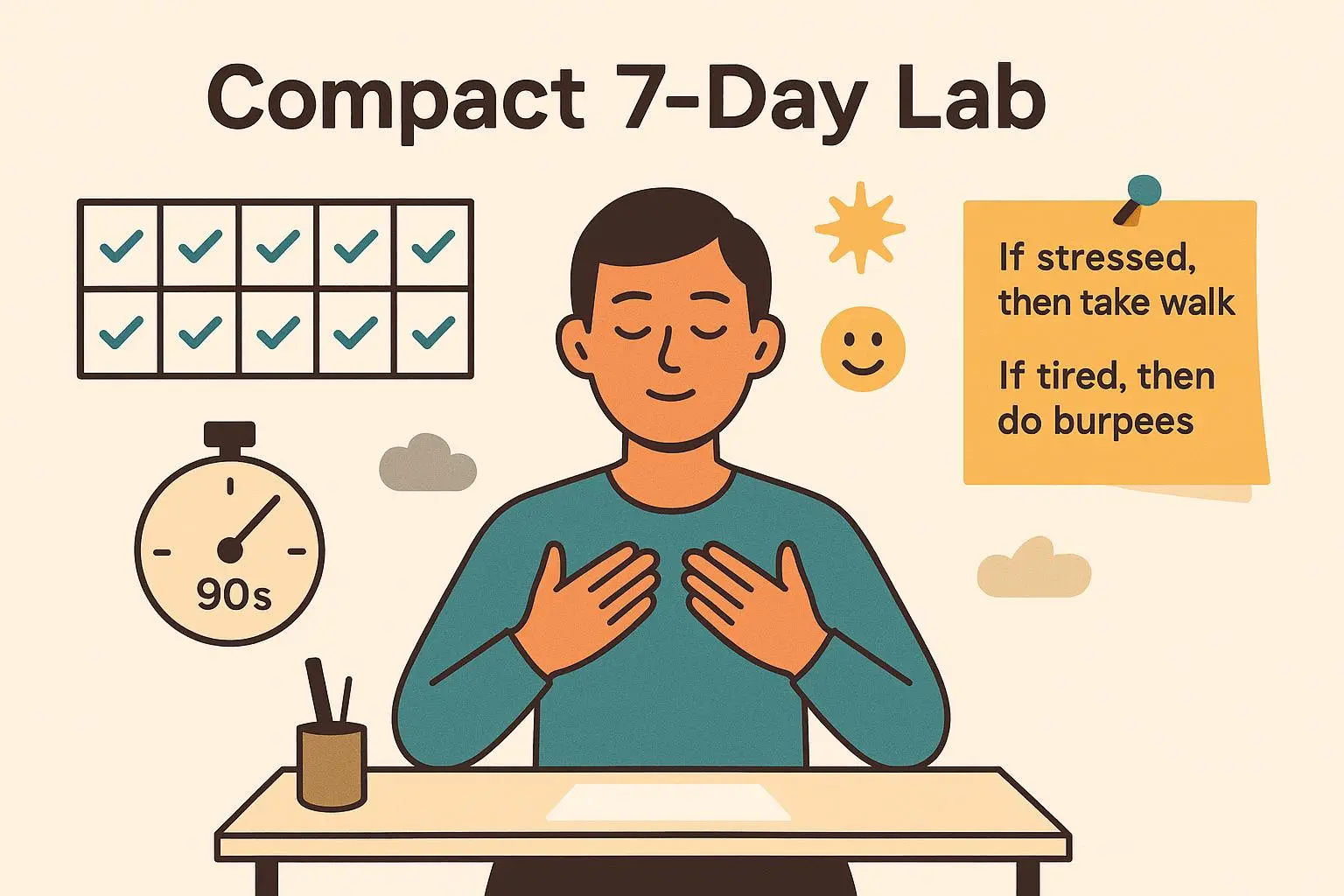
A seven-day emotion-capture experiment is a simple and practical way to start. Here’s a compact version you can actually stick to:
- For a week, keep a tiny log (phone note, notebook, or a notes app).
- Each time you notice a mood shift, jot:
- The emotion (boredom, stress, relief, curiosity, etc.)
- The context (waiting in line, finishing a task, commuting)
- Your immediate impulse (open social feed, check email, stand up)
- The duration (how long the mood lasted)
- At the end of the week, look for patterns. Which moods show up most often? Which impulses are most automatic?
If you’re coaching others, give clients a one-page sheet to track those lines quickly. The key is consistency, not perfection.
A quick, human moment from my own run: I realized I was most vulnerable to doomscrolling not when I was exhausted, but when I felt a mild, nagging sense of “the day isn’t over yet.” That afternoon, simply naming that this was my trigger helped me choose a tiny alternative rather than diving into endless feeds. The habit? A one-question pause: “What’s one tiny step I can take in the next 60 seconds?” The answer was rarely glamorous, but it created momentum.
Step 2: Design micro-habits that match emotional states
Now the fun part: pair the emotion with a tiny, positive action that takes 60–120 seconds. The aim isn’t to “fix” the emotion; it’s to create a new, favorable anchor for your brain to land on.
Guiding principles:
- Keep it under two minutes. The brain loves effortless actions.
- Make it easy to start and finish. The first tiny win matters more than the grand plan.
- Tie it to the emotion in a meaningful way. The action should feel like a natural extension of the mood.
Concrete examples:
- Boredom: If I feel bored, I’ll write down one idea (even if it’s silly). Then I’ll switch to a real task.
- Stress: If I feel stressed, I’ll take three deep breaths and note one controllable action.
- Relief: If I feel relief after finishing something, I’ll send a quick thank-you note or tidy my workspace for 30 seconds.
- Curiosity: If I feel curious, I’ll read one paragraph of a book or article on the topic.
Important nuance: these micro-habits aren’t about erasing the emotion; they’re about creating a competing response that’s safe, quick, and reinforces a constructive pattern.
A behind-the-scenes detail I learned while testing: the best micro-habits aren’t always flashy. Sometimes the best anchor is simply a short, almost ceremonial pause—breathing, naming the emotion, and starting a tiny action. The ritual itself—done consistently—becomes the cue the brain learns to expect.
Step 3: Implement with If-Then plans (implementation intentions)
If-then planning is a cornerstone of reliable habit formation. It creates a predictable bridge from emotion to action.
Template you can copy:
- If I feel [emotion], then I will [micro-habit].
Examples:
- If I feel stressed, then I will take three deep breaths and write down one thing I can control.
- If I feel bored, then I will jot down one idea and then read for two minutes.
- If I feel relief after completing a task, then I will send a quick thank-you note or tidy my desk for 30 seconds.
- If I feel curious, then I will read one paragraph about the topic.
This approach generates a replacement chain: the old impulse is interrupted by a concrete, low-cost action that reinforces a new habit loop.
And a tiny note on language: use language that feels natural to you. If you speak more colloquially, write the plan that way. The brain sticks to the cue when the cue is clear and the response is concrete.
Step 4: Prevent emotional hijacking (ethical design)
Emotions can be weaponized—by ads, by apps, or by our own brain’s shortcuts. The goal is to design safeguards so you’re not exploiting your mood for quick gains that backfire later.
Practical safeguards:
- Script for negative moods: When a mood is negative, pause and ask, “Is this habit helping me, or just numbing me?”
- Failure diagnostics: If the micro-habit doesn’t stick, ask:
- Was the emotion too intense?
- Was the habit too long or too hard?
- Was the cue too vague?
- Replacement chains for common pitfalls:
- Stress-eating: Stress → Pause → 3 deep breaths + water
- Doomscrolling: Boredom/Anxiety → Pause → 1-minute mindful observation
- Avoidance/Procrastination: Mild resistance → Break down first tiny step (30 seconds)
A real-world reflection: negative moods often escalate when the environment reinforces them (a cluttered desk, a phone that’s too easy to grab). I found that cleaning up the immediate space for 30–60 seconds not only reduced cognitive load but also made the 60-second micro-habit more inviting. A tidy space isn’t a cure, but it’s a friend that makes the next tiny action easier to choose.
Step 5: Leverage habit stacking for emotional anchors
Habit stacking means attaching your micro-habit to an existing routine. It makes the anchor less forgettable and increases the odds you’ll actually reach for the new action when the mood hits.
Simple stacking ideas:
- After a meeting that ends with a sigh of relief, send a quick thank-you note.
- Before you start the car, when you notice a trace of anxiety about the day, take three slow breaths.
- After finishing a task, while the relief is fresh, write one sentence of gratitude or tidy the immediate workspace for 30 seconds.
This technique isn’t about “more discipline.” It’s about piggybacking on momentum that already exists in your daily rhythm.
In a coaching setting, I’ve seen clients who naturally stack around morning rituals or commutes. A tiny change at a familiar cue—“after I walk in the door, if I feel stressed, I’ll do a 60-second stretch and drink a glass of water”—can completely reshape an evening routine over weeks.
Practical applications
- For individuals: Use emotional micro-triggers to strengthen resilience, creativity, and self-awareness. The goal is to convert fleeting feelings into reliable actions you can repeat.
- For coaches: Guide clients to identify personal emotional cues and design ethical, micro-level interventions. The emphasis is on sustainable growth, not quick fixes.
- For app designers: Build mood-aware prompts that suggest micro-actions aligned with user-triggered emotions. The focus should be on support, not manipulation.
A quick coaching-case memory: I worked with a client who struggled with late-evening doomscrolling. We mapped evenings’ mild anxiety to a 60-second breathing exercise followed by writing one line about what’s one small, controllable step for tomorrow. The client kept returning to the exercise, even when stressed, because it offered a tiny moment of agency.
A seven-day emotion-capture blueprint you can steal
- Pick a time window you can commit to every day (e.g., after lunch or before bed).
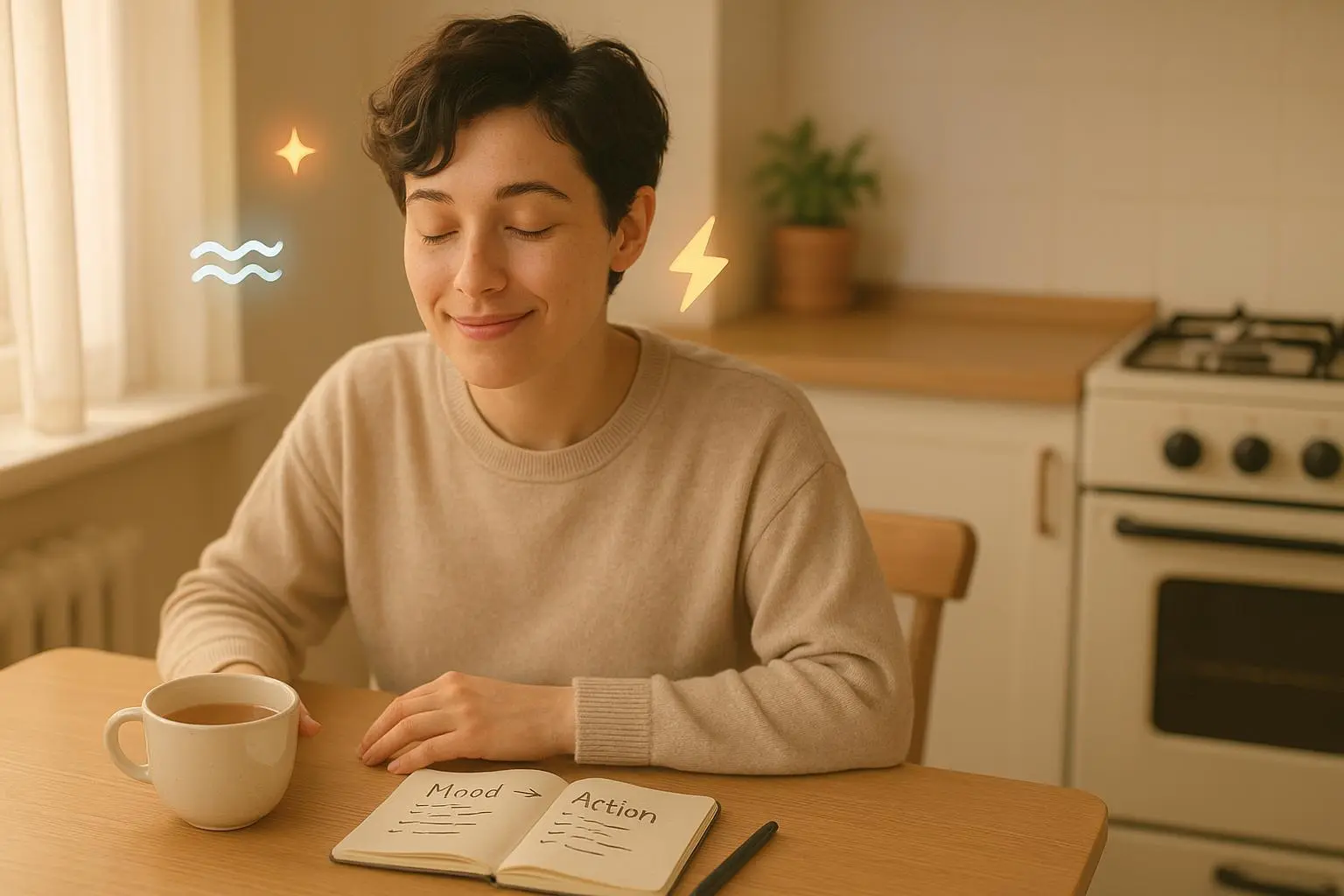
- Keep a tiny log: Emotion, Context, Impulse, Duration.
- At the end of day 7, identify which triggers came up most and which impulses were easiest to redirect.
- Choose 2–3 micro-habits that felt easiest and align them with those triggers.
- Create If-Then plans for those anchors and start a 2-week mini-cycle.
- Add a simple replacement chain for one major pitfall you tend to hit (e.g., stress-eating or doomscrolling).
- Review weekly: what worked, what didn’t, what needed adjustment?
This isn’t a magic trick; it’s a practical technique that compounds. The more you practice, the more automatic it becomes.
Here’s a tiny micro-moment to consider: the difference between a plan and a cue is that a plan has a pause built in. That pause is your friend. It’s a moment where you choose a micro-action on purpose, not on autopilot.
Final thoughts: Emotions as anchors, not bosses
Emotions aren’t the enemy. They’re data about what matters to you in the moment. When you treat them as signals and respond with tiny, deliberate actions, you give your brain something it already trusts: a path of least resistance that leads to progress.
If you’re coaching others or designing products, the ethical edge is essential. Use mood-aware features to support healthier habits, not to exploit vulnerability. The aim is resilience, not manipulation.
A quick reminder from continuous practice: your emotional landscape will shift with life changes—stressful seasons, new responsibilities, or a global event. The system you build should be flexible enough to adapt, but sturdy enough to hold its ground when the wind changes.
And if you want a concrete tool to kick things off, I’ve used a simple seven-day emotion-capture worksheet that helps you map your micro-triggers, test micro-habits, and build a replacement chain. It’s not a miracle cure, but it’s consistent, reliable, and respectful of your brain’s quirks.
If you’re curious about deeper research or want to adapt this for a workshop, I’ve collected a tidy set of sources aligned with the ideas here. They’re practical, not theoretical fluff, and they back up the approach with real-world evidence.