Troubleshooting the 90-Second Sunrise: Common Mistakes and Quick Fixes
Feb 26, 2026 • 9 min
If you wake up and feel groggy, this might be your morning light talking back to you. The 90-Second Sunrise isn’t a gimmick. It’s a tiny, science-backed nudge to your brain that says, “Hey—today is starting.” Exposing your eyes to bright light within minutes of waking can halt melatonin, kickstart cortisol, and push your mood into gear. It’s not magic, it’s biology—and yes, you can mess it up if you don’t bring a few practical fixes to the table.
I’ve been at this for years, experimenting with every corner case you can imagine: winter mornings with no sun, a stubborn hip injury that makes a quick walk outside feel impossible, and the moment when a sunrise lamp turns out to be a game-changer. In the last two winters, I tested four different setups, three lamps, and one very committed habit partner. The result wasn’t a perfect routine every day, but it was a reliable one most days, which matters when your job hinges on steady mornings. Here’s what I learned, what tripped me up, and how you can fix it fast.
And a quick moment I’ll never forget: I woke up to a dim, cloudy morning and a lamp that hadn’t turned on yet. The room was soft, quiet, and almost innocent in its grey. The lamp finally flicked to life, casting a pale blue glow across the walls. My cat shuffled in, gave me a judging look, and then settled on the rug like a tiny sunbeam himself. That small moment—the lamp finally doing its job—felt like a proof-of-concept: light isn’t a big ritual; it’s a tiny, reliable nudge you can count on, even on days when the world feels damp and reluctant.
So here’s the framework I rely on: identify the most common roadblocks, fix them with fast, practical tests, and then verify what actually moves the needle for you. You’ll see a mix of gear recommendations, habit tricks, and quick experiments that you can run this week.
How I actually made this work
Before we dive into the fixes, a quick confession. I’m not powered by perfect mornings. I’m powered by iteration. Some weeks I nailed the routine; other weeks I bungled it with a late night or a too-ambitious plan. The difference is in the quick tests I run when something feels off. If the light isn’t sticking, I don’t overhaul the entire morning. I adjust one thing, test, and wait for the data to tell me what’s effective.
Here’s the triage I use when the 90-Second Sunrise isn’t landing:
- First, confirm you’re getting light exposure within 30-60 minutes of waking. If you’re late, you’ve already missed the critical window for setting your circadian phase.
- Second, check intensity. If your lamp is weak or if your eyes are only catching a few seconds of brightness, your brain won’t register the dawn-like signal it needs.
- Third, watch the timing. If you’re hitting the light later in the morning, or if you’re blasting blue light at night, the system will misfire.
Now let’s turn those triage ideas into concrete fixes you can actually apply today.
Mistake 1: Battling low-light climates (winter, overcast, northern latitudes)
Low light is the nemesis here. If you live where the sun is shy for weeks at a time, natural dawn just doesn’t show up. The result? Your brain’s dawn signal never quite lights up, and the whole routine falls flat.
What I learned the hard way is that you don’t replace light with willpower. You replace it with reliable substitutes that are easy to run every morning.
Quick fixes you can try this week
- Light therapy lamps (10,000 lux). Put one on your desk or near your bed and use it for 20-30 minutes after waking. This isn’t a luxury; it’s a clinically validated substitute when natural light is scarce [Golden et al., 2005].
- Step outside, even for five minutes. It’s not a full-blown hike—just a brisk step to catch whatever daylight you can. The blue-light component in daylight, even on a cloudy day, helps anchor your circadian clock [Wright et al., 2013].
- Vitamin D isn’t your light hack, but it’s often a mood signal in low-light seasons. Talk to your doctor if you suspect deficiency; supplementation isn’t the same as morning light, but it can help mood and energy when days are gray.
Rapid test: Use the light lamp for 20 minutes each morning for a week. Track energy on a simple scale (0-10) and note mood. If you feel steadier and more alert than a baseline week, you’ve found a viable substitute for natural dawn.
A micro-moment that stuck with me here: I bought a lamp that’s quiet, but the first morning it hummed in the corner like a tiny office fan. I nearly turned it off. But the moment I sat at my desk and looked at the soft, bright white glow—not screaming blue, not glaring neon—I felt a real, gentle wakefulness. It wasn’t dramatic, but it was reliable.
References that matter here: the evidence on light therapy’s efficacy for mood disorders and SAD, and how natural light entrains circadian rhythms even when sunlight is scarce [Golden et al., 2005; Wright et al., 2013].
Mistake 2: Mobility constraints and physical limitations
If you can’t easily reach a sunny window or you’re navigating a mobility challenge, the classic “just go outside” instruction becomes a barrier. I know the feeling: a morning where stepping into the hallway feels like a victory, not a sunrise.
Adaptations that actually help
- Portable light devices. A compact device you can place on a bedside table, or even a wearable light accessory, keeps the morning signal close to where you are. The idea is to remove the friction of movement.
- Automated home lighting. This is where smart blinds, sunrise simulations, and gradually brightening bulbs come in. If you can’t get outside, your bedroom can still “sunrise” you in a tangible way.
- Assistance in the morning. If possible, a caregiver or family member to help you reach a bright window or to ready the light device for you can remove a big friction point.
Rapid test: See if you can position a portable light within five minutes of waking without significant strain. If you can, keep it; if not, trial a small automation setup (smart blinds or a dawn simulator). Track how quickly you feel a surge of alertness after you turn the light on.
A quick, real-life moment: a friend with a mobility constraint installed a bedside dawn simulator that gradually brightens over 15 minutes. It’s not the same as a walk outside, but it yields a reliable, gentle wake that makes it easier to start the day. The result wasn’t “sunrise,” but it was a dependable, repeatable cue that my friend could count on every morning.
Mistake 3: Incorrect light timing or intensity
This is the one that trips people up most. Light is not simply “turn it on.” It’s a timing signal, and if you get the clock wrong, you may disrupt sleep later rather than improve morning wakefulness.
What goes wrong most often
- Timing too late. If you expose yourself to bright light in mid-morning or afternoon, you risk delaying your circadian rhythm rather than advancing it. Early morning light is the cue that steadies wakefulness, not later exposure.
- Intensity that’s too weak. A dim lamp or a long stay near a desk lamp won’t cut it. The brain needs a robust bright signal to reset the clock.
How to fix it
- Consistency is key. Aim for the first 30-60 minutes after waking. The earlier, the better for setting your clock [Wright et al., 2013].
- Dawn simulation helps. A dawn simulator can ease the transition by gradually increasing light in your bedroom before your alarm, pre-wiring your brain for the bright moment to come.
- Avoid blue light at night. It’s the other half of the equation: you want bright, broad-spectrum light in the morning, and dim, blue-light-free environments in the evening to support melatonin production.
Rapid test: For three days, track your light exposure timing and your energy across the day. Are you getting bright light within an hour of waking? Are you avoiding screens for a few hours before bed? Change one variable at a time and observe the impact on alertness and sleep quality.
A tiny but essential observation: I once tried a “late morning” light routine because I had back-to-back meetings. By 11 a.m., the clock felt scrambled, and I was dragging through the afternoon. Re-centering the light exposure to the first hour of waking collapsed that slump within two days. The difference wasn’t dramatic on paper, but it was dramatic in how my afternoon energy swung back into balance.
Cited ideas here include the circadian phase advances from morning light and the consequences of mistiming, plus practical dawn simulators as a bridge to early exposure [Wright et al., 2013].
Mistake 4: Inconsistent routine and weak habit formation
Another big pitfall: you start strong, then life happens—late nights, chaotic mornings, a week that spirals. The brain loves patterns, but it hates cognitive load. If you make this routine too hard, it dies on the vine.
What actually works for habit formation
- Habit stacking. Tie your 90-Second Sunrise to something you already do every morning. For example, “After I brush my teeth, I stand by the window for 90 seconds.” This leverages an existing ritual to anchor a new one.
- Start small. Don’t sprint to 90 seconds. Begin with 20-30 seconds and increase as you build consistency.
- Accountability. A simple check-in with a partner adds social pressure in a good way. It’s not public shaming; it’s a nudge you don’t want to disappoint.
- Environment design. Put your light source where it’s almost impossible to ignore. If it’s by your bed, you’re not jumping up to grab it; you’re letting it be the first thing your eyes meet.
Rapid test: Can you sustain the routine for three consecutive days at 30 seconds? If yes, push to 60 seconds, then 90. If not, simplify further or align it with a stronger accountability mechanism. The goal is momentum, not perfection.
A personal note: the habit stickiness often rested on one little cue. I placed the lamp on a stand so it faced my bed, not the wall. When I rolled over, the glow hit my eyes almost instantly. It felt obvious, but it changed how quickly I reached for the light each morning. Tiny, practical alignment beats grand intentions every time.
The research supports habit formation strategies like habit stacking and gradual ramping as effective ways to build consistent routines over time [Clear, 2018].
The deeper why: what the light actually does for you
The 90-Second Sunrise isn’t just about waking up; it’s about signaling your brain that the day has begun. This initial light exposure reduces melatonin production and kickstarts cortisol release, setting a tone for alertness, mood, and focus during the day. The science behind it is simple in concept, but the practice lives in the daily details—timing, intensity, and sustainable habit formation.
Key takeaways that matter in practice
- Early light is best. The sooner you can get a bright signal after waking, the better you align your circadian clock with the day ahead.
- Bright light beats dim light. If you’re in a dark apartment or a place with persistent cloud cover, you need a reliable alternative that delivers a strong, broad-spectrum signal. -Consistency trumps intensity in the long run. A modest, repeatable routine beats heroic but inconsistent attempts. A tiny, reliable habit compounds over time.
And here’s a mental model I use to stay honest with myself: the brain doesn’t know “I tried.” It only notices patterns. If you show up with light every morning, the brain starts to expect it. That expectation becomes energy, focus, and better mood. It’s not magic; it’s neurobiology meeting behavior.
Quick tools and practical gear that actually help
You don’t need the most expensive setup to win here. You need reliable, predictable exposure and a simple routine you won’t abandon after a week of good intentions.
- Light therapy lamp (10,000 lux). Look for clinically validated devices with good reviews, a solid build, and a reasonable price tag. The goal is reliability and ease of use.
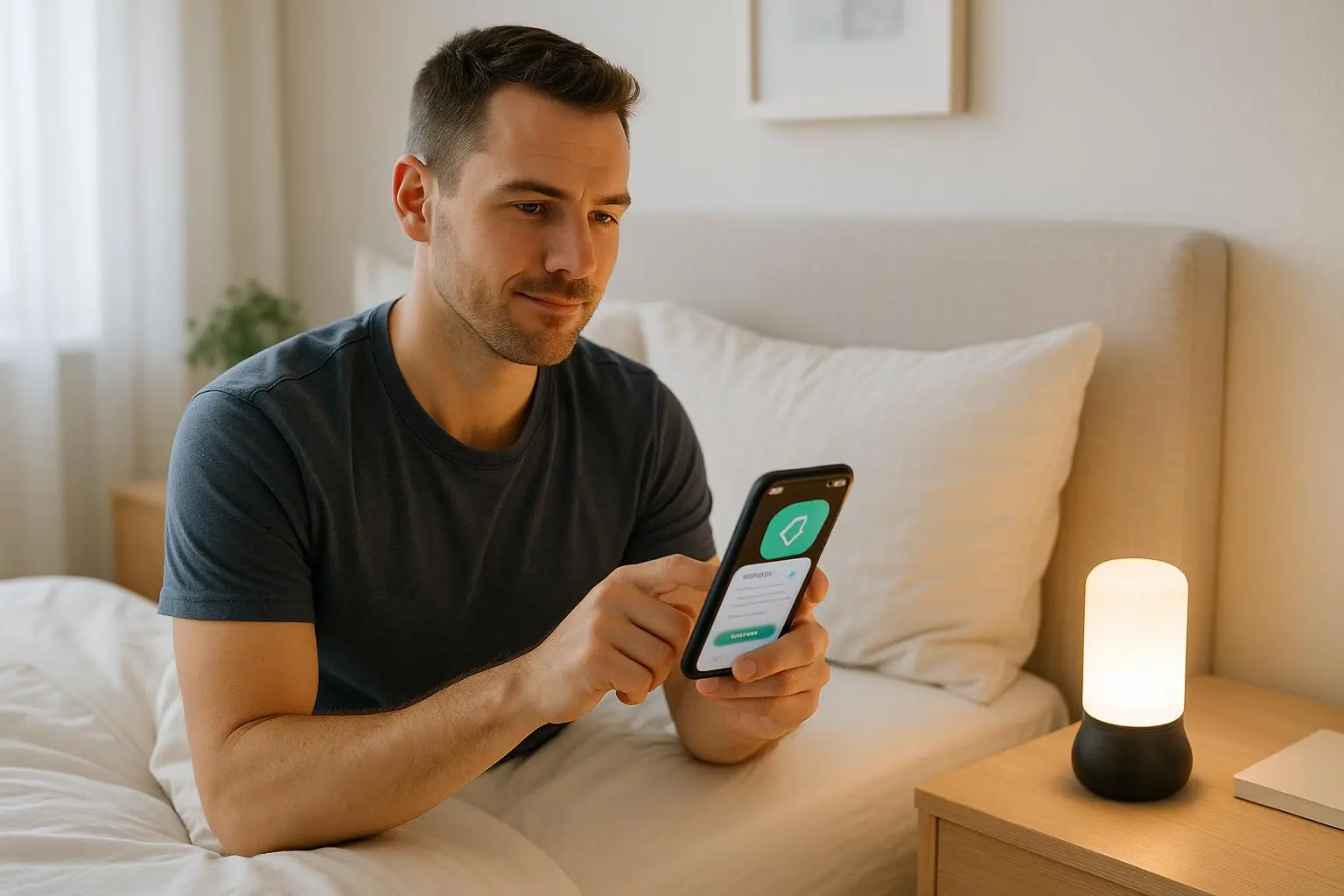
- Dawn simulator. A bedside device that gradually brightens the room before your alarm can dramatically ease the transition to bright morning light.
- Portable light devices. Small, easy-to-position options make it possible to get light even if you’re still in bed or moving around with mobility constraints.
- Smart home automation. Automated blinds, smart bulbs, and sunrise routines reduce friction and make “turn the light on” a no-brainer.
- Habit-tracking tools. A simple app or notebook to log your wake times, light exposure, and mood can reveal patterns you’d otherwise miss.
If you want to stack a few supportive tools, consider pairing a dawn simulator with a portable lamp. It creates a two-stage approach: a gentle pre-wake glow in your room, followed by a bright, robust signal for waking. It’s not perfect for everyone, but for many it cuts the friction dramatically.
The three rapid tests you can run this week
- Test A: Light timing within 30-60 minutes after waking for seven days. Keep a simple mood/energy scale. If you notice a bump, you’re aligned with your biology.
- Test B: If you have mobility constraints, try a bedside or wearable light solution for a week. If it makes mornings smoother, you’ve found a practical workaround that can scale with your needs.
- Test C: If you’re skeptical about intensity, measure it with a lamp rating and your perception (how “bright” it feels). Swap for a higher-lux alternative and re-test. Small changes in brightness can have outsized effects on wakefulness.
The point is to move from “I think this helps” to “I’ve measured a real improvement in energy and mood.”
Embracing the light for a brighter you
The 90-Second Sunrise is a simple idea, but its effectiveness lives in the details: the right light at the right moment, kept consistent by habit. It’s a small lever with outsized impacts if you give it a little structure. You don’t have to become a sunrise evangelist; you just need a routine you can actually perform most days.
If you’re dealing with low-light climates, mobility issues, timing confusion, or plain old inconsistency, you now have a set of practical, tested fixes. Try them in the order that feels most doable for you, and use the rapid tests to confirm what’s moving the needle.
Real life isn’t perfect, but real routines can be reliable. The moment you give your morning light the chance to do its job—consistently—you’re gifting yourself better energy, focus, and mood for the whole day.
And if you stick with it, you’ll notice something small but meaningful: your mornings stop feeling like a fight and start feeling like a sequence you can actually count on.