WineWhisperer AI: Natural & Orange Wine Starter Toolkit
Feb 28, 2026 • 9 min
If you’ve ever picked up a bottle labeled “orange wine” and wondered if someone swapped your Sauvignon Blanc for a jar of marmalade, you’re not alone.
Natural and orange wines are the buzzwords of the last decade, and they’re confusing because they break the rules you learned about wine. They’re cloudy, sometimes tangy, often tannic, and they refuse to behave like the neat categories on your wine app.
This toolkit is practical: clear definitions, honest tasting notes, pairings that work, and a few ways to spot quality versus a genuine fault. Think of it as the cliff notes the sommelier forgot to give you.
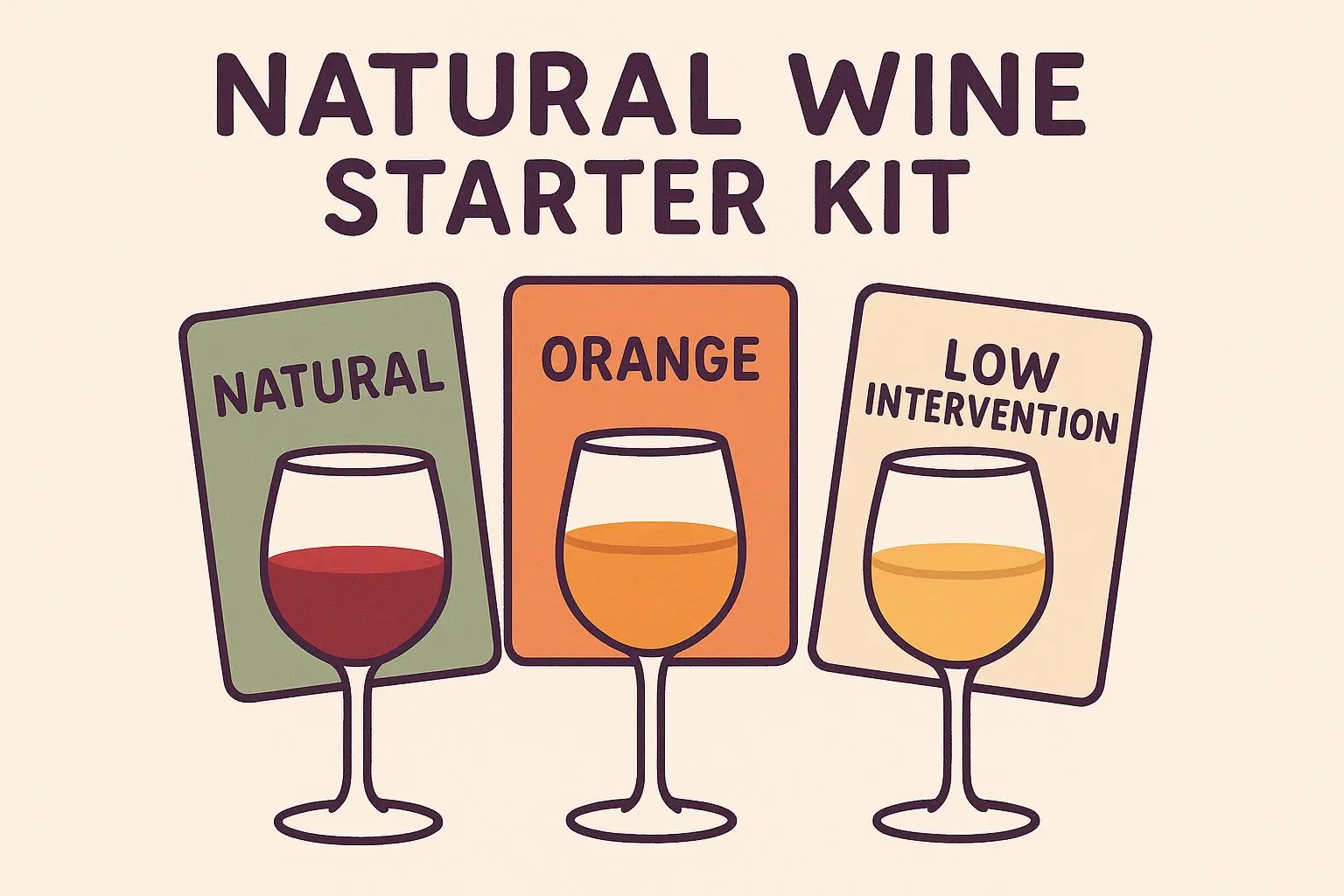
Quick definitions (so we all start speaking the same language)
Natural wine: a philosophy more than a legal category. Grapes from organic or biodynamic farms, native yeast fermentation, little to no additives (especially sulfur), minimal filtration. The point is: low intervention so the vineyard shows up in the bottle.
Orange (or amber) wine: a method. It’s white grape juice fermented with skins, seeds, and sometimes stems—like making red wine with white grapes. Skin contact extracts tannin, texture, pigments, and savory compounds. Color can be straw-gold to deep amber.
Important side-note: Not all orange wines are “natural” and not all natural wines are orange. There’s overlap, but they’re not synonyms.
What you’ll actually taste
Forget “oaky” or “buttery” as the default descriptors. These wines use different tools, so their flavor vocabulary feels foreign.
Natural wines:
- Expect unpredictability. Native yeasts bring funk—think yeasty bread, barnyard, sometimes bruised fruit.
- Low SO2 means some bottles show a lively spritz or, occasionally, volatile acidity (that sharp, vinegar-like lift). Not all funk is bad; it can be deliciously savory.
- Texture matters: many natural wines feel more alive—lighter bubbles, grainy tannins, or a soft, teetering acidity.
Orange wines:
- Tannin is the headline. Skin contact makes white grapes behave like light reds—drying structure, mouth-coating tannins.
- Flavor notes run from dried apricot, orange peel, and marmalade to roasted nuts, tea, curry, and earthy herbs.
- They can be oily, waxy, or leathery on the palate. Think “white with backbone.”
A real forum quote that stuck with me: “It’s like a white wine that decided to grow up and become a light red.” That nails the texture.
The beginner’s tasting rubric (three things to judge)
When you try one, use this quick checklist:
- Aroma vs. taste match: Does what you smell occur on the palate? If the bottle smells like wet dog but tastes clean and fruity after a minute, it may just need air.
- Balance of tannin and acidity: Orange wines should feel structured, not scratchy. If tannin dominates and bitterness lingers for minutes, that can signal a problem.
- Fault signals: Rotten egg, heavy nail polish remover, or outright vinegary acetic acid — those are real faults. Yeasty, earthy, or “farmy” is often intentional.
How to pair these unruly wines (rules that actually work)
Conventional pairing rules—“white with fish, red with meat”—often fail here. The key: match intensity and texture.
Tannic orange wines:
- Treat them like light reds. Roasted chicken, duck breast, pork belly, mushroom risotto, or aged cheeses like Comté work well.
- They love umami and fatty richness. The tannins cut fat beautifully.
Funky, low-sulfur natural wines:
- These thrive with pungent, fermented, or spicy foods: kimchi, gochujang dishes, aged hard cheeses, cured meats, or complex Indian curries.
- They can handle heat and strong acid—don’t pair them with very delicate crudo or subtle seafood.
A practical rule: if your dish has punch (fermented, grilled, smoky, spicy), this wine will likely be your friend.
Price and where to look (because budgets matter)
Yes, many natural and orange wines are pricier—small lots, hands-on farming, specialist winemaking. But you can find entry points.
- Expect $20–$45 for good entry-level orange wines from Eastern Europe (Slovenia, Georgia) or Italy.
- Natural wines from small producers often start around $25–$35 in the US market.
- Look for “in-transition” producers: small estates moving to natural methods but not yet certified. You often pay less for nearly the same profile.
A tip from bargain hunters: check regional importers who specialize in Eastern European or Caucus producers. They often bring in small lots with friendly price tags.
Regions and grapes worth trying first
If you’re starting out, try these low-risk options:
- Georgia: the original skin-contact wines (qvevri method). Rich history, robust texture.
- Friuli and Veneto (Italy): consistent producers of approachable orange wines—often balanced and food-friendly.
- Slovenia and Croatia: exciting, often affordable orange wine scenes.
- Northern Rhône/Loire: look for minimal-intervention whites from Chenin Blanc or Viognier producers to taste the concept without extreme funk.
Grapes that make easy entry points: Ribolla Gialla, Rkatsiteli, Pinot Gris (skin-contact versions), and Riesling made with subtle skin contact.
How WineWhisperer AI helps (and what it won’t do)
Tools like WineWhisperer AI analyze tasting notes, producer profiles, and user reviews to recommend bottles. Here’s what I’ve learned about using those tools:
- They’re great for matching textures. Tell the algorithm you like tannic reds or funky saisons, and it can find orange wines with similar mouthfeel.
- Use them to filter by production style: “low sulfur” or “skin contact” tags help dodge surprises.
- Don’t expect them to replace tasting. The human element—your palate that day, the bottle’s chemistry, even the cellar temperature—matters.
An AI can narrow the field from 200 confusing options to five likely winners. That’s useful when you’re learning.
How to tell quality from a flawed bottle
Here’s a short cheat sheet when you’re at the table:
- Give it a swirl and a minute. Some natural wines “clean up” with oxygen. If the nose opens and fruit appears, great. If it just gets worse—sharp acetic or rotten notes—put it down.
- Sediment and haze? Expect it in many natural/orange wines. That’s not a fault.
- Extreme bitterness or an astringent aftertaste that makes you grimace? Likely over-extraction or poor winemaking choices.
- Persistent nail-polish or paint-thinner smells? Faulty volatile phenols—don’t drink it.
A real story: how I learned to stop fearing cloudiness (120–170 words)
A few years ago I opened a $28 Slovenian orange wine with a group of friends. The label promised “skin-contact, native yeasts,” and I expected something exotic but pleasant. The first pour smelled like bruised apple and something mildly barnyard. One friend frowned and called it “cider-adjacent” and set it aside.
I decided to decant half while the rest sat. Ten minutes later the decanted glass had softened—honeyed fruit, tea leaves, a surprising candied orange peel. The bottle that sat closed never improved. We circled back to the decanted glass all night; it paired with seared salmon and a warm lentil salad better than a day-one Chardonnay would have.
Lesson: many of these wines need time or oxygen to show their best face. Don’t judge at sip one. Try decanting, and give it 20–30 minutes before you decide it’s “weird” or “ruined.”
Micro-moment: the detail that stuck with me
One tiny image that won’t leave me: a producer wiping his hands on a vineyard shirt after checking grapes, then smiling and saying, “We taste the dirt before picking.” That tactile honesty is what these wines try to bottle.
Practical shopping tips (quick wins)
- Use apps like Vivino to check communal notes, then cross-reference with Delectable for pro impressions.
- Ask your wine shop for “skin-contact” or “low-sulfur” tags and let them know you like structure or funk—good shops will suggest a safe bet.
- Start with $20–35 bottles. You’ll learn faster if you can afford to taste a handful.
Recommended starter bottles by profile:
- Approachable orange: a Friuli skin-contact Pinot Grigio
- Gentle natural white: a low-SO2 Chenin Blanc
- Funk-forward: a small-batch Gamay or Pinot Noir from a minimal-intervention producer (for those who like some red structure)
Common questions beginners ask
Is orange wine natural? Not necessarily—orange is the method; natural is the philosophy.
How long do low-sulfur wines last? It varies. Many are meant young (1–3 years), but some age beautifully if made with good acid and tannin structure. Store them cool and upright if you plan to open soon.
How do I know I’m buying quality? Reputation of the producer, clear tasting notes that mention balance (not just “funk”), and importers who specialize in natural wine are good signals.
Final thought: approach with curiosity, not fear
Natural and orange wines are invitations to taste history, terroir, and process—not just flavor. Some bottles will surprise you in the best way. Some will miss. That variance is part of the point.
If you go in armed with a little patience (decant), the right food pairings, and a few reliable producers, you’ll turn confusion into a favorite new wine category.
Happy tasting. And when in doubt: decant, pair boldly, and ask the person behind the counter what they’re drinking tonight.