Beat the 3pm Crash Without Caffeine
Feb 23, 2026 • 7 min
That heavy, slow feeling that lands around 2:30–3pm? The one that turns your to-do list into hieroglyphs and makes the coffee machine feel like a life raft? You don’t always need caffeine. A short, structured breathing rhythm—done sitting at your desk—can reset your nervous system and give you clear, steady focus for the next hour or more.
I’m going to show you a desk-friendly, 5-minute coherent breathing protocol (5-second inhale, 5-second exhale), quick posture hacks so it actually works, a simple A/B test to compare it to your usual caffeine top-up, and where to grab 3-, 5-, and 10-minute timer tracks so you don’t have to count.
No fluff. No New Age nonsense. Just something practical I’ve used, tested, and measured with teammates.
Why this works (short version)
Coherent breathing slows you to roughly 5–6 breaths per minute. That rhythm tends to maximize heart rate variability (HRV), which is a reliable marker of how flexibly your nervous system can switch between calm and alert states.[1] Stimulating the vagus nerve with slow, even breaths nudges your body out of that low-grade stress mode that eats cognitive bandwidth—so you feel calmer and more focused at the same time. It’s not magic; it’s physiology.
The 5‑minute desk protocol (do this exactly)
You can do this without leaving your desk. Seriously.
- Posture first (30 seconds)
- Feet flat, knees at ~90°, weight evenly on both sit bones.
- Sit tall—imagine a string pulling the top of your head up.
- Open your chest slightly by rolling shoulders back and down.
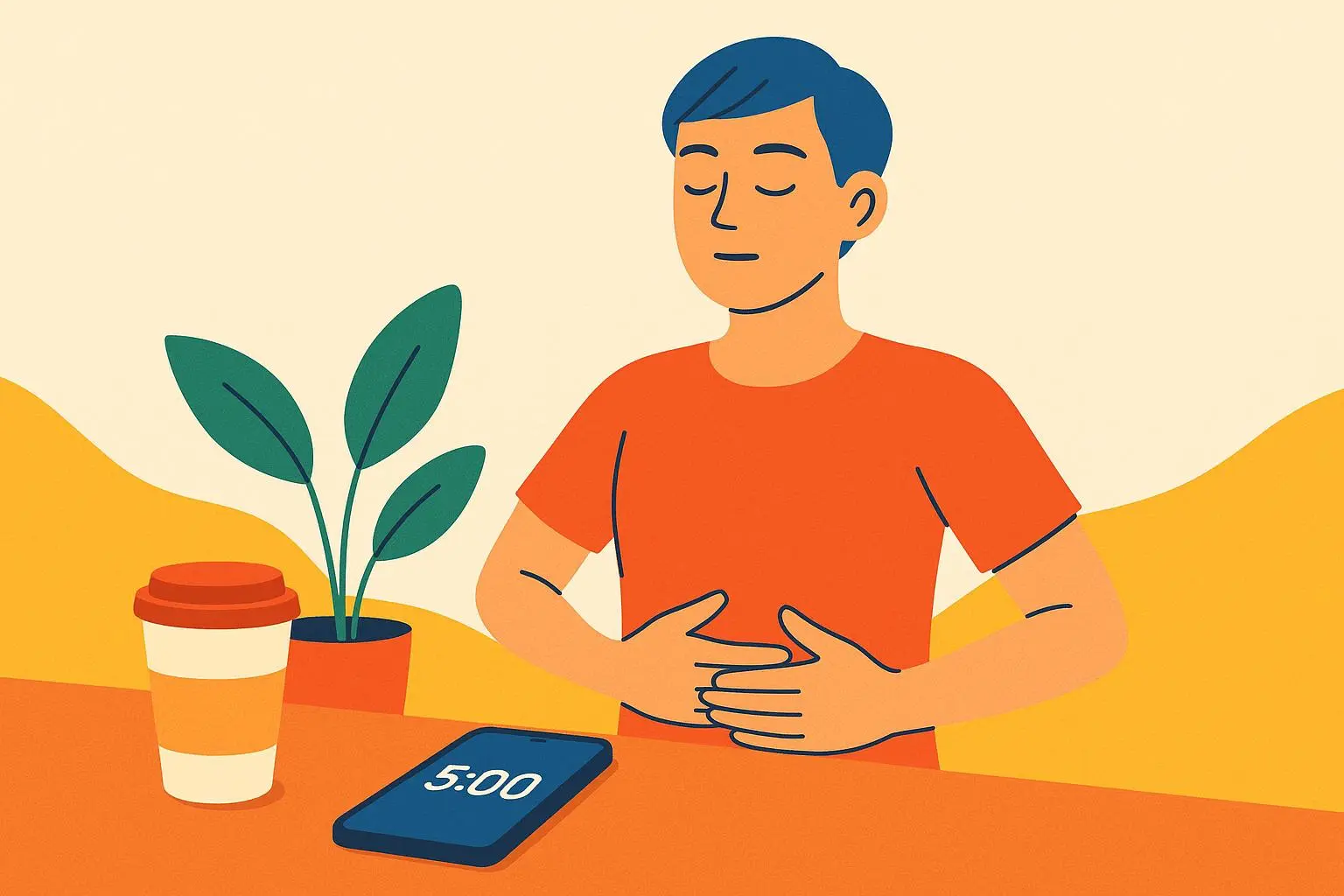
- Hands rest on your lap or desk. Place one hand lightly on your belly if you want feedback.
- The breathing (5 minutes)
- Inhale through your nose for 5 seconds. Fill belly first, then chest.
- Exhale through your nose for 5 seconds. Make the exhale smooth—don’t force it.
- Repeat for five minutes (about 30 cycles). Eyes closed or soft gaze if you can.
- Finish and re-enter work (30 seconds)
- Open your eyes, blink a few times, notice how your body feels.
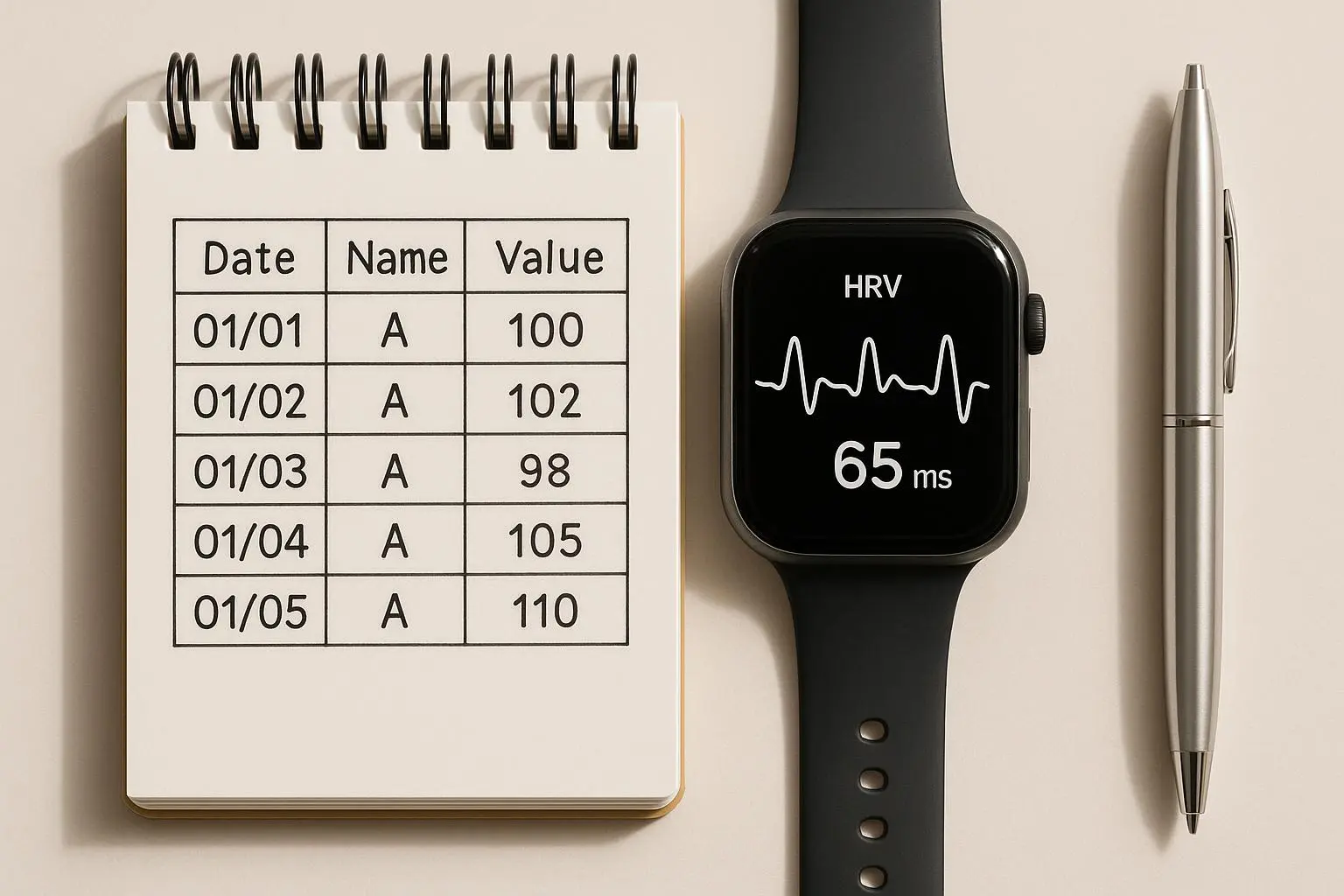
- If you track anything (focus score, HRV), jot it down.
That’s it. No special gear. No weird positions. Do it in your office chair between meetings, at your kitchen table, or in a quiet corner.
Posture hacks that actually matter
Here’s what most people skip—and why it ruins the breathing.
- If you’re slouched, the diaphragm can’t move. You’ll end up chest-breathing, which doesn’t stimulate the vagus nerve the same way.
- Ground your feet. A stable base helps the diaphragm engage naturally.
- Slight chest lift—just enough to open the ribs—lets air move belly-first then chest, which is the efficient pattern for coherent breathing.
Micro-moment: I once did the 5-minute breathing in an open-plan office with earbuds and a collar-button shirt. The tiny thing that made it work? I loosened my collar. Suddenly the breaths felt deeper. A small physical detail like that can make five minutes feel like five minutes of real reset, not a pointless pause.
How to A/B test it vs your usual caffeine hit
Want proof for yourself? Run this for two weeks.
Week A: Breathing protocol
- At your usual slump time (say, 3pm), do the 5-minute coherent breathing.
- Immediately after, rate focus 1–10.
- Track objective output for the next 60 minutes (emails processed, Pomodoros completed, lines of code, pages edited—pick one metric).
Week B: Caffeine baseline
- Same time, consume your usual caffeine top-up.
- Rate focus immediately before and ~30 minutes after (when the caffeine kicks in).
- Track the same objective output for 60 minutes.
Compare:
- Immediate spike vs steadier lift
- Jitters, anxiety, or sleep effects that evening
- Total quality output, not just activity
In my ad-hoc tests with colleagues, breathing gave a lower initial spike than caffeine but produced steadier attention and fewer evening sleep disturbances. One teammate cut a 3pm cold brew in half and kept the breathing—sleep improved, and afternoon productivity stayed roughly equal.
Real story: how I ditched a daily top-up
When I started working longer days, I developed a ritual: espresso at 10am, then a refill at 3pm. Within two weeks I noticed poor sleep and afternoon anxiety. I decided to try the breathing protocol for two weeks instead of the 3pm cup.
First week was ugly—my brain wanted the instant wake-up. But I forced myself to do the five minutes and track the next hour. By the second week, something shifted: I felt calmer, made better editing decisions, and didn’t get the late-afternoon tremble. I slept two nights better in a row. The most surprising part: my "productivity score" (emails processed per hour) was roughly the same, but the quality of work improved—fewer follow-up edits, fewer mistakes.
It wasn’t instantaneous. It required committing to the practice for at least a week. But the trade-off—losing the crash and sleeping better—was worth it.
What to expect (and what not to expect)
- You’ll likely feel calmer and more focused. That’s the point.
- It’s not a substitute for sleep. If you’re chronically sleep-deprived, it helps some but won’t replace rest.
- For high-pressure, last-minute deadline sprints, some people still want a small caffeine boost. This technique reduces dependency, not necessarily replaces every use-case.
- If you have respiratory or cardiovascular conditions, check with your doctor before changing breathing patterns.
Measuring results with HRV (optional, nerdy but useful)
If you like data, use an HRV app or device (Oura, Elite HRV, chest strap). Short-term HRV increases after a coherent-breathing session are common,[1] and many people report higher afternoon HRV over days when they practice vs when they don’t.[2] Use it if you want objective confirmation.
Timer tracks and tools
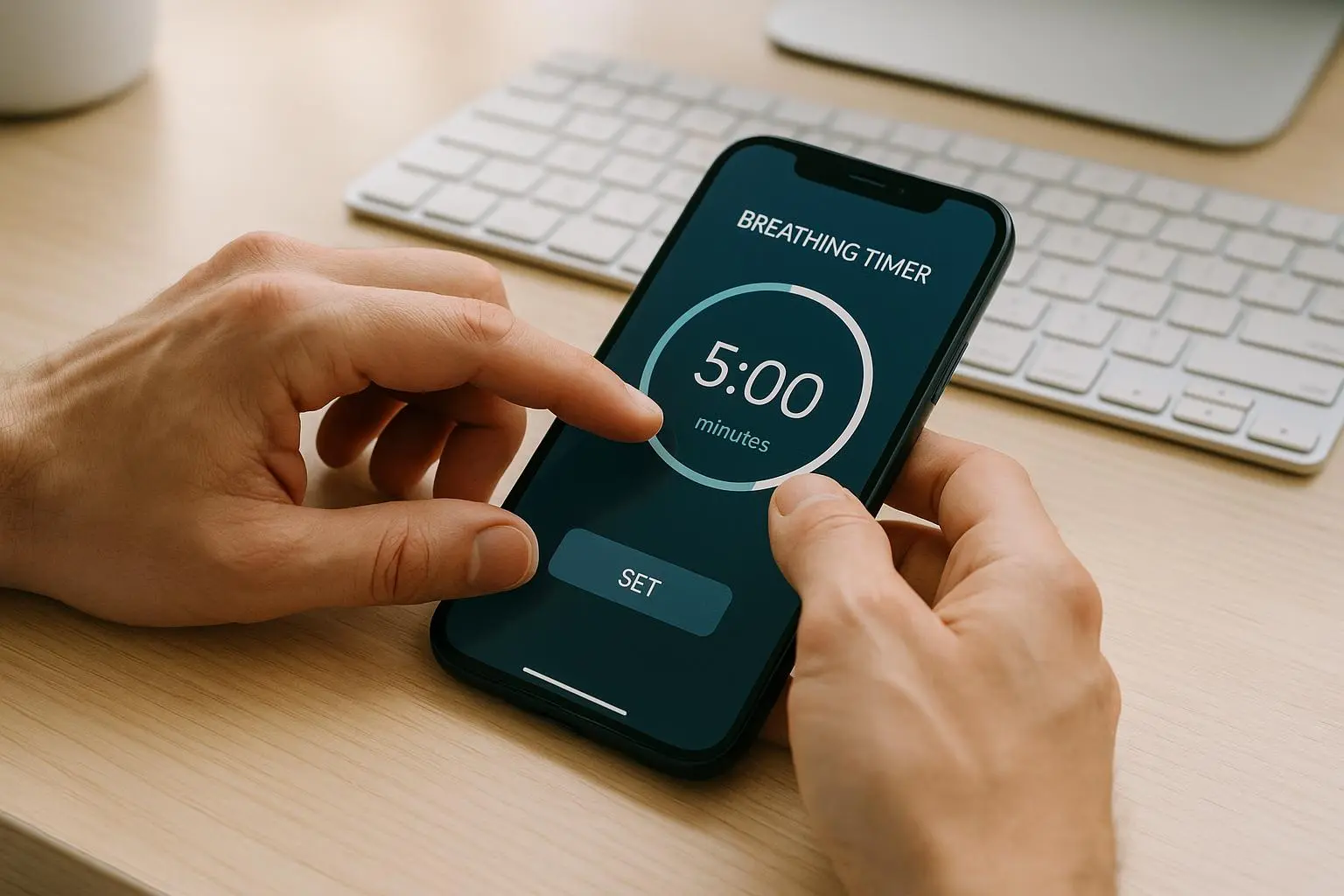
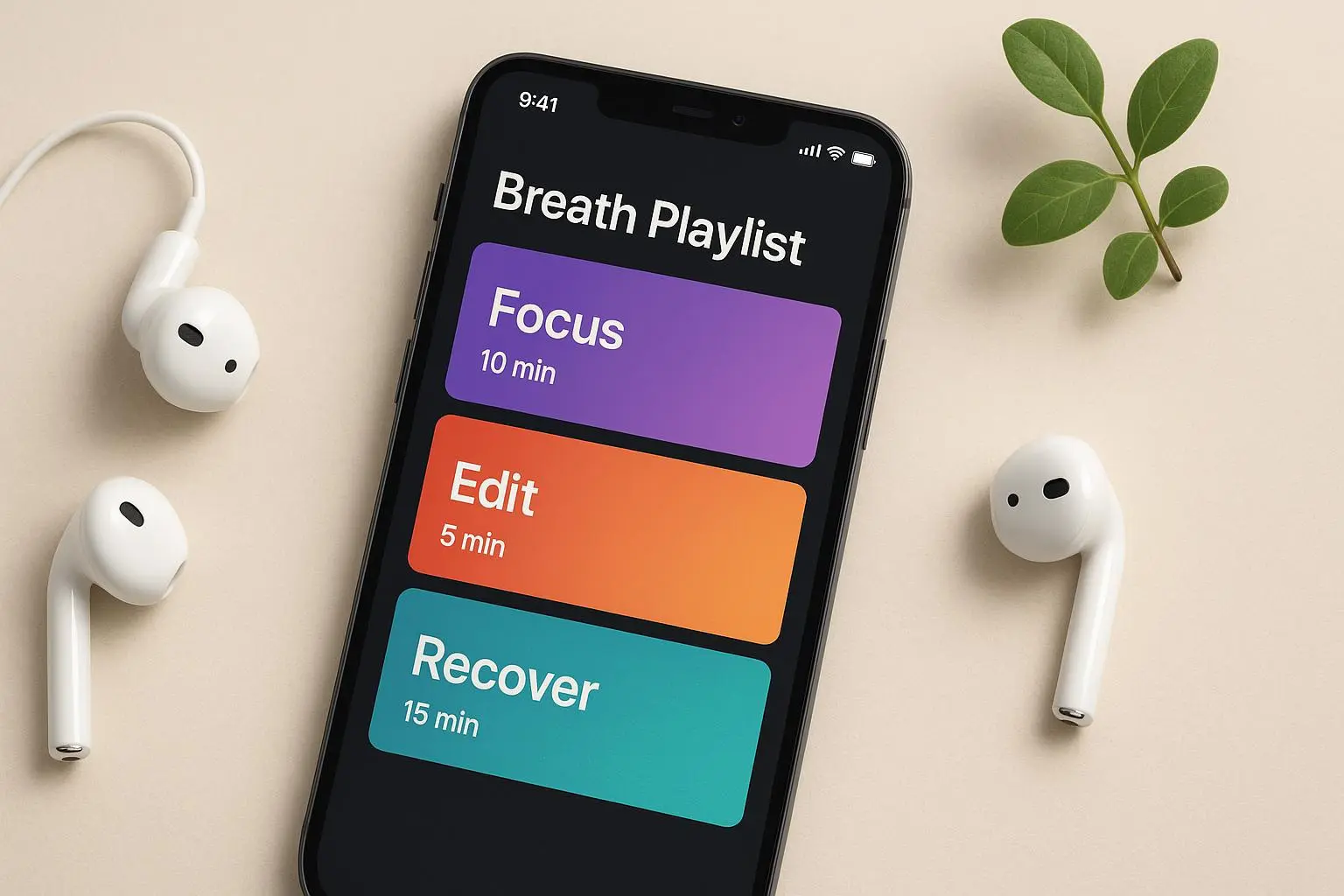
Grab a 3-, 5-, or 10-minute guided track so you don't have to count. A visual pacer app (Paced Breathing) or a simple web timer (Respirate.app) works fine. Use the 3-minute if you’re pressed for time; the 10-minute if you want a deeper reset.
Useful apps/tools:
- Paced Breathing apps with customizable inhale/exhale times
- Elite HRV for tracking results
- A simple silent timer—your phone’s timer works perfectly
Quick troubleshooting
- Strained breaths? Slow the pace slightly and focus on smoothness, not depth.
- Feels boring? Anchor on the physical sensation of your hand on your belly.
- Can’t sit still? Try standing breathing for one session; you’ll still get benefits.
Final thought (practical)
Here’s the honest trade-off: five minutes of disciplined breathing replaces the roller-coaster jolt of caffeine with a calm, steady attention that lasts longer and doesn’t wreck your evening. It takes practice. It’s not dramatic overnight. But if you care about doing high-quality work and sleeping well, it’s an easy habit to adopt.
If you want to try it today, set a 5-minute timer, sit up straight, and do the 5s in / 5s out cycle. No expectations—just observe. Then compare it to your next caffeine hit and see what your own data says.
References
Footnotes
-
Steffen, P. R., Bartlett, D., Channell, R. M., Jackman, K., Cressman, M., Bills, J., & McLean, G. (2021). Integrating Breathing Techniques Into Psychotherapy to Improve HRV: Which Approach Is Best? Frontiers in Psychology. Retrieved from https://www.frontiersin.org/journals/psychology/articles/10.3389/fpsyg.2021.624254/full ↩ ↩2
-
Zaccaro, A., Palma, A., Pinti, M., et al. (2018). Effects of different breathing techniques on heart rate variability and attention in young healthy subjects. Physiology & Behavior. Retrieved from https://doi.org/10.1016/j.physbeh.2018.05.004 ↩