DIY Snuffle Mat Variations: 7 Budget Builds That Keep Dogs Busy for Weeks
Jan 31, 2026 • 9 min
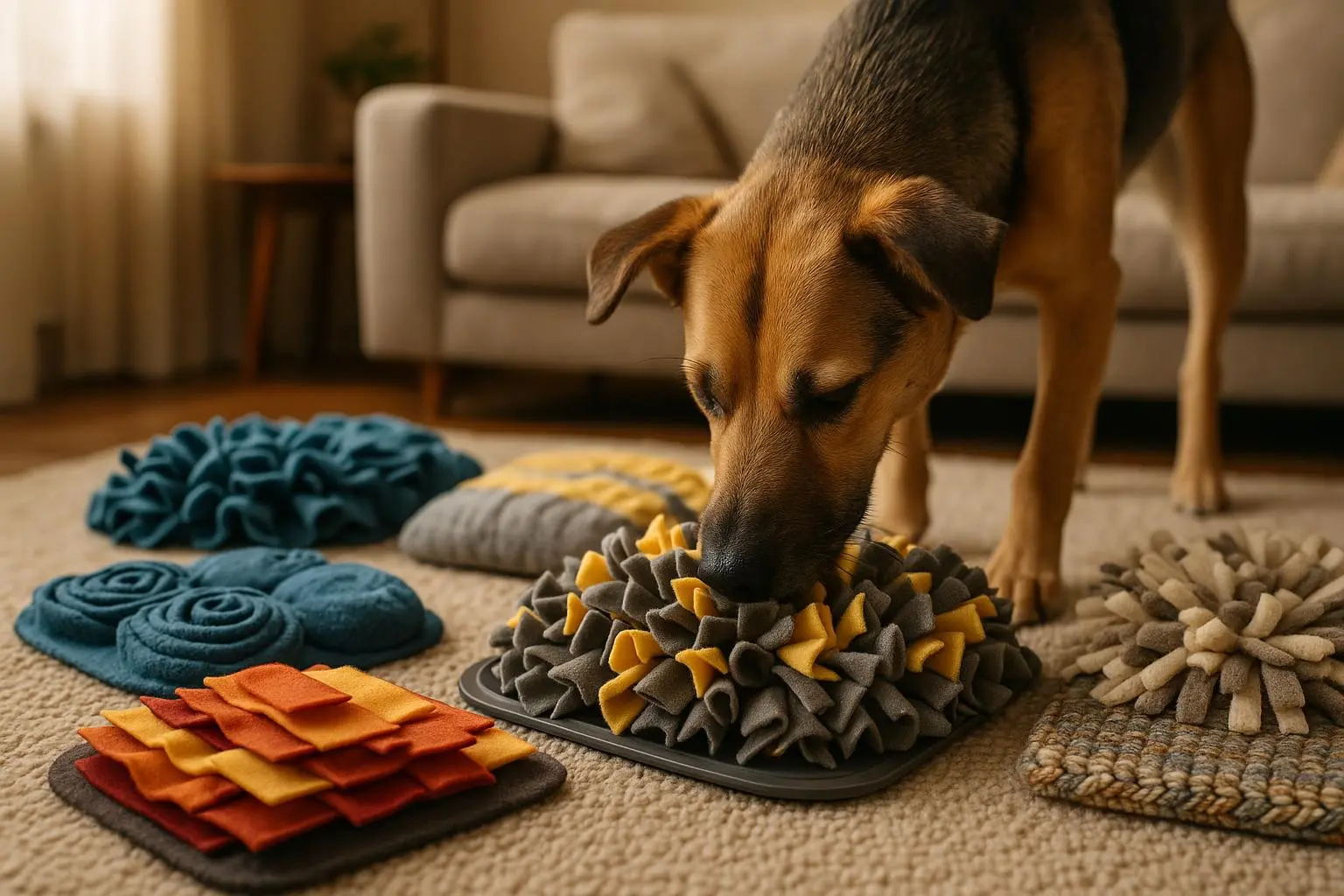
If you’ve ever watched a dog nose around the couch for five minutes, you know enrichment isn’t just nice-to-have stuff. It’s brain food. It slows down meals, tires out a busy mind, and pulls a dog away from potentially destructive patterns. A snuffle mat is one of the simplest, most effective tools you can DIY with stuff you probably already own.
But here’s what I learned the hard way: not all snuffle mats are created equal. I bought a couple that looked slick online, and within minutes my power chewer shredded the surface. The lesson? If you want durability, you have to design for how your dog actually chews, pulls, and sniffs. I ended up building seven variations—no fancy equipment required—that balance safety, cost, and that irresistible nose-work it takes to uncover every hidden treat.
And yes, I’ve tested these with two dogs over the course of several weeks. By week two, I could predict which mat would spark a fresh round of sniffing and which would need a little tweak to hold attention. Here’s how I approached it, with practical builds you can copy today.
A quick personal note before we dive in: this isn’t about flashy new gadgets. It’s about materials that are affordable, accessible, easy to clean, and—most important—safe for dogs who love to chew. The moment that sticks with me is when I added a scent boost to a simple fleece strip mat and watched my beagle, who’s famously picky about textures, drop into a focused sniffing trance. The trick wasn’t fancy; it was layering a durable base, tightly secured knots, and a scent that kept the nose engaged long enough to slow a gulp of dinner. Micro-moment: the dog’s nose twitched, low to the ground, and the whole body relaxed as the scent hit. Small thing, huge impact.
What makes this different from a lot of DIY guides is that I’ve organized these into seven builds by difficulty, plus a two-week rotation plan to keep novelty high. You’ll find safety checks at every turn to minimize swallowing risks and avoid loose bits that could become a choking hazard.
Let’s jump in, starting with the classics and moving toward a few more unique textures and bases.
How I actually made this work
If you’re new to DIY dog enrichment, start with the no-fray, no-solder builds and move up only as your dog’s interest dictates. I’ve found a four-step approach works best:
- Pick a base that won’t crumble or shed. Rubber sink mats, silicone trivets, or low-pile rugs work well. 2) Use material scraps you already own (fleece, old towels, t-shirts). 3) Secure every knot or seam. 4) Add a scent layer to ramp up engagement—carefully, so you don’t overwhelm the dog or yourself with handling.
Two things I pay attention to every time: fabric safety and texture variety. A dog that chews the edges of fabric or starts swallowing strips needs a lighter, simpler construction for a bit. Observing frustration cues early saves you from escalating to harder builds that may backfire.
If you’re curious about the numbers behind the design choices, I’ll lay them out as we go. For each mat, I’ve included the difficulty, the ideal dog profile, the primary mechanics, scent strategies, and a short safety checklist. Every build is designed to be implemented in under an hour if you’ve got a box full of scraps.
Now, the seven budget builds.
1) The Classic Fleece Strip Mat (Easy to Easy-Plus)
Materials: Rubber sink mat or another perforated base; fleece fabric scraps or cheap yardage; a good pair of scissors.
Difficulty: Easy
Ideal dog: Most dogs, especially beginners to enrichment.
How to build:
- Cut fleece into strips about 1 inch wide and 6-8 inches long.
- Push strips through the holes in the base and tie a tight knot underneath to secure. You can do rows at right angles to increase density.
- Fluff the ends so the strips stand up, creating pockets where treats hide.
Scent-baiting: Start with small, high-value treats jammed a bit deeper in the mat. As your dog gets the hang of it, switch to regular kibble to extend the challenge.
Safety: Look for loose knots. If a knot starts to loosen with chewing, re-tie or switch to a tighter weave. Avoid any base that has sharp edges or fibers that can pull loose.
Two quick notes from the field: I’ve used this with a terrier who chews aggressively, and the trick is to knot the strips extra snug and to occasionally rotate this mat with something a bit more intricate to maintain interest.
Micro-moment: When the first treat finally popped free after a minute of sniffing, the terrier paused, looked up, then hopped into a little victory dance—snout high, tail wagging, but the mat remained steady.
Two-week rotation idea: Keep this mat in the rotation for days 1-2, then switch to Mat 2 or 4 and come back later.
2) The T-Shirt Weave Mat (Intermediate)
Materials: Old cotton T-shirts; a non-slip silicone mat or mesh base.
Difficulty: Easy to Medium
Ideal dog: Moderate chewers; dogs who enjoy varied textures.
How to build:
- Cut T-shirts into long strips (like T-shirt yarn).
- Weave the strips through the base, using the second shirt’s strips to knot and secure a dense surface. You’ll be creating a multi-layered, knotted surface with a lot of texture.
Scent-baiting: Rub the strips with a little peanut butter or a dog-safe oil to introduce scent before hiding treats.
Safety: Ensure knots are tight and trim any frayed ends. Cotton breathes more than fleece, which can feel nicer on the mouth for dogs that chew.
Real-world note: This one’s great for dogs who like to nose through a softer, more flexible surface. It’s less harsh on gums but still challenging.
Micro-moment: The moment the dog detected the first scent cue—just a sniff of a strip—his ears pricked, the body lowered into a searching stance, and the foraging began in earnest.
Two-week rotation idea: Wrap it in with Mat 1 for a day, then rotate away to something with a deeper pocket for a few sessions.
3) The Upcycled Rug Mat (Intermediate/Advanced)
Materials: An old, durable rug with a tight weave; nails or heavy-duty thread; a needle or a sewing machine.
Difficulty: Medium to Advanced
Ideal dog: Power chewers and determined foragers.
How to build:
- Cut along the rug to create small pockets or slip in a few fabric strips into the weave.
- Sew or tie the fabric ends so they don’t unravel and to create hidden pockets for kibble.
Scent-baiting: Use a strong-smelling treat hidden deeper in a pocket to drive a longer sniffing session.
Safety: Check for loose fibers that could be ingested. This mat will be heavier and more durable than the fleece version, which helps with strong dogs.
Real-world note: My Rug Mat build became a go-to for a dog with a history of destroying lighter mats. It held up for weeks, and I could rotate in scent variations to preserve novelty.
Micro-moment: The moment the dog nose-darted to a small corner pocket and fished out a kibble as if solving a tiny puzzle—this is the success moment enrichment is all about.
Two-week rotation idea: This mat shines in a rotation with Mat 1 and Mat 5 for a mixed texture week.
4) The Silicone Trivet Puzzle (No-Sew, Quick Win)
Materials: A silicone baking mat or trivet with deep crevices.
Difficulty: Easy to No-Sew
Ideal dog: Dogs who benefit from quick wins or those with arthritis or flexibility issues.
How to build:
- Simply hide treats within the grooves of the silicone. The dog uses sniffing and pawing to retrieve items.
Scent-baiting: A quick wedge of liver treat tucked in a larger crevice works wonders for initial sessions.
Safety: Ensure the silicone is food-grade; supervise so the dog doesn’t bite chunks off the silicone.
Real-world note: A friend of mine uses this with her senior retriever. It’s incredibly forgiving on joints and still delivers mental stimulation.
Micro-moment: The first successful retrieval—tiny tail wag, a small leap forward, then a confident foraging stance as the dog settled into a comfortable pace.
Two-week rotation idea: Great to slot in between two tougher builds. It’s the reset button when a dog seems frustrated with deeper, more complex mats.
5) The Pocket Scarf Mat (Advanced)
Materials: A long fabric strip (canvas or heavy felt), sewing machine.
Difficulty: Advanced
Ideal dog: Dogs who enjoy linear searching and longer retrieval paths.
How to build:
- Sew parallel lines across a long fabric strip to create long pockets.
- Partially fill pockets with treats, then seal ends. The result is a long, rollable mat with a linear search path.
Scent-baiting: Start with one scent in the pockets and gradually layer more as the dog grows confident.
Safety: Check stitching to ensure there are no loose threads; long pockets should be sealed so the dog can’t pull threads out.
Real-world note: This one takes time, but my dog adored the extended search. It felt like a treasure map in fabric.
Micro-moment: Watching him drag the scarf mat across the living room floor during a rainstorm—completely absorbed, ignoring the sound of the doorbell outside.
Two-week rotation idea: Pair with Mat 2 and Mat 6 for a layered challenge week.
6) The Felt Flower Mat (Intermediate)
Materials: Large felt base; multiple felt circles for petals.
Difficulty: Intermediate
Ideal dog: Nose-first sniffers who enjoy varied textures more than high-speed puzzles.
How to build:
- Cut felt into circles; cut slits from the edge toward the center to create “petals.”
- Layer petals and sew them onto the base, leaving gaps between petals for hiding treats.
Scent-baiting: Place treats under petal layers to encourage lifting and sniffing.
Safety: Felt tends to pill with heavy use. This design is better for lower-intensity sniffing or as a decorative layer in rotation rather than a daily habit.
Real-world note: A crafts-y build that looks gorgeous in photos but requires patience. It’s still a winner if your dog enjoys exploring textures.
Micro-moment: The dog nudged a petal aside and found a treat with a soft, satisfied sigh—proof that aesthetics and enrichment can share the same table.
Two-week rotation idea: Use it during a gentler day in the rotation, a nice contrast to the more intense mats.
7) The Layered Towel Mat (Intermediate)
Materials: Two old bath towels; scissors; sewing machine or sturdy pins.
Difficulty: Intermediate
Ideal dog: Dogs who like a quilted look and deep channels to explore.
How to build:
- Lay one towel down as the base.
- Cut the second towel into strips and layer densely on top, sewing lines across to create a quilted effect with deep channels.
Scent-baiting: A mix of dry kibble and a dab of dog-safe oil can be brushed into the fibers to boost aroma.
Safety: Ensure all layers stay securely attached and there are no loose threads that could be ingested.
Real-world note: This build feels almost luxurious to touch and works surprisingly well for long sniffing sessions. It’s the cushier option in the lineup, which can be a relief for dogs with dental or joint concerns.
Micro-moment: The moment he settled into the towel layers with a slow, satisfied sniffing rhythm. It was the kind of calm focus that makes enrichment feel effortless.
Two-week rotation idea: Use this as a comfort week option, especially when you’re testing out tougher mats for the first time.
Scent-baiting strategies that actually work
Scent is the engine of enrichment. Without a strong scent cue, even the most clever mat can fall flat. Here are tactics I actually use:
- Replace high-value treats regularly. If your dog loves freeze-dried liver, rotate into cheese or chicken when you need to rebuild interest.
- Layer scents gradually. Start simple, then introduce a stronger scent a few sessions later to intensify the search.
- Hand-scent technique. Rub a tiny amount of a dog-safe oil or treat on your hands before hiding treats to prime the nose.
A note from the field: I’ve had better success when I pair scent variety with mat texture variety. A dog that loves the feel of fleece may still be drawn in by the sparkle of a felt flower mat if the scent is just right. It’s not a magic trick; it’s a careful balance of texture, scent, and reward timing.
Safety first, always. Do routine checks before you set a dog loose on any mat. If you see tearing, loose threads, or questionable fabric, pause and switch to a safer build.
The two-week novelty rotation plan
Keeping a dog engaged for weeks on end is all about variation. The two-week rotation plan I use looks like this:
- Rotate mats every 3-4 days. Keep a couple of “reset” mats on standby for days when you sense frustration or boredom.
- Change scent strategies with each rotation. This doesn’t have to be complicated—swap the treat type, the oil, or the scent intensity.
- Track engagement. Time to Completion (TTC) is a simple metric you can log with a notebook or a simple app like Treat Tracker Pro. Note if TTC decreases over time (great) or if your dog starts to show frustration (adjust difficulty, take a break, or switch mats).
- Watch for boredom signals. If your dog starts to paw at edges or chew fabric, step back a notch in difficulty for a few sessions.
A quick field note for readers who want a sanity check: Coren emphasizes enrichment should be challenging but achievable. If your dog can finish the entire mat in under a minute consistently, it’s a sign you’ve made it too easy. You want a pace that keeps them engaged, but not so frustrated that they quit.
Safety checks that save you from misfires
- No small parts. Avoid anything detachable that could be swallowed (buttons, beads, plastic trimmings).
- Secure edges and knots. Loose threads can be a choking hazard or cause ingestion.
- Use non-toxic, washable materials. The mats will get dirty; washing keeps health in check.
- Supervise initial sessions. Always, always supervise new mats until you’re sure your dog uses them safely.
If you want more confidence, bring in the rotation plan and track TTC. It’s a practical, non-pressured way to see whether your dog’s interest stays high across a two-week window.
A note on outcomes and learning
This approach isn’t about creating a one-size-fits-all gadget. It’s about understanding your dog’s preferences and building a catalog of safe, affordable tools to sustain cognitive engagement. The seven builds cover a spectrum—from quick wins to complex puzzles—so you can calibrate to your dog’s temperament, energy level, and chewing style.
The best part isn’t just the enrichment. It’s the value of watching your dog become more deliberate about sniffing, problem-solving, and patience. The improvement isn’t just mental; it often translates into calmer, more confident behavior during meals and playtime.
If you’re curious about the science, there’s a steady stream of research backing olfactory enrichment for dogs. The key takeaway: scent-focused activities can reduce stress behaviors and improve welfare when done safely and with appropriate challenge. That’s the core of this DIY approach—accessible, adaptable enrichment you can actually sustain.
Closing thoughts
DIY snuffle mats aren’t just a craft project. They’re a practical, low-cost way to support your dog’s mental health, tailor enrichment to their individual quirks, and keep them engaged for weeks on end. By rotating between seven builds, you create a dynamic environment that rewards sniffing, problem-solving, and patience—not quick, mindless nibbling.
If you want, I can tailor a week-by-week plan based on your dog’s age, breed tendencies, and chew style. Share a quick note about your dog’s needs, and I’ll map out a two-week rotation with suggested scent strategies and a simple tracking sheet you can print out.