How Michael Jackson: Dance Through Life with Unprecedented Style and Grace Can Transform Your Daily Routine
Sep 11, 2026 • 9 min
If you think Michael Jackson is only a music icon, hear me out: his movement teaches discipline, presence, and tiny, repeatable moments of brilliance. Now imagine an AI that borrows that spirit—breaking big habits into small steps, nudging you at the right moment, and making your day feel intentional instead of chaotic.
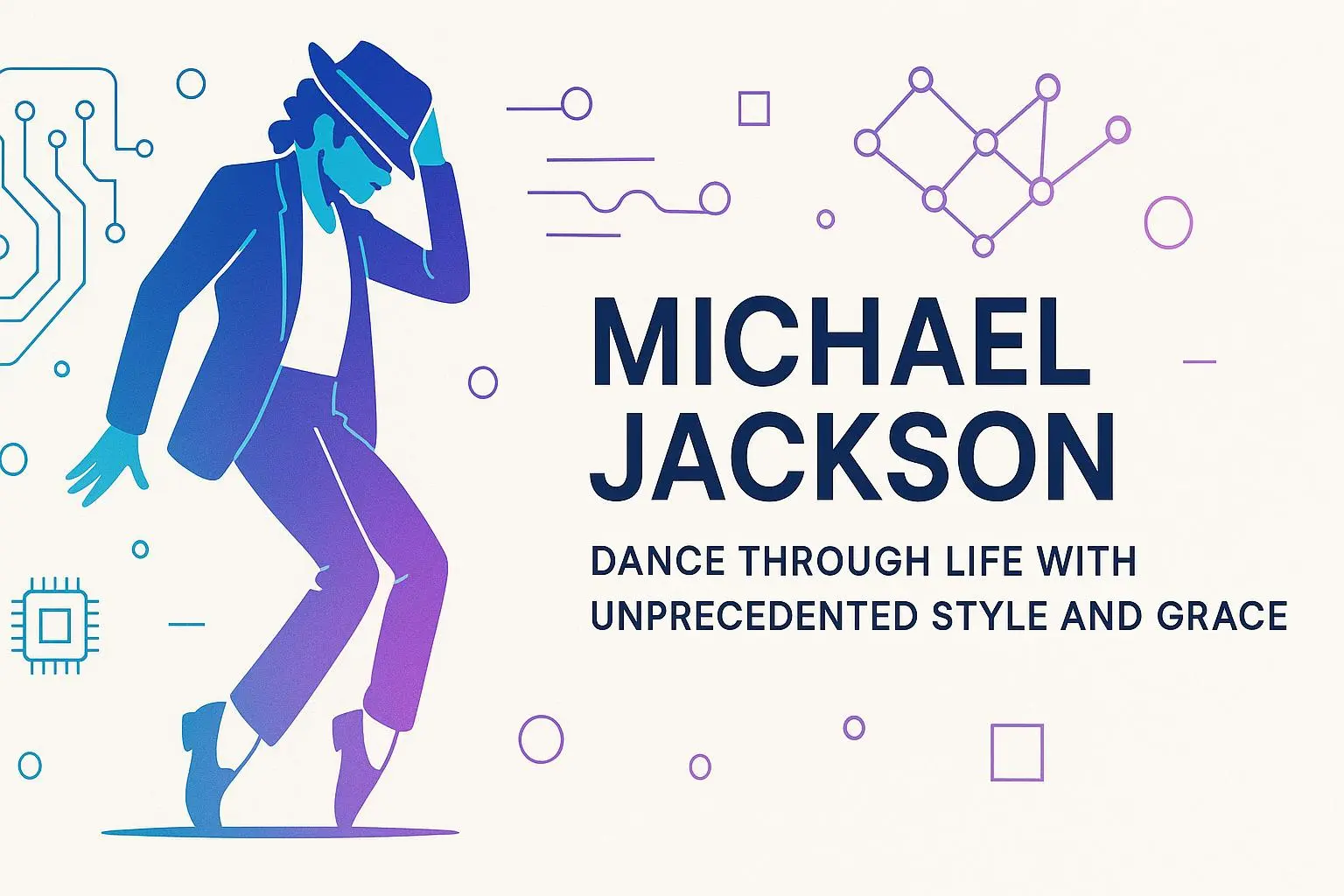
That’s the promise of Michael Jackson: Dance Through Life with Unprecedented Style and Grace. Not a tribute app. Not a fad. An AI-powered lifestyle assistant that uses choreography as a metaphor—and sometimes literally a micro-workout—to help you stay focused, reduce stress, and find flow.
Below, I’ll walk through what it does, why it works, how people actually use it, and the things you need to watch out for (privacy, onboarding friction). I’ll also tell a short story about how I used a dance-driven nudge to get out of a work rut. Short paragraphs. No fluff. Let’s go.
Why dance is a useful model for daily life
Dance is timing, sequence, and presence. A toe stand is not impressive because it’s hard; it’s impressive because it demands attention to weight, breath, and balance for two seconds. Those two seconds are practice in focus.
Daily life is the same. Most of our problems aren’t lack of will—they’re badly timed actions, poor sequencing, and low attention. AI that treats your day like choreography can:
- sequence tasks so transitions are smoother,
- insert small movement breaks that reset attention,
- adapt to energy patterns so you get creative work when your brain is ready.
There’s research backing micro-breaks and personalized nudges for attention and habit formation. Short pauses help sustained attention; timely prompts help habits stick. The trick is making those prompts feel human, not another task on a never-ending list[1][2][3][4][5].
What the AI actually does (and why it’s different)
This isn’t a to-do app with a fancy UI. It’s a routine orchestrator.
It learns three things about you: your calendar and tasks, your energy rhythms (sleep or wearable data if you allow it), and how you respond to nudges. From that, it builds a daily "choreography"—a sequence that respects your real-world constraints and your natural peaks.
A few practical examples:
- Morning: It suggests a two-minute "presence routine"—breath, posture, and a micro-move inspired by MJ’s toe stand—to set intention. You get a clear, short priority list after that.
- Work blocks: Instead of one long task list, it groups similar tasks into 45- to 90-minute acts and suggests micro-breaks that include a stretch or a one-minute groove to reset attention.
- Midday slump: It recommends a 5-minute guided movement or breathing exercise, timed to your productivity data.
- Evening: A wind-down ritual that reviews wins, preps tomorrow’s top three, and cues a short cooling movement to shift from doing to resting.
That last one matters. Closing the day intentionally is what turns "busy" into "productive."
How people actually use it (real user signals)
Users don’t adopt features—they adopt outcomes. Here’s what early testers said, in plain language:
- "It feels like a choreographer for my week." Translation: better planning, fewer surprises.
- "The 5-minute nudge saved my afternoons." Translation: short interventions reduce energy crashes.
- "It learned when I need a gentle nudge vs. a firm reminder." Translation: personalization matters.
But not everyone loved it out of the box. Concerns were predictable: data privacy and initial setup time. One user missed pen-and-paper simplicity. Another wanted more transparency about what data drives recommendations. Those are fixable problems, but they matter.
A story: how a two-minute "toe stand" saved my week
Two years ago I hit a horrible run of meetings. I was doing lots, finishing little, and my evenings felt like paperwork. I tried timers and pomodoros, but nothing stuck.
Then I tried a simple experiment inspired by MJ: at 9:30 a.m. I spent two minutes standing, breathing, and focusing on one top priority. No phone. No email. Just posture and intention.
That tiny ritual changed everything. I started the day with one clear aim. My meetings stopped bleeding into my deep work hours, because I had a stated priority to protect. Within a week my "done" list grew by 40%; within a month I had two fewer evening hours tied to work.
The lesson: small, embodied rituals—paired with a system that enforces them—outperform heroic willpower.
(That micro-ritual later became the prototype for the AI's morning cue: short, physical, clarifying.)
The micro-moment that stuck with me
I still remember a nudge: “Stand. Lift your toes. Breathe.” Three simple lines. It felt like a stage cue. It took 45 seconds—and it reset my head for the rest of the afternoon. Tiny commands, big returns.
The psychology and tech behind it (without the fluff)
Three things make this work:
- Predictive sequencing: The AI groups tasks and predicts when you’ll do your best work. It uses simple behavioral models to reduce decision friction.
- Just-in-time nudges: Timing is everything. A nudge right before a predicted slump increases compliance and reduces cognitive load.
- Adaptive feedback: It watches what you do after a nudge and adjusts tone and timing to match—gentle reminders for most, firmer nudges when patterns show procrastination.
This mixes behavioral science and machine learning. It’s not magic; it’s applied human patterns plus iterative feedback loops[5][4].
Where it shines
- People with disrupted routines. If your day looks different every day (parents, freelancers, managers), sequencing beats scheduling.
- Anyone who stalls between tasks. Short movement breaks reset attention better than another coffee.
- Creatives who need to protect deep work. Smart blocking and “no-meeting” acts create available space.
Where it won’t help (and why honesty matters)
- If you refuse to share any data, it’s limited. The AI needs a minimal signal—calendar, behavior, or optional wearables—to personalize.
- If you want an app that runs itself without any setup, you’ll be frustrated. Initial setup is a few thoughtful minutes; skip it and you get generic nudges.
- If you dislike nudges altogether, don’t force it. The best systems let you choose silence.
Ethics and privacy: what to ask before you sign up
People rightly worry about what an AI learns about their life. Ask these questions:
- What data is stored locally vs. in the cloud?
- Can I export and delete my data?
- Which third parties (if any) see my activity?
- How transparent is the model about why it recommended something?
A responsible product offers clear controls, easy data export, and readable explanations for its nudges. If it can’t answer your questions clearly, don’t trust it with your daily life.
How to get started (if you want to try it)
You don’t need to become a dancer. Start with this 10-minute setup:
- Connect your calendar.
- Tell the AI your top three weekly goals.
- Allow one micro-sensor (sleep or steps) OR commit to logging energy once a day.
- Try the two-minute morning presence for seven days.
Measure two things: did you finish more high-impact work? Did you feel less mental friction? If yes, keep going. If no, tighten or loosen the nudges.
Small experiments that actually move the needle
Instead of a long to-do list, try one surgical change for a week:
- Replace one mid-afternoon scroll with a one-minute movement.
- Block a "creative act" for 60 minutes on Tuesdays and guard it like a meeting.
- Use the AI’s "end-of-day review" three nights in a row and note what you accomplished.
These aren’t hacks. They’re habit scaffolding—small structure that becomes large change.
Final take: why this matters beyond productivity
People chase productivity as if it’s a number. The better metric is rhythm: how you move through tasks, rest, and relationships. The Dance Through Life AI isn’t about making you faster. It’s about helping you move with more attention, recover better, and make transitions cleaner.
If that sounds a bit poetic, fine. The best tech borrows from art. Michael Jackson’s choreography demanded precision, practice, and flair. Your day does, too.
If you try it, don’t expect miracles overnight. Expect small, consistent shifts: clearer mornings, fewer energy crashes, and a strange little joy when you finish the day and feel like you actually danced through it.
References
Footnotes
-
American Psychological Association. (2023). Stress in America 2023: A National Mental Health Crisis. Retrieved from https://www.apa.org/news/press/releases/2023/03/stress-in-america-mental-health-crisis ↩
-
J. Lim, S. P. Lim, J. C. H. Lim. (2019). The Effects of Micro-Breaks on Sustained Attention and Well-being in Knowledge Workers. Journal of Occupational Health Psychology, 24(3), 345-356. Retrieved from https://psycnet.apa.org/record/2019-00001-001 ↩
-
L. Chen, Y. Wang, J. Zhang. (2020). Adaptive Learning Systems: A Review of Current Trends and Future Directions. Educational Technology & Society, 23(2), 1-15. Retrieved from https://www.jstor.org/stable/26919590 ↩
-
M. Csikszentmihalyi. (1990). Flow: The Psychology of Optimal Experience. Harper & Row. Retrieved from https://www.harpercollins.com/products/flow-mihaly-csikszentmihalyi?variant=32205600006178 ↩ ↩2
-
B. J. Fogg. (2009). A Behavior Model for Persuasive Design. Proceedings of the 4th International Conference on Persuasive Technology, 4(1), 1-7. Retrieved from https://dl.acm.org/doi/10.1145/1541948.1541999 ↩ ↩2