The Ultimate Dog First-Aid Kit Checklist
Jan 16, 2026 • 8 min
You don’t need to become a vet to be useful in an emergency. You need a kit that’s smart, prioritized, and easy to use when your hands are shaking and your dog is scared.
This is the checklist I wish someone handed me the day my Lab cut his pad on a jagged rock. It covers what to keep at home, what to stash in the car, and what to toss in a fanny pack for hikes. It also includes quick organization tricks (color coding saved me) and a printable label and expiration calendar so your kit doesn’t turn into a dusty box of useless supplies.
If one thing sticks from this article: pack for the first 10 minutes. Those are the minutes that matter.
Why a dog first-aid kit matters — short version
Because common things happen: nail bleeds, splinters, ticks, stomach upsets, banged heads. A few targeted tools and meds won’t fix everything, but they will stop bleeding, reduce pain, and buy time to get to a vet.
I’ll tell you what to pack, why it matters, and how to tailor the kit for walks, road trips, and multi-dog households. There’s a short, practical guide for using each item woven through the list — not a medical textbook, just what you’ll actually need.
The Essentials: Core items every kit needs
These are non-negotiable. If you have room for nothing else, have these.
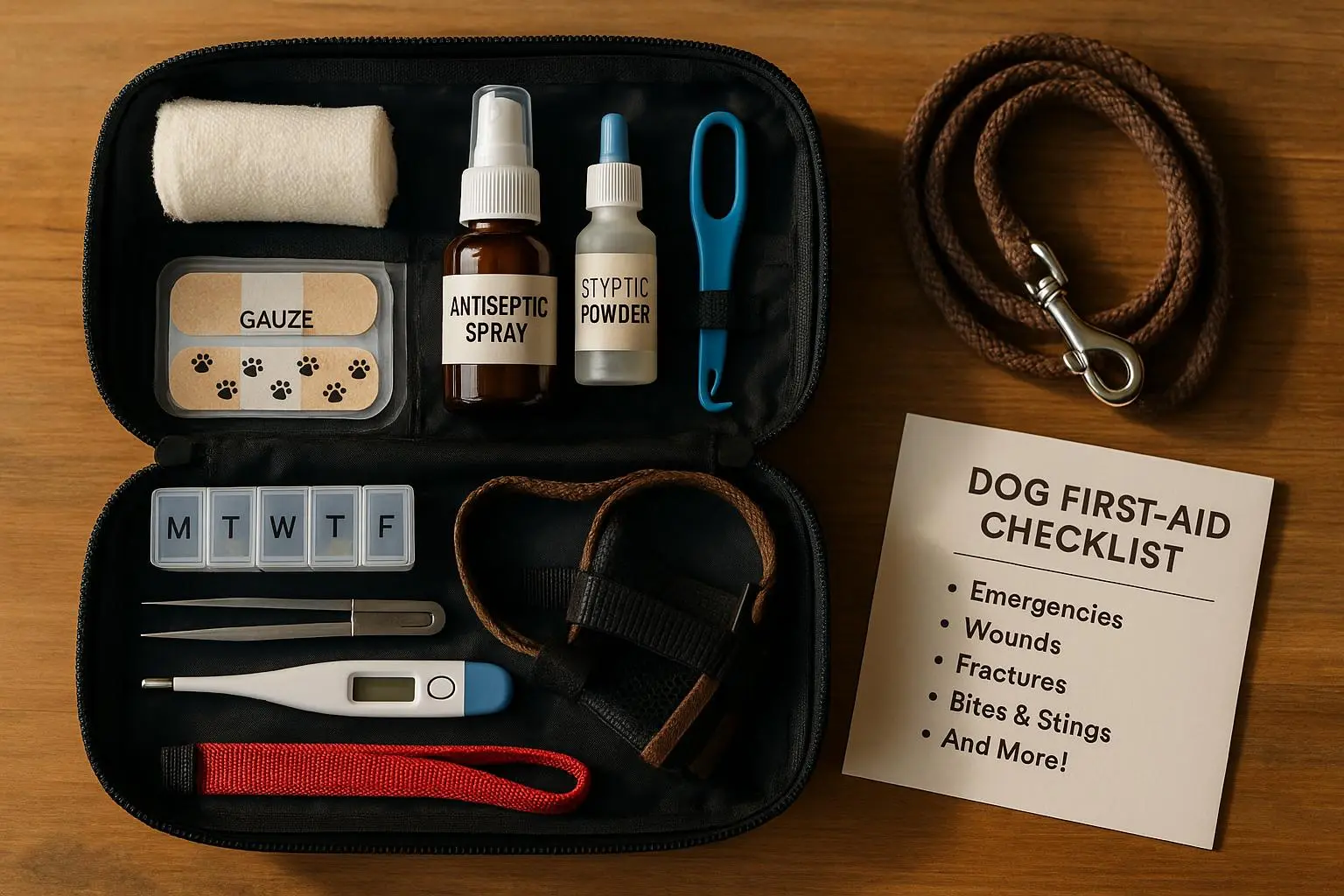
- Rolled gauze (2–4 inch) — for wrapping wounds and making temporary slings.
- Non-stick sterile pads (Telfa-style) — put directly on wounds.
- Self-adhering wrap (Vet Wrap/Coban) — sticks to itself, not fur.
- Medical adhesive tape — to secure pads and dressings.
- Blunt-tipped scissors/hemostat — trauma shears are worth the $10.
- Sterile saline solution — for flushing wounds and eyes.
- Disposable gloves (latex or nitrile) — hygiene and protection.
- Tweezers or a tick-removal tool — fine-tipped tweezers or commercial tick tools.
- Styptic powder or styptic pencil — stops nail bleeds fast.
- Digital rectal thermometer — accurate temps matter; don’t guess.
- Flashlight/headlamp — for looking into mouths, eyes, and wounds.
- Emergency contact card — vet, nearest 24/7 animal ER, Pet Poison Helpline.
Why these? They let you stop bleeding, clean a wound, stabilize, and get reliable vitals. That covers about 80% of field needs.
The Next Layer: Items for common but more serious scenarios
Once you have the essentials, add these. They help with allergic reactions, poisoning, or when professional help is far away.
- Benadryl (diphenhydramine) — get dose guidance from your vet and write it on the card.
- Activated charcoal — only use if instructed by a vet/poison control.
- Small supply (3–5 days) of your dog’s prescription meds — in original labeled bottles.
- Needleless syringe or eye dropper — for administering liquids or flushing wounds.
- Butterfly closures or wound-closure strips — for small skin tears.
- Disposable towels and a large absorbent towel — restraint, warmth, or packing wounds.
- Small bag of dry ice packs or instant cold packs — for swelling and heat injuries.
- Collapsible water bowl and bottled water — dehydration turns minor to major fast.
- Probiotics — for travel-related diarrhea (ask your vet).
A note on medications: never give human meds without vet dosing instructions. Benadryl can be life-saving for allergic reactions, but dose varies by weight and health status.
Tools for safety and restraint
Treating a hurting dog can lead to bites, even from the friendliest pup. Have safe restraint options.
- Two muzzles: one soft fabric muzzle and one basket muzzle (for panting or vomiting, basket is better).
- Slip leash and spare collar — temporary restraint if the primary collar breaks.
- Leather leash or long line — safer for control during movement.
Quick tip: practice putting the muzzle on when your dog is calm. A muzzle used correctly is a safety tool, not punishment.
Diagnostics and monitoring
Simple tools that tell you whether you’re dealing with something small or urgent.
- Digital thermometer (already mentioned) — normal dog temp: 100.5–102.5°F.
- Watch/phone timer — to monitor breathing rate and capillary refill.
- Capillary refill check: press gum until pale, release, count time to pink (<2 seconds is normal).
- Note pad and waterproof pen — write timeline, meds given, and observations.
Write the time and dosage when you give any medication. In the shock of the moment you’ll forget.
Packing for different situations
Not every kit looks the same. Here’s what to carry based on what you’re doing.
For short walks and hikes (mini kit)
- Small roll Vet Wrap (wraps small paws quickly).
- 3–4 sterile gauze squares and a few adhesive bandages.
- Tick remover tool.
- Small tube of antiseptic wipes or chlorhexidine wipes.
- Styptic powder.
- Collapsible water bottle and a few treats.
- Emergency contact card folded in ziplock.
Make it fit in a fanny pack, saddlebag, or side pocket. Weight under 1 lb. If you're only going for 30 minutes, skip the thermometer.
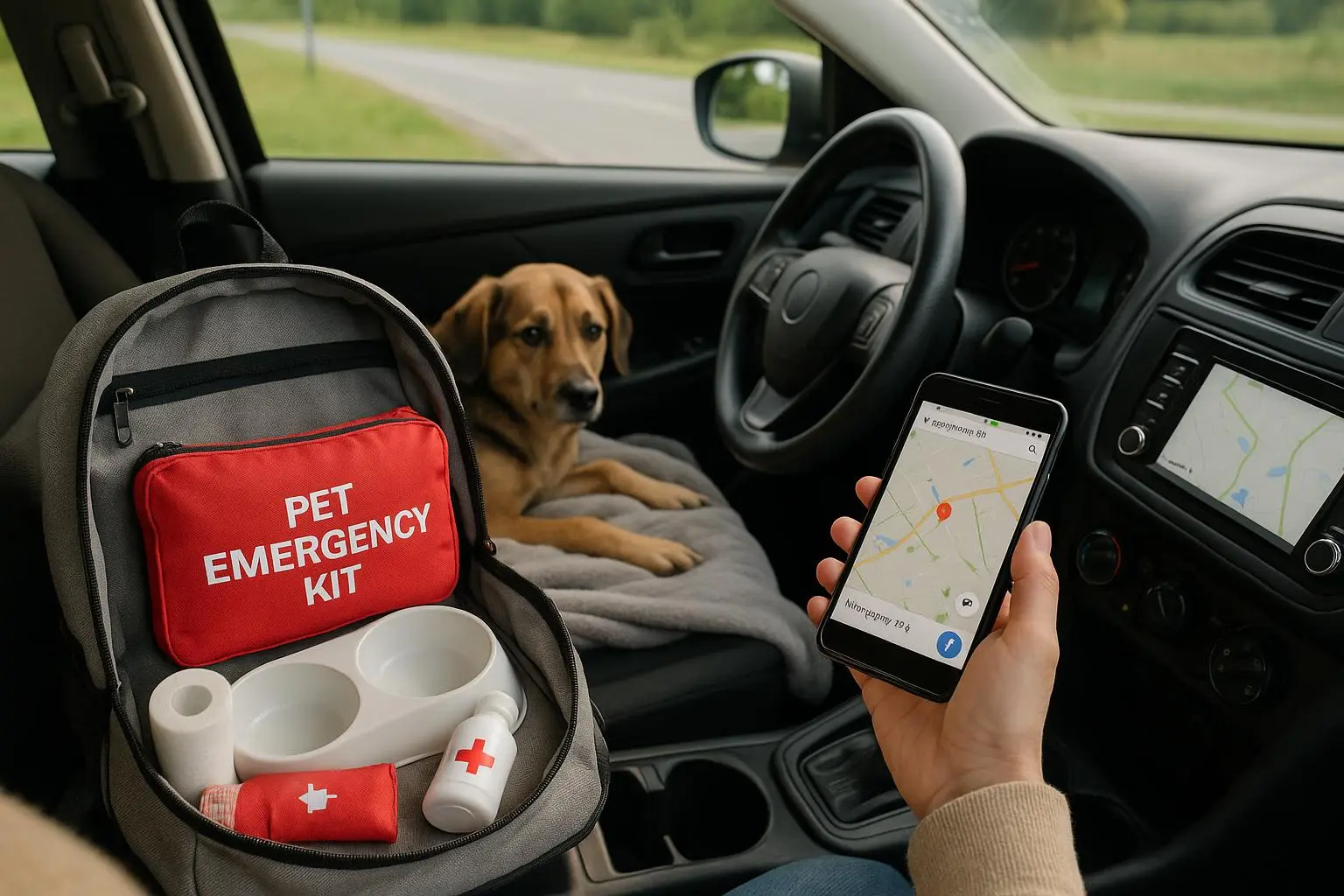
For the car (road trip kit)
- Everything from the Essentials plus:
- Larger gauze rolls, emergency blanket, extra water, full medicine supply, muzzle, heavy-duty towel, and a hard case waterproof box.
- Cooling mat or ice packs in summer.
- Portable crate or barrier for travel restraint.
Keep this under the seat or trunk, clearly labeled. I recommend a bright color so you spot it immediately after a roadside stop.
For home (full kit)
- Store in a waterproof tote with compartments.
- Keep hard-to-replace items like sterile saline and medication in the main home kit.
- Keep it in a temperature-stable place: not the garage in summer, not the basement if it floods.
Multi-dog households and special needs
If you have more than one dog, duplication is your friend.
- Color-code pouches for each dog (red pack = Rosie, blue pack = Max).
- Keep separate med lists and pill organizers for each dog.
- Store duplicates of muzzles and leashes.
- Larger households benefit from two full kits: one at home, one in the car.
If you have a senior dog or a dog with chronic conditions, add mobility aids, a copy of medications and dosing schedules, and a list of special instructions for vets or sitters.
How to use the common items — quick practical notes
- Cleaning wounds: flush with sterile saline for several minutes. Don’t scrub aggressively.
- Stopping bleeding: apply direct pressure with a sterile pad for 5–10 minutes. If bleeding soaks through, don’t remove the pad—add more on top.
- Broken nail: apply styptic powder or cornstarch; hold pressure for a few minutes. If bleeding continues, go to ER.
- Tick removal: use fine-tipped tweezers or a tick tool. Pull straight out, do not twist. Clean the area and save the tick in a labeled zip bag if possible.
- Chewing/poisoning: call Pet Poison Helpline immediately. Do not induce vomiting unless directed by a veterinary professional.
My real story (what actually happened and what I learned)
Two years ago, I took my Lab, Gus, on a cliff-side trail. He slipped on a wet rock and slammed a front paw into a hidden branch. There was a long, jagged cut across his pad that bled like a faucet. My hands were shaking. I set the pack down, pulled a pair of gloves, pressed a non-stick pad to the wound, and wrapped Vet Wrap tightly. The bleeding slowed but didn’t stop, so I added more gauze and kept firm pressure while a friend drove us to the nearest ER (20 minutes away).
At the clinic they praised the quick pressure and the fact I’d used non-stick pads. They also told me the wrap would have been impossible with regular tape. Gus needed stitches and three days of antibiotics; he recovered fully. What I learned: the right tools (blunt scissors, non-stick pads, Vet Wrap) and a calm checklist in your head buy you time. A tiny kit in my car saved us hours of stress and an expensive emergency because I could stabilize him long enough to travel safely.
One tiny micro-moment you’ll remember
The smell of the antiseptic wipes. It’s strangely grounding. In that moment it made me feel like I was actually doing something useful instead of panicking.
Kit maintenance: labels and expiration calendar
A kit is only as good as its upkeep.
- Label the kit with: Owner name, emergency contacts, dog name(s), assembly date.
- Tape a simple expiration calendar inside the lid: list meds and their expiry dates and set a review schedule every 6 months.
- Replace saline and sterile items yearly. Meds check every 3–6 months.
- Use apps like PetDesk or calendar reminders to nudge you.
If you prefer analog, write the next check date with a permanent marker on the outside of the kit — it’s visible and hard to ignore.
A few hard truths
- First aid is not a substitute for veterinary care. It’s triage.
- Never give pain meds meant for humans (like ibuprofen or acetaminophen) to dogs.
- If your dog is showing signs of shock (pale gums, rapid breathing, weak pulse, cold extremities), get to an ER immediately.
- If you’re unsure about dosing or a toxic ingestion, call poison control. Don’t guess.
Building a budget-friendly kit
You don’t need brand-name everything. Buy basic sterile supplies in bulk and split them into kits. Spend money where it matters: a good muzzle, blunt scissors, Vet Wrap, and a reliable thermometer. The rest can be economical.
Final checklist you can use now
- Essentials: gauze, non-stick pads, Vet Wrap, tape, scissors, saline, gloves, tweezers, styptic powder, thermometer, flashlight, emergency contacts.
- Add for travel: extra water, collapsible bowl, full med supply, towel, cooling pack.
- Add for hikes: mini Vet Wrap, antiseptic wipes, tick tool, small gauze squares, treats.
- Organize: label, color-code, expiration calendar, and practice using muzzles and tools when calm.
Keep one kit at home (full), one in the car (stabilization + meds), and a mini-kit for walks. Review every six months and after any use.