Travel Hydration Planner: Keeping Dogs Safe on Long Drives and Flights
Jun 29, 2026 • 9 min
Three seconds: that’s about how long it takes for a highway heatwave or a missed layover to turn a good trip into an emergency for a dog. Hydration is the easy part to overlook—and the hardest to fix once it’s a problem.
This is a practical, no-nonsense planner. It tells you what to do before you leave, how to manage water on the road and in the air, what gear actually works, and a short emergency playbook if things go sideways. I write this from trips that went great and one that didn’t. Read the story later—learn from my mistakes.
Why hydration matters more than you think
Dogs lose water fast through panting. Add stress, heat, confinement or long periods without access to water, and things escalate quickly: lethargy, dry gums, poor skin elasticity, and in extreme cases, shock.
Daily baseline: most dogs drink roughly 50–60 ml per kg of body weight under normal conditions. But travel changes the math. Expect higher needs in hot weather, after vigorous activity, or during stressful travel. That’s why planning beats panic.
Before you go: a simple pre-trip routine
Start seven days out: track your dog’s normal water intake.
- Measure: note how many ml your dog drinks each day for a week. This gives you a baseline.
- Stabilize: keep feeding and walking schedules consistent. Extra short walks encourage normal drinking.
- Familiarize gear: introduce any new bowl, bottle, or flavored additive at least 3–5 days before travel so your dog recognizes it.
The 2–4 hour rule for food and water:
- Food: most vets recommend finishing the last meal 4–6 hours before departure to reduce motion sickness.
- Water: offer water until about 2 hours before leaving for a long trip. For short drives under 4 hours, avoid severe restriction—offer small amounts if needed.
Why? You want your dog hydrated at the start, but not so full they’re uncomfortable or can’t hold it during the first stop.
Micro-moment: I always stash a zip-top bag of crushed ice in the cooler. On a hot stop, dropping a handful of icy cubes into the bowl gets a hesitant drinker going. The sound of ice hits the bowl and they’re curious—then they sip.
On the road: practical hydration scheduling
Road trips are the easiest to manage if you plan stops.
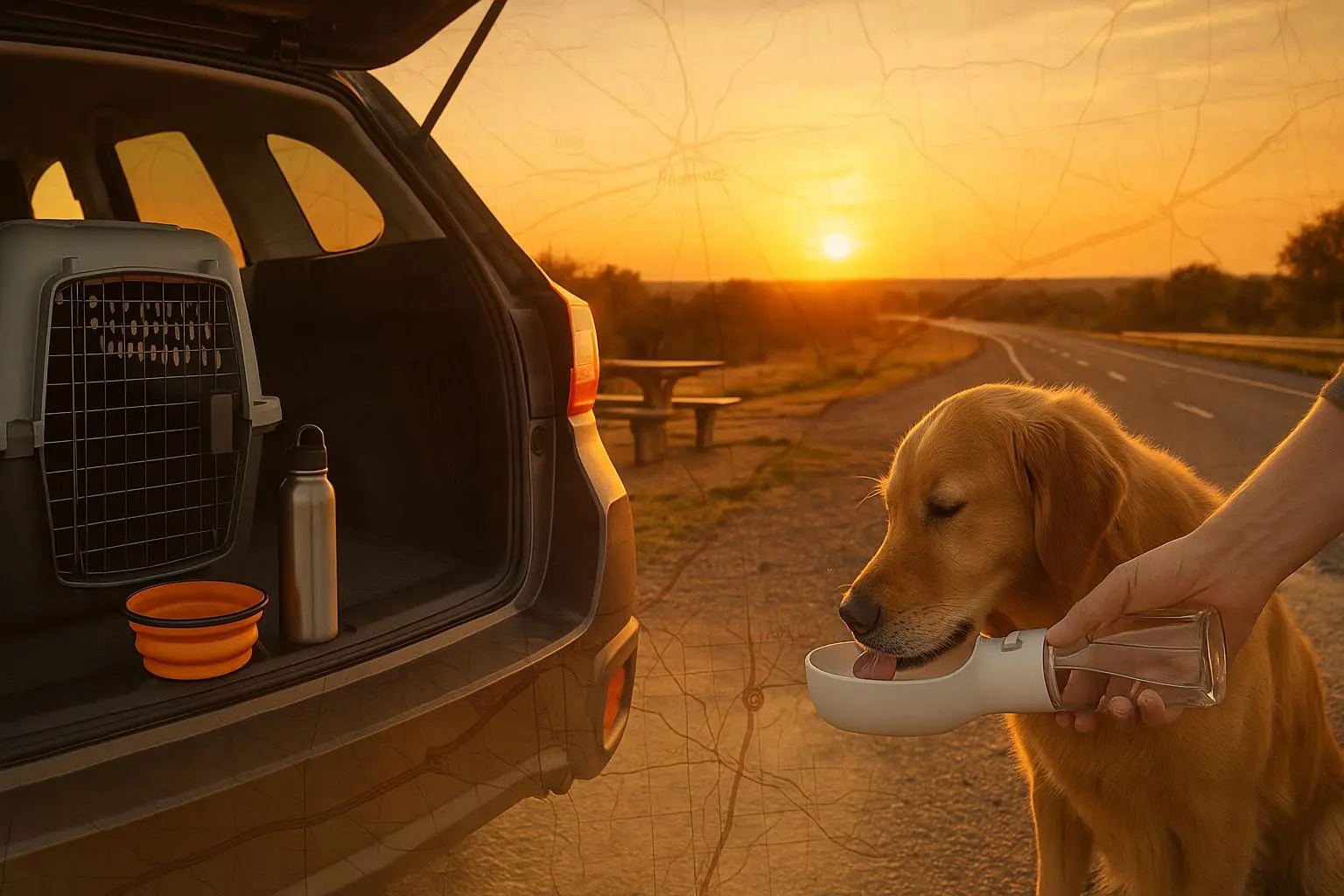
- Stop every 2–3 hours for 15–20 minutes. Let the dog out, walk them, and offer water outside the vehicle.
- Offer water in controlled amounts. Don’t force large gulps—small, repeated sips are safer.
- Carry extras: at minimum, 1 gallon (3.8 L) of water per day for a medium dog, plus reserves for delays.
Gear that matters:
- Collapsible silicone bowl (wide mouth): easy to clean and dogs usually accept it.
- Leak-proof travel bottle with attached trough or flip-top dispenser: handy, but test it at home—some dogs hate the angle.
- A dedicated car mat or towel for spills and a small towel to dry mouths after drinking.
A quick note on in-car access: leaving a bowl in the car while driving often leads to spills and less effective drinking. I prefer scheduled, calm breaks—my dog drinks more when we make it a ritual.
User insight I’ve seen echoed: owners who measure intake on the road can detect problems early. If your dog drinks less than ~75% of baseline, consider stopping sooner.
Flying with dogs: different rules, same goal
Air travel, especially when a dog is in the cargo hold, is the trickiest.
Pre-flight:
- Make sure your dog drinks well about 2 hours before check-in.
- Attach two empty, leak-proof dishes to the crate door (airlines often require this). Freeze water in the dishes; thawing gives slow access with minimal spillage during handling.
- Label the crate with feeding/drinking instructions and your contact info. Don’t assume staff will check unless prompted.
In-flight realities:
- Staff may not refill water during layovers. Be prepared for no refills.
- Small breeds and brachycephalic dogs (short-nosed) are more at risk—consult your vet before flying.
Post-flight:
- Offer water slowly. Stress and dry cabin/cargo air can make dogs drink poorly or gulp too fast. Give calm space and small amounts repeatedly.
Electrolytes: when, what, and how
Most trips need only water. But electrolytes can help in heat, after vomiting/diarrhea, or during prolonged panting.
- Vet-approved canine electrolyte supplements are best. If unavailable, plain Pedialyte (unflavored) is sometimes used in small amounts—check with your vet first.
- Never give salted human sports drinks like Gatorade regularly—sugar and additives can be harmful.
- Bone broth (low-sodium, no onion/garlic) mixed into food is an easy, appetizing boost.
Use electrolytes as a supplement, not a substitute, and consult your vet if you plan to use them on a trip. Overuse can cause electrolyte imbalance.
Recognizing dehydration early
Don’t wait for dramatic signs. Do quick checks every stop.
- Skin turgor: lift the skin between the shoulder blades. If it snaps back immediately, hydration is fine. If it stays tented for more than 2 seconds, that’s concerning.
- Gums and capillary refill time (CRT): press on the gums until pale, then release. Color should return in under 2 seconds. Slower indicates poor circulation.
- Behavior: excessive panting, lethargy, drooling, or refusal to drink.
If you see these, stop in a safe place, offer water, and consider emergency measures.
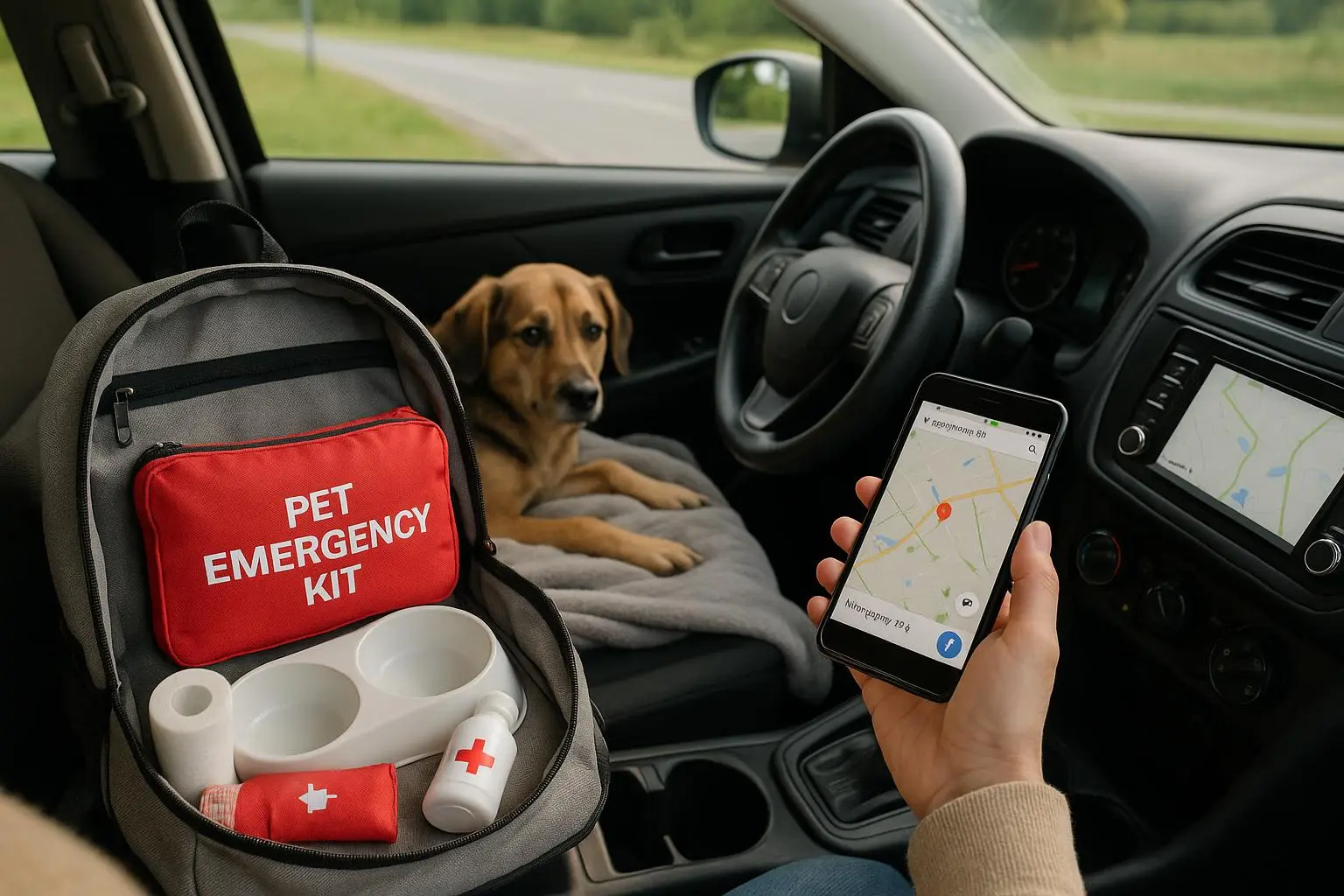
Emergency hydration kit (pack this every trip)
- Extra water (sealed bottles) and an extra gallon for long/delayed trips
- Collapsible bowl + a spare
- Small bottle of vet-approved electrolyte solution
- Large, needleless syringe (30–60 ml) for syringe-feeding fluids if the dog won’t drink
- Cooling towel or vest and a small fan for heat exposure
- Contact list: your vet, nearest emergency clinic along the route, Pet Poison Helpline
- Recent photo of your dog, vaccination card, and ID tag info
If your dog is panting heavily and won’t drink, use the syringe to give small amounts (5–10 ml every few minutes). If symptoms persist, seek emergency vet care immediately.
Real story — what I learned the hard way (120–160 words):
Two summers ago I drove my Labrador, Miso, from Phoenix to a mountain town. I followed my normal checklist: bowl, bottle, frozen ice pack. But I misjudged a holiday traffic jam and we sat, engines off, for nearly five hours in rising heat. Miso started heavy, sticky panting and would not touch plain water. I had no electrolyte solution—only bottles that sat untouched. I used a syringe to drip small amounts of water into her mouth and shaded her with the car sunshade while a neighbor handed over a cool towel. We made it, but I learned three things: freeze one small bottle of electrolyte solution for slow melt, always carry a syringe and instructions from your vet, and map emergency vets along the route before you leave. Since then, my hydration kit is non-negotiable.
Small habits that make a big difference
- Offer water off-leash or on a long lead—many dogs won’t drink if they’re anxious on a leash.
- Measure water on longer trips—knowing exact intake prevents guessing.
- Keep the car well-ventilated; closed cars heat quickly even with windows cracked.
- Introduce flavored hydration (low-sodium bone broth) at home so it’s familiar in travel.
Special situations
Hot weather: increase stop frequency, use cooling vests, and never leave a dog unattended.
Senior, ill, or brachycephalic dogs: consult your vet before travel. These dogs tolerate stress and heat poorly and may need more frequent checks or even to skip travel.
Airline travel and regulations: check airline rules on crate size, water bowls, and trunk conditions. IATA Live Animals Regulations are the gold standard for international travel—read them if you’re flying cargo.
Quick 10-item travel hydration checklist (printable)
- Baseline water intake recorded 7 days before departure
- Last meal 4–6 hours before travel; water until ~2 hours before
- At least 1 gallon of extra water per day for medium-sized dog
- Collapsible bowl + spare bowl
- Leak-proof travel bottle (tested at home)
- Vet-approved electrolyte solution or bone broth
- Large syringe (30–60 ml) for emergency administration
- Cooling supplies (towel, vest) and sunshade
- Emergency vet contacts along route + recent photo and medical info
- Crate attached bowls frozen (for flights) and clear instructions on crate
Final word
Travel is supposed to be fun for you and your dog. Hydration planning is low-effort insurance that prevents most travel-related health issues. Measure what you can, pack the essentials, and err on the side of stopping early. If something feels off—sticky gums, slow CRT, or refusal to drink—treat it seriously and find help.
The next trip will feel calmer when you know you can hydrate, measure, and act. Your dog will thank you with a nap in the backseat instead of a scary vet visit.