Beginner's Guide: Validate Your Micro-Niche Podcast in 30 Days
Sep 15, 2026 • 9 min
Starting a podcast is exciting. Recording, editing, lining up guests—the sunk-costs pile up fast. But here's the blunt truth: most niche podcasts fail because nobody was actually waiting for them.
If you want to know whether your tiny, very-specific idea actually has an audience, this is the fastest way I know to find out without burning months or a small fortune. It’s a 30-day lab: seven rapid, low-cost tests that give you clear signals. At the end you’ll either launch confidently, pivot deliberately, or shelve without regret.
I’ll walk you through each test, what to build, the signals that matter, and quick ways to measure success. No fluff. No “just try harder.” Just actionable experiments you can run this month.
Why micro-niches win — and why you must validate
General podcasts are fine if you want a hobby. But if you want loyal listeners who tell friends and spend money later, specificity wins.
A micro-niche is the opposite of “true crime” or “small business.” It’s “true crime about small-town theft rings in the Midwest” or “small business marketing for indie coffee roasters using POS data.” The more specific the problem you solve, the easier it is to find and serve an audience.
But specificity alone isn’t proof. You must test whether people actually seek help on that topic, share it, and are willing to give you a tiny bit of commitment (like an email). That’s what this 30-day lab proves.
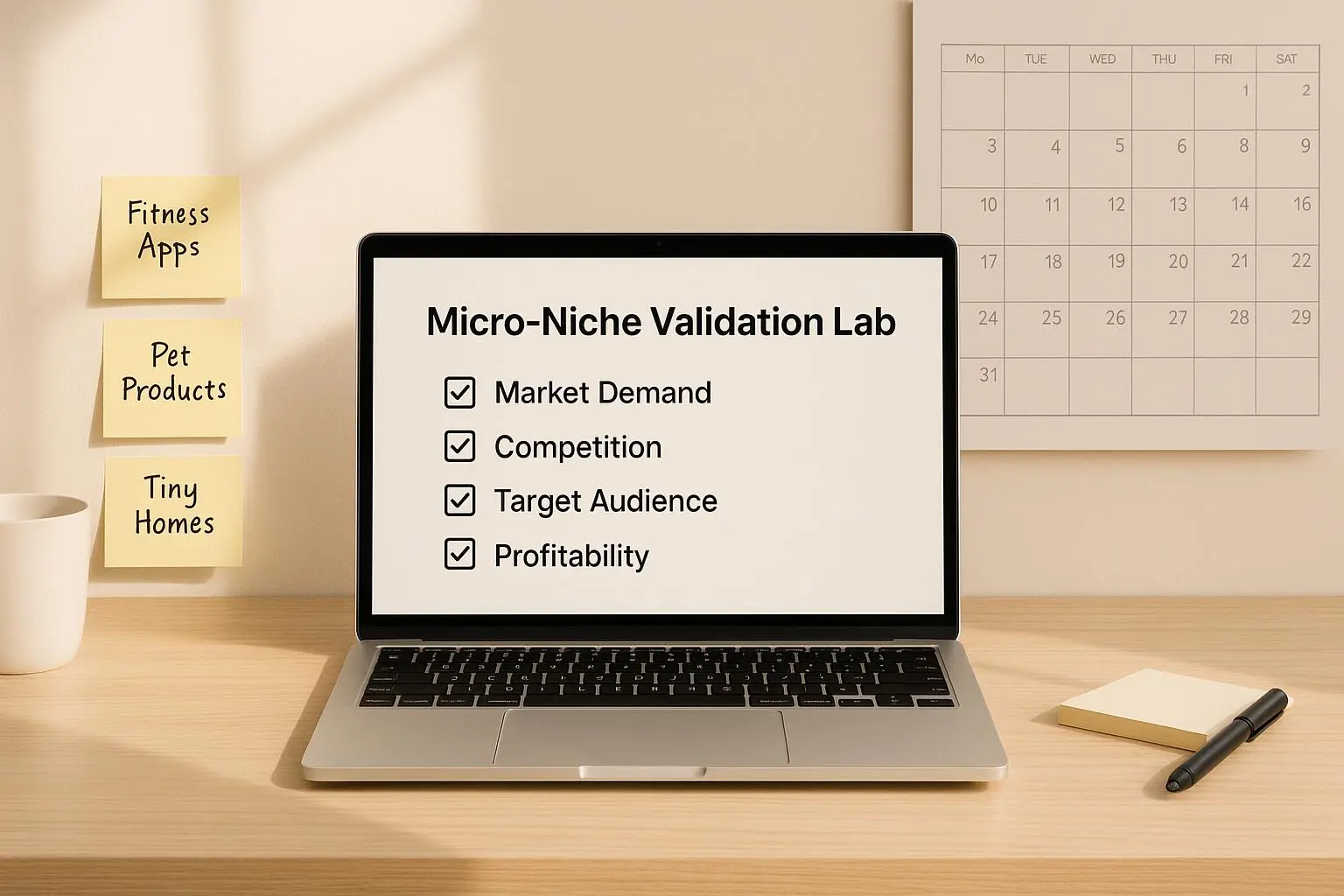
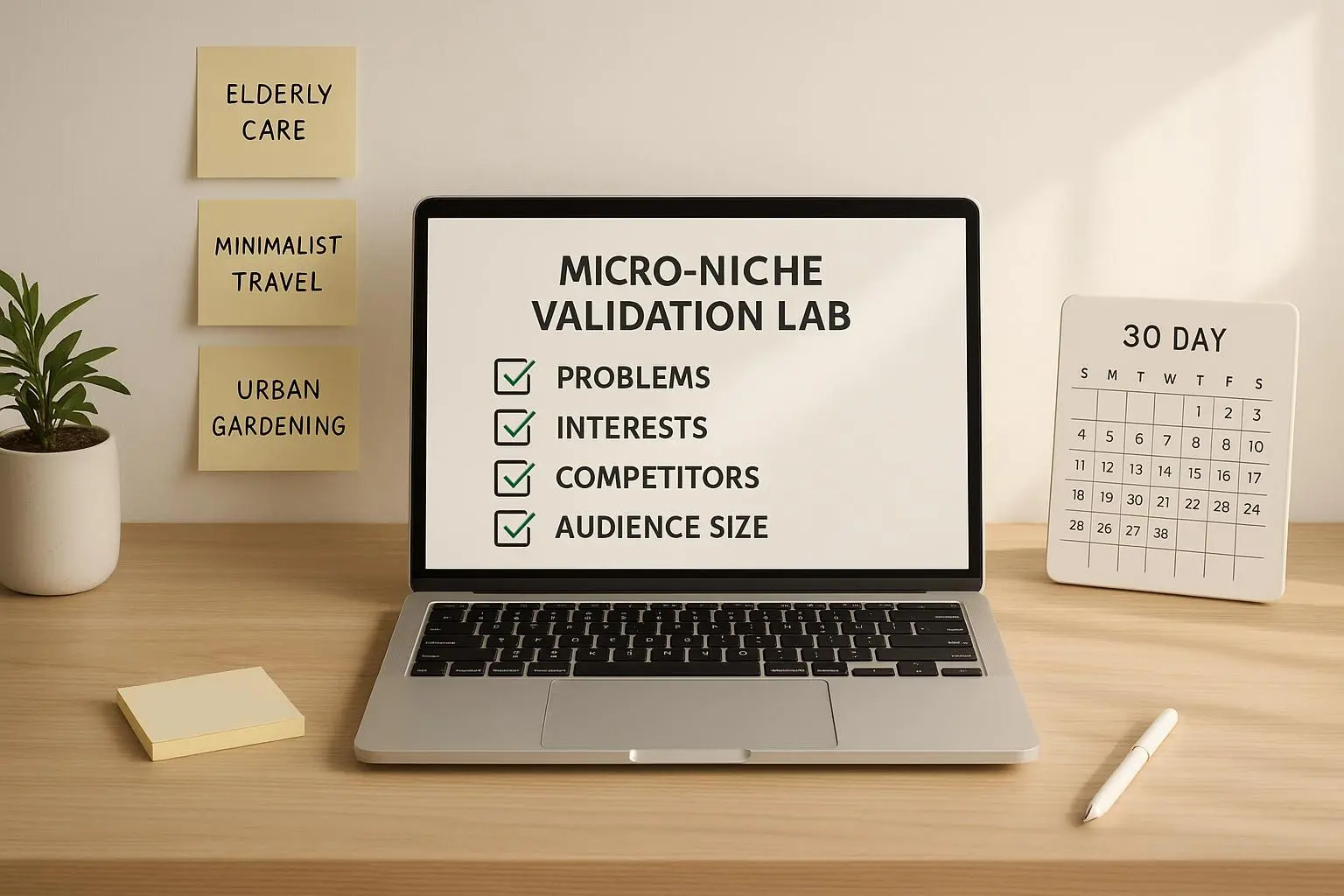
The 30-Day Micro-Niche Validation Lab — overview
We compress market research into four weeks. Each week has focused tests that are cheap, fast, and high-signal.
Week 1: Define and test the core concept (3 tests) Week 2: Measure interest with content proxies (2 tests) Week 3: Get direct audience feedback (1 test) and map competitors (1 test) Week 4: Interpret the data and decide
Let’s run it.
Week 1 — Define and test the core concept (Days 1–7)
Good validation starts with clarity. If you can’t describe the idea in one tight sentence, your audience won’t either.
Test 1 — The “One-Sentence Hook” Test
- Write one sentence that answers: who is this for, what specific problem do you solve, and why you (or this format) are uniquely qualified.
- Say it out loud. If you hesitate, simplify. If your friend says “huh?” you’re not ready.
Signal that matters: three people hear the sentence and immediately explain the audience back to you. If they do that, your hook is clear.
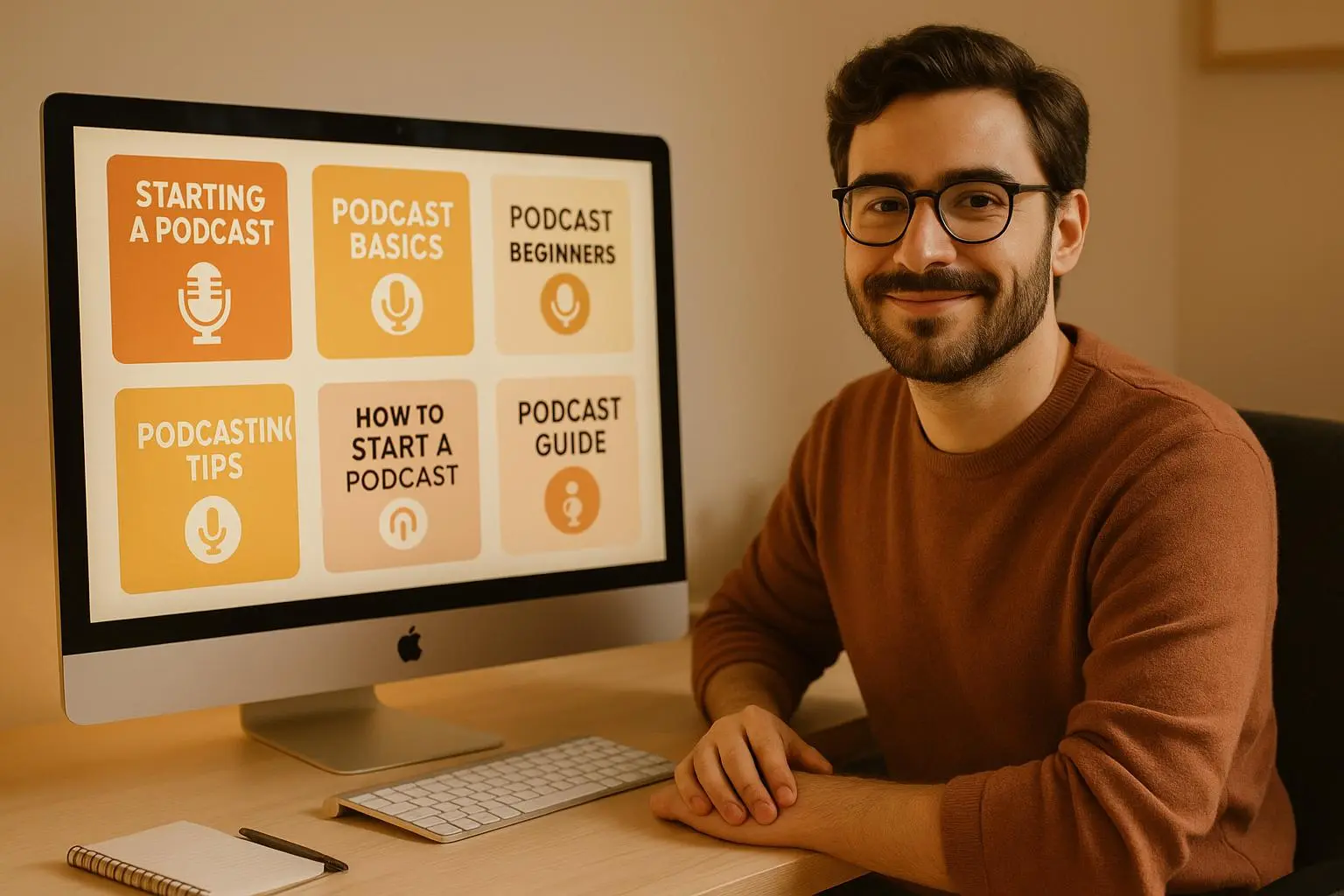
Test 2 — Keyword Intent Mapping
- Use Ahrefs, SEMrush, or even Google Keyword Planner.
- Search your core terms and related phrases. Note search volume, related questions, and intent (informational vs. action).
- High informational volume means people are looking for help; strong long-tail phrases are what you want.
Signal that matters: clear search volume for specific queries (not just the umbrella topic). Even 200–500 searches/month for tight long-tails can be enough for a micro-niche.
Test 3 — The Community Deep Dive
- Spend concentrated time in communities: subreddits, niche forums, Slack groups, LinkedIn groups.
- Don’t post yet. Read threads, bookmark pain-point posts, count how many people ask the same question and how recent those threads are.
Signal that matters: multiple threads in the last six months with real questions and engagement (comments that show follow-up questions). If you find the same unmet problem repeatedly, that’s a gap.
Quick aside: in my early days I thought a hobby podcast about vintage calculators would find fans. I found two obsessive collectors online—one in Ohio and one in Kyoto—and zero evidence of a broader audience. I spent a week in forums, and when I posted the one-sentence hook to a group of retro-tech folks, three people asked “when are you launching?” and two others shrugged. That was enough to stop. I pivoted to a podcast about "forgotten workplace tech that still shapes modern systems" and suddenly had dozens of people asking for episodes. The difference was audience size, not passion.
Week 2 — Gauge interest with content proxies (Days 8–14)
You don’t need a full episode to measure interest. Build proxies: things that stand in for the podcast.
Test 4 — Landing Page + Email Capture
- Make a one-page landing site (Carrd, ConvertKit, or simple HTML). Describe the podcast in that one-sentence hook, list 5 episode ideas, and offer a micro lead magnet (a 1–2 page checklist or one-page template) in return for email.
- Drive a small amount of traffic: 30–50 targeted visitors via niche forums, a $50 run of paid social, or personal outreach.
Signal that matters:
- Conversion rate 3–10% on a targeted audience = good signal.
- 50+ email signups from relevant sources in 30 days = very strong.
- If you have clicks but zero emails, the hook or magnet is weak.
Test 5 — Social Snippet Testing
- Record 3–5 short audio clips (30–60 seconds) that solve one tiny problem—one immediate takeaway each.
- Post them as Reels/TikToks or LinkedIn posts depending on where your audience hangs out. Caption with a one-line problem and call-to-action to your landing page.
- Track plays, saves, comments, shares.
Signal that matters:
- Engagement rate (likes+comments+shares)/views above platform benchmarks (on TikTok/Reels aim >1–3% for a niche account).
- Comments asking for more detail or sharing personal experiences = strong interest.
A small micro-moment: I once posted a 40-second clip about “one command that fixes a broken dev environment.” It got a comment saying “you just saved my week” and that single comment led to three DMs asking for a deeper episode. Short, useful clips behave like tiny audits of demand.
Week 3 — Direct audience feedback and competitor gap (Days 15–21)
Now you want direct signals: will people ask, engage, and recommend?
Test 6 — Host an AMA / Live Q&A
- Run a 45–60 minute Zoom, Twitter Space, or Reddit AMA focused on the problem the podcast would solve.
- Promote it to the email list you built, social channels, and relevant communities.
- Measure turnout, questions, depth of follow-up, and whether participants opt into future updates.
Signal that matters:
- High-quality questions (not “what mic do you use?” but “how do I integrate X workflow with Y process?”) indicate a hungry audience.
- Quantity is helpful too: 20+ engaged attendees with active Q&A is a solid proof point.
Test 7 — Competitor Analysis & Gap Identification
- Pick 3–5 podcasts that brush your niche. Listen to recent episodes. Read reviews and comments.
- Note what listeners say they want more of or complain about.
Signal that matters:
- Consistent complaints (e.g., “too general,” “not actionable”) are opportunity. If reviewers ask for the specific content you plan to make, that’s a green light.
Week 4 — Decision time (Days 22–30)
By day 30 you should have multiple data points. Don’t fall in love with a single metric—look at the pattern.
Launch signal
- Keyword intent shows search volume for long-tail queries (Test 2).
- Landing page converts (Test 4): at least a 3% conversion with a meaningful number of visitors.
- Live sessions generate deep questions (Test 6). If you hit these, you have demand. Plan your first 10 episodes around the most-asked questions and launch a minimum viable show: 10 tightly-edited episodes, a basic feed, and a promotion plan.
Pivot signal
- Strong community chatter (Test 3) and competitor gaps (Test 7), but poor email conversions (Test 4).
- Clips get some engagement, but people don’t click through. This means the topic resonates, but your hook or lead magnet needs work. Try a different angle, reframe the value in your landing page, or change the format (short interviews vs. solo deep dives).
Shelve signal
- Weak search intent, low email interest, shallow community engagement across tests. Respect the data. You’ve saved yourself months of work. Archive notes, and move on to an idea with clearer signals.
What success looks like — numbers you can use
Here are practical thresholds I use:
- Landing page: 3–10% conversion on targeted traffic. 50+ emails in 30 days = strong.
- Social snippets: >1% engagement rate on niche platforms; comments asking for more = excellent.
- Live AMA: 20+ engaged attendees with multiple follow-up questions = strong.
- Keyword research: Long-tail phrases with 200+ monthly searches are usable in micro-niches.
If you hit two of the above consistently, consider launching. If one or none, pivot or shelve.
Tools and quick setup checklist
You don’t need expensive software. Use what moves fast.
- Keyword research: Ahrefs/SEMrush (or Google for free signals)
- Landing page: Carrd or ConvertKit
- Email capture: ConvertKit, MailerLite, or even Google Forms (not ideal, but fast)
- Snippet recording: Anchor, Audacity, or your phone + simple editing
- Social posting: native apps; repurpose for multiple platforms
- Live sessions: Zoom or Twitter Spaces
Set aside two hours a day for the first two weeks. The data comes from consistent, focused work—not sporadic effort.
A short story that stuck with me (100–200 words)
I once helped a friend test a podcast idea about freelance contract negotiation for UX designers. We built a one-page Carrd, wrote a one-sentence hook, and offered a one-page contract checklist. We spent $40 on targeted LinkedIn posts and messaged 60 designers in Slack groups. In 10 days we had 67 signups—mostly from organic Slack referrals. Then we hosted a live AMA and 45 designers turned up; their questions were specific and technical. We launched three episodes and converted 18% of our email list into active listeners in the first month. That traction turned into a small sponsorship within three months. The lesson: one clear problem + a useful deliverable + a community ready to talk beats polished production every time.
Final notes: validation is a tool, not a badge
Validation kills excuses and prevents wasted labor. It doesn’t guarantee stardom, but it buys you high-probability work. If the lab tells you to pivot, do it quickly. If it tells you to shelve, archive the idea and move on—creator time is the scarce resource.
Start with a tight hook. Build tiny things that prove interest. And keep your ego out of the metrics. The listeners will tell you what they want, if you ask the right way.