When to Tell Them You Used AI: Timing Heuristics That Protect Trust
Feb 15, 2026 • 9 min
The question of when to disclose AI assistance in dating isn’t a polite etiquette puzzle. It’s a trust architecture problem. The moment you reveal your AI help, you’re not just sharing a fact—you’re shaping how your date reads you, your effort, and your future together.
I’ve played this out in real life a few times, and I’ve learned to trust three things above all: signals from the other person, the rhythm of the conversation, and what kind of vulnerability you’ve already offered. The science backs that up, too. The outcomes aren’t about “right vs. wrong”; they’re about timing that preserves trust while keeping momentum toward an actual date.
Here’s how I’ve learned to read the moment, and how you can test it in your own conversations this week.
A quick aside that stuck with me: I was in a coffee shop, trying to craft a first message that felt warm but not cheesy. I’d chosen a photo with a goofy hat, which earned playful replies. I realized the real victory wasn’t the opener—it was the follow-up. When I paused to ask a real question about their weekend instead of piling on more witty lines, I noticed their replies started revealing tiny details: a favorite book, a hospital shift, a dog named Maple. It wasn’t about being perfect; it was about recognizing the moment their wall came down. That moment—when someone shares a real detail—became my cue to consider disclosure more seriously.
Three signals you’re reading readiness correctly
- Signal 1: Depth of response and reciprocity
- Signal 2: Consistent rhythm in replies, not occasional bursts
- Signal 3: A moment of vulnerability or a genuine personal disclosure from them
When you see these, you’re not just creating a nicer conversation. You’re shaping the context in which your disclosure will be received as honest and practical, not evasive or deceptive.
If you take away one thing from this piece, let it be this: the timing isn’t a trick; it’s a boundary you set to protect the integrity of the connection you’re trying to build. When you time disclosure well, AI is not a risk to trust—it becomes a tool you’ve used thoughtfully to put your best self forward.
Now, let’s dive into the three timing strategies that actually work, the decision tree you can follow, and three plug-and-play experiments to test this week.
The trust calculus: deception versus effort
In dating, trust is built through perceived consistency and genuine effort. If you’re using AI to draft the entire personality, core values, or life stories, the recipient is evaluating not only the message but the person behind it. It’s about the transfer from online persona to real-life person. Research in digital communication consistently shows authenticity drives initial attraction and the likelihood of meeting face-to-face. The key distinction is editing versus generating. If you’re using AI to polish grammar or to summarize a thought you already own, that’s different from letting AI generate core personal narratives.
Disclosing too early can feel like signaling “I’m not putting in the work.” Disclosing too late can trigger a “caught you” moment that erodes trust. The sweet spot is the moment when the recipient has enough context to process the disclosure without feeling blindsided.
From my own dating life, I’ve learned that a well-timed disclosure tends to shift the conversation from “Are you real?” to “This person is thoughtful and intentional.” That shift is exactly what converts a conversation into a date.
Heuristics for reading readiness (the depth metric)
Readiness isn’t a single-dimension thing. It’s a blend of how deep the conversation already is, how much the other person has shared, and how consistent their engagement remains over time.
Heuristic 1: Recipient depth
- If your partner is asking thoughtful questions, sharing personal details, and the messages aren’t just small talk, they’re signaling you’ve crossed into meaningful territory. That’s a green light to consider disclosure as a normal part of an honest conversation, not a confession.
Heuristic 2: Reciprocity and vulnerability
- If they’ve shared a personal story, a wish, or a concern, they’re signaling emotional investment. Disclosures here are more likely to be interpreted as honest and practical.
Heuristic 3: Rhythm and consistency
- If the pace of replies is steady, not a wave of enthusiasm followed by silence, your disclosure is less likely to come off as manipulation. Inconsistent patterns—an abrupt leap from casual to polished—should push you to think twice before disclosing.
These signals aren’t rigid rules; they’re a compass. If you sense readiness, you’re not forcing transparency. You’re embracing it as a shared value: you’re both in this conversation, and you want the other person to know you’re being upfront about the tools you used to communicate.
Three timing strategies (and when to use them)
Strategy 1: The Early Transparency Window (Messages 3-7)
- When to use: If you’re using AI to craft the initial opening lines or early conversation prompts.
- The logic: You disclose before the other person has invested heavy emotional energy in the conversation. It’s framed as a practical tool, not a deception.
- How to say it: “Full transparency—I used AI to help craft that opening line because I wanted to make a good first impression. But everything I’m saying now is genuinely me.”
- Why it works: You prevent the later discovery moment that can reframe the entire conversation as a lie. People often rate AI-assisted messages as effective when the tone remains human and the disclosure is straightforward.
- Conversion risk: Moderate. Some may interpret it as insecurity; others will respect the honesty. Overall, the data suggests disclosures made early tend to be less harmful than discovery during or after a big reveal.
Best for: Matches who show early reciprocal engagement and who value authenticity. If they ask about the opening line or show curiosity about your approach, you’re in the right zone for this.
Strategy 2: The Pre-First-Date Confirmation (Before Suggesting a Meet)
- When to use: After several days of good conversation and a clear interest in meeting in person.
- The logic: Disclose right before you propose an IRL encounter. It’s framed as part of presenting the “real me” before moving from online to offline.
- How to say it: “Before we meet in person, I want to be upfront—I used AI to help with some of my earlier messages because I wanted to make sure I put my best foot forward. The real me is here, though, and I’m looking forward to meeting you.”
- Why it works: This timing aligns with the psychological transition toward meeting the real person behind the messages. It signals you’re mindful of the gap between digital and real-life interactions without undermining the rapport you’ve built.
- Conversion risk: Low to moderate. If your date has already decided to meet, this can feel like a helpful clarifier. If they’re not convinced, they might reconsider the date—but this is still better than revealing after you’ve met and created a mismatch narrative.
Best for: Matches who have demonstrated consistent engagement, vulnerability, and a genuine interest in meeting.
Strategy 3: The Post-Meeting Reflection (After First Date, If Relevant)
- When to use: After a first date, if your prior messages or style comes into question or is being scrutinized.
- The logic: Wait for a moment when they ask about your communication style or when you’re reflecting on the date together.
- How to say it: “You know, I was nervous before we met, and I used AI to help with some of my earlier messages because I wanted to make sure I wasn’t overcomplicating things. I’m glad you got to meet the real me, though.”
- Why it works: The first date creates a shared in-person frame that can anchor the disclosure as a nuanced footnote rather than a foundation. It’s safer if you’re confident they won’t have discovered AI assistance first.
- Conversion risk: High if used incorrectly. If they discover AI use before you tell them, they may feel misled. Use this only when you’re confident your in-person connection stands on its own.
Best for: Matches where you felt a genuine rapport on the date, and you’re continuing conversation with a clear path forward.
If you’re wondering which strategy to pick, remember this: you’re not forcing a single solution. You’re testing timing to see what your dating pool responds to best. That means real-world experimenting. The three strategies are your playbook, not your gospel.
Decision tree: Which strategy fits your situation?
START: Are you using AI to write messages?
- NO → Keep building genuine connection. Let your personality show in real time.
- YES → Has your match shown reciprocal vulnerability or personal sharing?
- NO (surface-level responses) → Use Strategy 1 (Early Transparency). Disclose in messages 3-7 before they invest emotionally.
- YES (they’ve shared something personal) → Are you about to suggest meeting?
- NO (still in early conversation) → Use Strategy 1 (Early Transparency). Disclose soon to prevent discovery later.
- YES (ready to transition to first date) → Use Strategy 2 (Pre-First-Date). Disclose before proposing a date.
- After first date goes well → Consider Strategy 3 (Post-Meeting) only if they ask or if you’re confident they won’t discover AI use independently.
The key is to stay flexible. If your match shows strong curiosity or a desire to understand your perspective, you can pivot toward Strategy 1 a bit earlier. If they’re excited about meeting you and seem a little anxious about the digital-to-IRL transition, Strategy 2 becomes your best bet.
Three plug-and-play timing experiments you can run this week
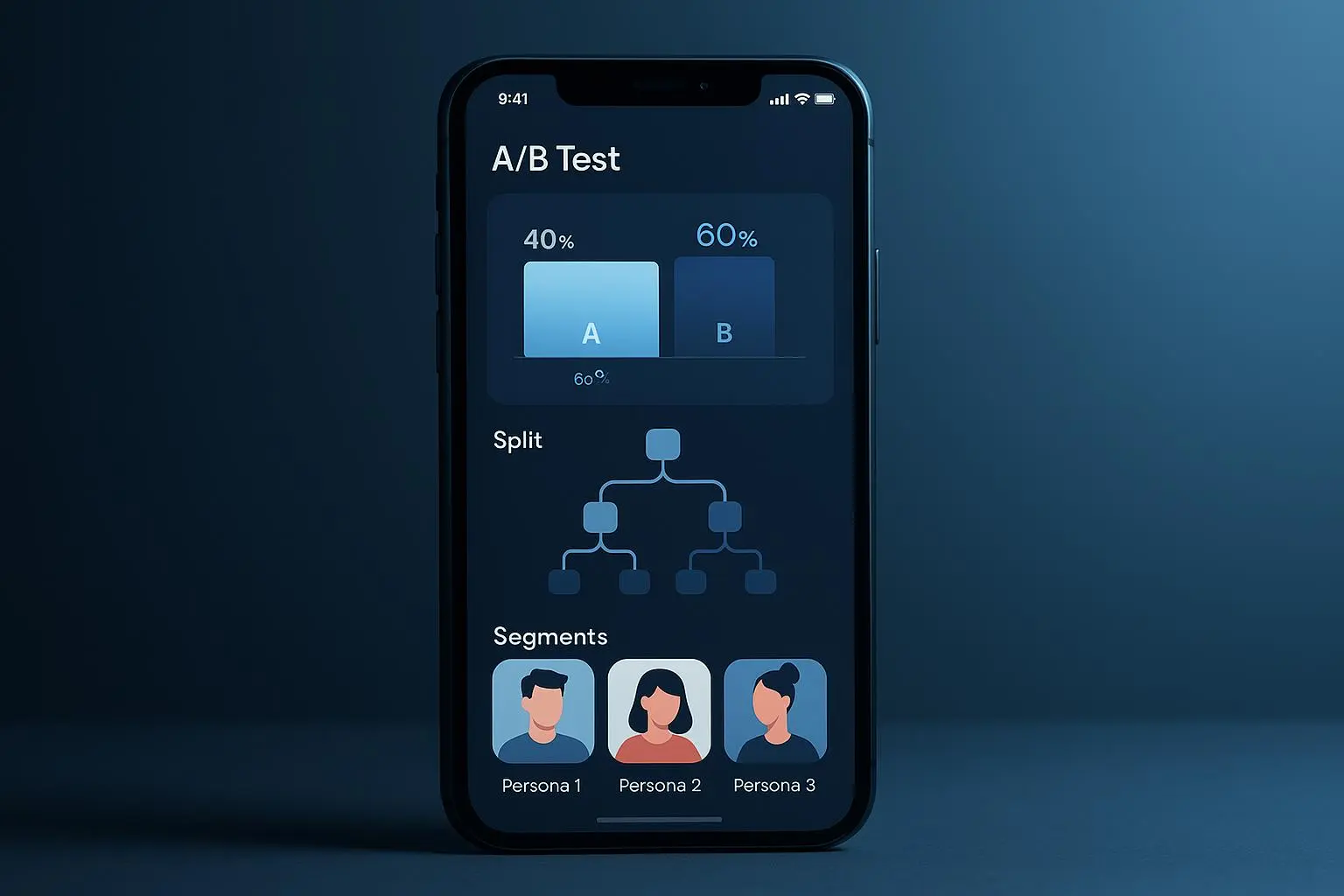
Experiment 1: Early transparency vs. silent assistance
- Setup: Two matches at similar stages. For Match A, disclose AI assistance in message 5 using Strategy 1 framing. For Match B, don’t disclose yet.
- What to measure: Next-message response rate (within 24 hours), depth of engagement, and whether they suggest meeting within 5 exchanges.
- What you’re testing: Does early disclosure help, hurt, or not matter for your dating pool?
- Expected takeaway: If Match A maintains similar or better engagement than Match B, early transparency is working in your context. If Match B outperforms, your audience may prefer secrecy, or at least delayed disclosure.
Experiment 2: Pre-first-date disclosure timing
- Setup: For matches you’ve talked to for 3-5 days with clear interest in meeting, disclose AI assistance right before you propose a date.
- What to measure: Agreement to a date, speed of reply, follow-up questions about AI use, and tone of the response.
- What you’re testing: Does disclosure at this transition point hinder or help conversion to an actual date?
- Expected takeaway: If 70%+ agree to the date after disclosure, you’re likely aligned with your audience. If fewer than 50% do, you’re tapping into a cohort that’s not ready for transparency at that moment.
Experiment 3: Response depth as readiness signal
- Setup: Track 10 matches across the first 10 messages. Score responses as 1 (surface), 2 (engaged), 3 (vulnerable or highly personal).
- What to measure: The point at which you disclose AI assistance and the match’s response to that disclosure at different readiness levels.
- What you’re testing: Is read readiness (as the score suggests) a reliable cue for timing?
- Expected takeaway: Higher readiness scores correlate with positive responses to disclosure more often, while low scores predict mixed results. Use the pattern to guide the timing of your disclosure moving forward.
Three common scenarios you’ll encounter in the wild
- The “I’m enjoying this but I don’t know them yet” scenario
- You’re seeing genuine warmth but there’s still a gap between online and in-person judgment. Strategy 1 gives you a buffer, showing you’re committed to honest conversation while you gauge the next move.
- The “we’re moving toward a date” scenario
- You’ve had several good exchanges and you want to minimize misalignment on expectations. Strategy 2 helps you set a shared frame—“we’re real people, not just digital avatars.”
- The “after the first date” scenario
- If you sense a strong connection, you want to preserve trust and avoid a future narrative that your chemistry was “AI-generated.” Strategy 3 works best when you’re confident in your in-person rapport and want to keep the memory of the date intact.
The trust architecture behind timing
Disclosing early reframes AI use from deception to transparency. If your match discovers AI-generated text on their own, they may feel betrayed—the conversation suddenly lacks a foundation they believed in. Proactive disclosure makes AI an ally, a tool you and your date can discuss openly. It reduces the “performative self” risk and emphasizes the human core: your values, personality, and the effort you bring to the relationship.
A practical way to think about it: AI is a co-pilot, not the pilot. You’re still steering the conversation, choosing the topics, asking the questions, and deciding when to take the next step. The timing should reflect that you’re in control of your message rather than letting a tool entirely drive you.
The ethics of transparency: consent, not compliance
Beyond dating outcomes, disclosure is about consent. Hidden AI use removes your match’s ability to decide how they want to engage with you. By disclosing, you restore agency. You’re inviting the other person to evaluate the interaction with full information, which is a basic, human standard for any relationship—online or offline.
If you want a quick takeaway: use disclosure to protect both sides. It helps you maintain integrity, invites honest dialogue, and avoids the domino effect of a misalignment that could derail a potential relationship.
A real-world capstone: what I’d do next time
If I were starting fresh today, here’s my plan to optimize for trust and dating outcomes:
- In the first week, I’d test early transparency with a handful of matches who ask good questions early on. I’d frame AI as a tool that helps me start strong, then pivot to showing the real me as the conversation develops.
- In the second week, I’d run pre-first-date disclosures with a few matches who are clearly interested in meeting. I’d be precise about the timing and the framing, and I’d track whether they still say yes to a date.
- In the third week, I’d compare the results against a control group where I don’t disclose at all, to see what the actual differences are in real-world dating dynamics for my audience.
A final micro-moment that stuck with me during testing: once, a date asked me about my “opening line philosophy.” I told the truth that I sometimes use AI to draft openings but always verify the thread of the conversation and keep it human. Their reply was, “I appreciate that you care about honesty. It makes this feel real.” It wasn’t a flawless exchange, but it was real. And that’s the bar I want to hit.
The ethical footnotes: where the line lives
- Early disclosure can be a compliment to your date’s discernment—your care to be transparent signals you value their time and judgment.
- Over-reliance on AI to generate large parts of your identity or stories is where the line should be drawn. Use AI for editing or organizing thoughts, not for writing core personal narratives that define you.
- If your date asks, answer honestly. If you feel uncertain, delay disclosure slightly and lean into vulnerability about your own communication journey.
In the end, timing isn’t a cheat code. It’s a way to respect the other person’s right to know what they’re engaging with. When you time it well, AI remains a useful partner in the dating journey—not a threat to your authenticity.