When to Tell Them You Used AI: Timing Scripts That Keep the Vibe
Feb 8, 2026 • 8 min
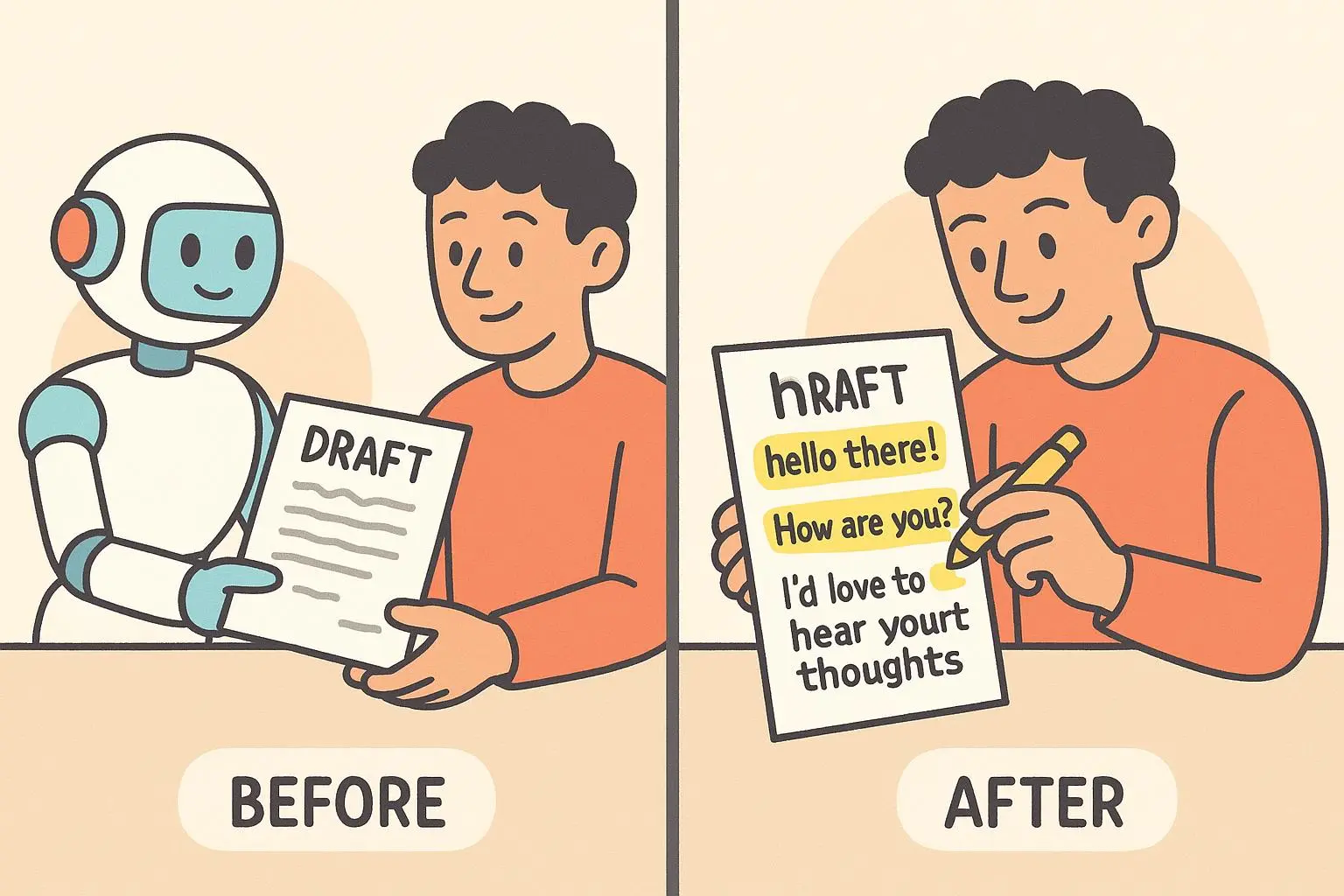
You used AI to polish a dating profile line, or to rescue a limp reply five minutes before a match saw it. Now you're staring at the chat, wondering: tell them now, later, or never?
I want to give you practical, no-fluff guidance: where and when a quick admission helps, what to say (tone-matched scripts), how to follow up when people react the way humans do (curious, suspicious, amused), and a tiny decision flow so you don’t overthink it.
Spoiler: honesty wins most of the time. But timing and tone decide whether it reads as confident or awkward.
Why this even matters
We’re in a weird transition stage. AI is doing the polishing work that used to be "spend time drafting." For some people it’s a helpful nudge. For others it feels like pretending to be someone you’re not.
Research and surveys show two clear patterns:
- People dislike being deceived, even about small things. If your online voice and in-person voice are wildly different, trust drops fast.
- Many people also expect small digital aids—grammar checks, spell-checks, even phrasing help—and don’t consider those morally wrong.
So your move is a balancing act: be transparent enough to avoid future trust issues, but not so eager to overshare that you sabotage chemistry.
The three moments that actually make sense
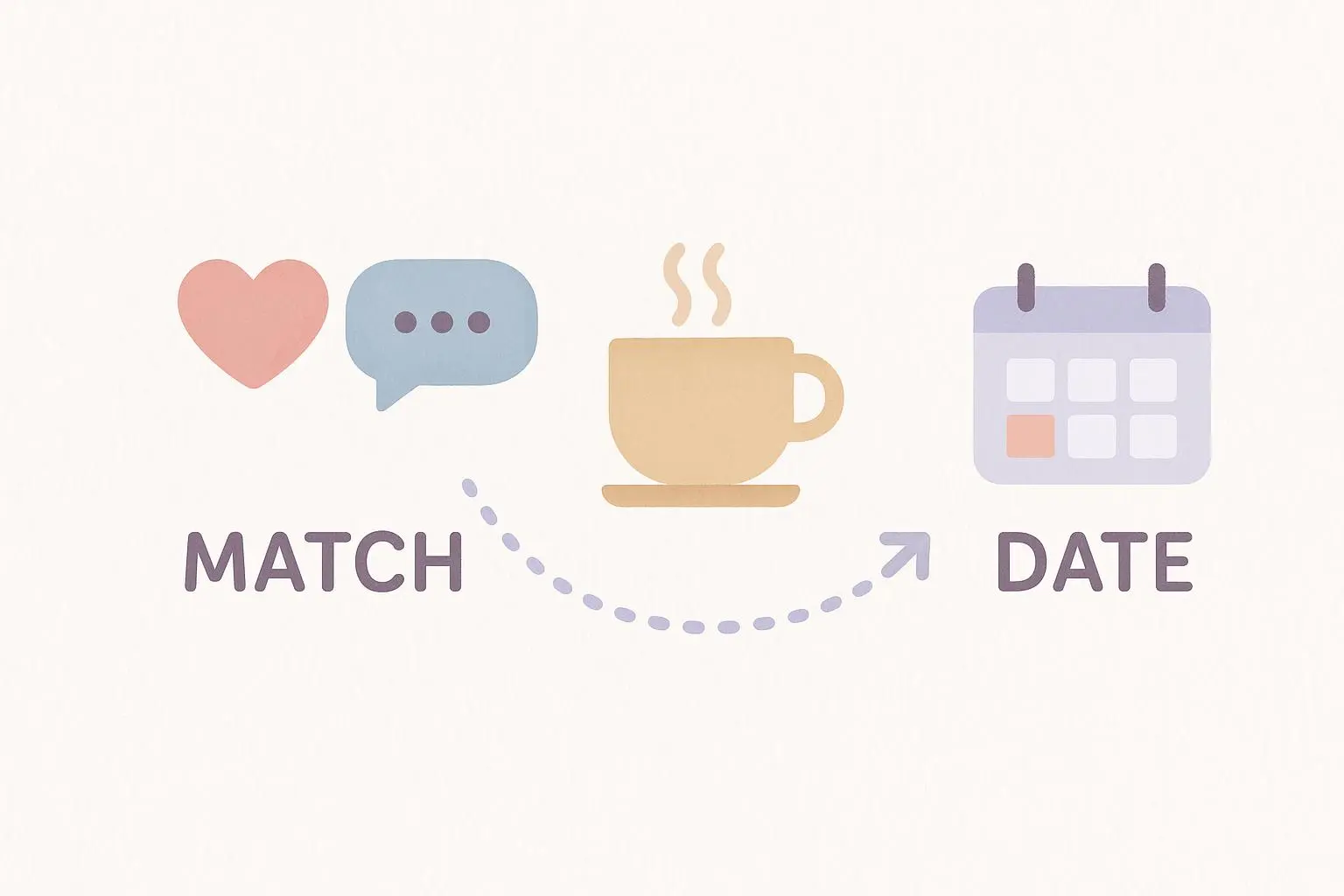
You can divide disclosure into three practical phases: early chat, pre-date, and post-date. Each has a purpose and a tone that works.
1) Early chat: low stakes, light touch
When: you just matched and you’ve used AI for a clever opener or to punch up a prompt.
Why: it’s a filter. A quick, playful line tells the other person you’re self-aware and not hiding the fact, and it helps you avoid matches who’ll be bothered by AI use.
What to say (casual/playful):
- “Heads up—my opening line got a little help from a digital wingperson. But I’m the one who actually loves tacos. Your move.”
Follow-up if they ask more:
- “I asked for options, picked the dumbest/funniest one, and edited it. Promise my weird facts are real.”
This approach does two things: it lightens the mood and pivots quickly to something human (favorite food, weird hobby). People laugh, accept it, or move on. All good outcomes.
2) Pre-date: this one matters more
When: you’ve been chatting for several days, the conversation has depth, and you’re about to meet.
Why: at this point the stakes are higher. You want your in-person self to align with the digital one. If AI skews your written voice—extra polish, sharper jokes—say something before meeting.
What to say (transparent but relaxed):
- “Small confession: I used some tools to help me word a few messages. I wanted to be clear, because I like being honest before we meet. The in-person version is 100% organic.”
Follow-up if they sound skeptical:
- “Totally get that. If you want I can show you the original message vs. the edited one—no drama, just curious what you think.”
This avoids the “you’re different in person” shock. It also frames AI as a helper, not a mask.
3) Post-date: vulnerability or red flag?
When: after the first date — especially if it went well and you want to build rapport.
Why: disclosure here can be intimate. Saying you used AI as a nervous crutch can be endearing. But if your dating behavior was mostly an AI script (i.e., you outsourced your personality), you should probably disclose earlier to avoid betrayal.
What to say (vulnerable, human):
- “I’ll be honest: I ran a few of our conversations by an AI because I was nervous. It helped me organize my thoughts but meeting you made me relax. I liked that.”
Follow-up if they’re confused or upset:
- “I’m glad you said that. If it bothered you, I’d rather clear that up now than have it become a thing later.”
The rule of thumb: use post-date disclosure when it deepens connection. If you relied on AI to fabricate core beliefs, disclose immediately. That’s not a technique — that’s misrepresentation.
Scripts that match the vibe (short, usable)
Below are one-liners and quick follow-ups you can copy, tweak, and actually say.
Early chat — playful
- Line: “Confession: my opener had a co-writer—an AI. I retained veto power.”
- Follow-up: “So what’s your go-to takeout? (This is my personality test.)”
Pre-date — casual & clear
- Line: “Quick heads up: I sometimes use AI to help me word things when I’m thinking a lot. Just so you know.”
- Follow-up: “I’m still me—just slightly better timed.”
Post-date — honest & bonding
- Line: “I used an AI to practice what to say because I was nervous. Meeting you was worth the nerves.”
- Follow-up: “If you want, I can explain more about how I use it.”
When they react curious:
- “Happy to nerd out about it. I mostly use it to get unstuck or avoid typo chaos.”
When they react skeptical:
- “Fair. I’d never want it to mask who I am. If something felt off, tell me.”
When they turn it into a joke:
- “My digital wingperson insists on being credited. Do you want to see its best lines?”
A simple decision flow (so you don’t overthink)
Ask yourself three quick questions—answer yes/no, then pick the script.
- Did I use AI to generate or heavily rewrite personality/values?
- Yes → Disclose immediately.
- No → Continue.
- Are we meeting in person soon or have we already met?
- Yes → Pre-date or post-date script.
- No → Early chat script if you want to filter.
- Is my goal casual or serious?
- Casual → Keep it playful or skip if it was only grammar.
- Serious → Be transparent earlier.
If you picked “serious” and “used AI heavily,” be honest before the first date. If you picked “casual” and it was a one-line tweak, you can let it slide until curiosity arises.
Real story: my AI confession that worked (and why)
I once helped a friend rewrite his Hinge prompts. He’s brilliant but awkward in text—long sentences, weird punctuation. We used an AI to trim three prompts into sharp, funny lines. He matched with someone who had a shared taste for live music. After a week of chats, they planned a show together.
Before the show he told me he felt guilty and considered saying nothing. I told him to keep it light and honest: right after they confirmed plans, he sent, “Full disclosure: some of my profile lines had a very minor ghostwriter (it’s tech, not magic). But if the playlist fits, I’ll take you to my fave indie spot.” She laughed, asked what he meant, he explained briefly, and she said, “Cool—honesty points.” They went to the show, hit it off, and a month later they were still texting without any AI between them. The key was timing—right before the date—and tone—self-aware, not defensive.
That conversation saved him future small lies and made him feel less anxious walking into the date. He wasn’t pretending; he was scaffolding his confidence.
Micro-moment: the detail that stuck with me On his second date she joked, “So where’s the AI sitting—front row?” He shrugged and said, “It’s in the coat room; I left it there.” They both laughed. Small detail, big human moment.
What to avoid (so you don’t undermine trust)
- Don’t act surprised if they care. Dismissing concerns with “it’s no big deal” looks defensive.
- Don’t claim AI did more than it did. “I used a grammar tool” vs. “AI wrote my entire backstory” are different confessions.
- Don’t wait until someone discovers it. Found-out confessions feel like cover-ups.
- Don’t weaponize the reveal (“I used AI, so my messages are smarter than yours”). That’s a mood killer.
Edge cases and tricky questions
Do you need to disclose if it was only grammar checks?
- Most people won’t care about grammar fixes. If the wording or tone was changed, a brief mention is courteous but optional.
What if the other person used AI heavily?
- Mirrored honesty works. If they disclose, ask curious, nonjudgmental questions: “How do you use it? For practice or to write your whole profile?” Their answers reveal intent.
Does disclosure affect perceived attractiveness?
- It can. If your AI use is framed as insecurity compensation it can lower perceived authenticity. If framed as a tool to be clearer or kinder, it’s often neutral or positive.
What if you want to never disclose?
- You can try, but the risk rises with time. People notice differences in tone and depth. If AI did heavy lifting, sooner disclosure is kinder.
The ethics line: augmentation vs. replacement
Use AI to augment: clarify thoughts, fix tone, reduce typos. That’s sustainable.
Don’t use AI to replace: inventing core beliefs, fabricating achievements, or writing whole emotional narratives is deception. If you crossed that line, fix it early.
Experts and surveys lean the same way: society will normalize little tools, but misrepresenting who you are will still feel wrong to most people.
Final takeaway: keep the vibe, be honest on your terms
If you want one sentence to remember: be honest in a way that preserves connection and matches your goals. Use playful disclosures to filter and bond early. Use transparent pre-date lines when rapport is growing. Use vulnerability after a good date to deepen connection.
And a last practical tip: rehearse the line out loud. Saying “I used AI” in your head sounds different than saying it with a smile. Try a short phrase that feels like you. If it sounds awkward, tweak it until it doesn’t.
You don’t owe anyone a full tech demo. You owe them the truth in a tone that fits the relationship you want.