Slow-Feed Showdown: Which Puzzle Feeders Actually Reduce Fast Eating and Bloat Risk?
Jun 30, 2026 • 9 min
The sight of a dog inhaling dinner in under a minute used to make me laugh. Then my vet used the word "GDV" and my laughter stopped.
Fast eating is more than a silly quirk—it’s a documented risk factor for gastric dilatation-volvulus (bloat), especially in large, deep-chested breeds. Puzzle feeders and slow-feed bowls promise to stretch a compulsive 30-second meal into something calmer and safer. But the market is noisy: plastic mazes, silicone mats, wobblers, and ceramic puzzles all claim to be the answer.
I tested the options, read the studies, and talked to owners and veterinarians. Below is what actually works, what falls apart, and how to try a new feeder safely so you and your dog both stay sane.
Why slowing down matters (quick science)
When dogs eat fast they swallow air (aerophagia) along with kibble. That inflates the stomach and raises the risk of GDV. Multiple veterinary studies link rapid eating and certain feeding practices to higher bloat risk[1][2].
The practical takeaway: make meals longer and more engaging. An effective slow feeder should increase meal time by at least 5x and reduce gulping, not just hide kibble in a hole your dog can clear in one lick.
The players: what kind of feeders are out there?
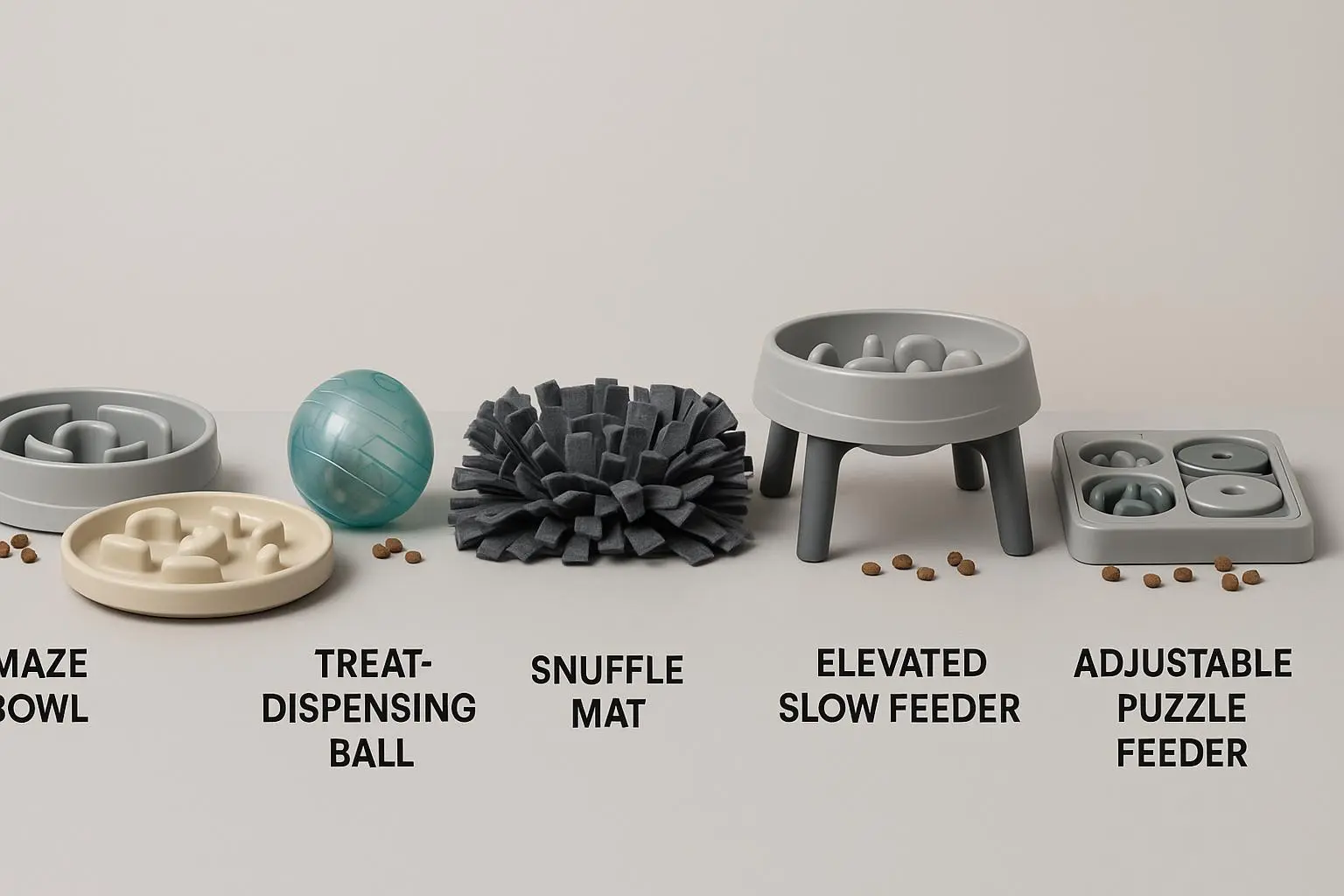
There are three main families of slow-feeding tools that matter in real life:
- Maze bowls (plastic or ceramic): molded ridges and obstacles.
- Silicone/rubber puzzle mats: flexible surfaces with deep grooves or interlocking pieces.
- Dispensing toys/wobblers: move, tip, and drop food as the dog plays.
Each has pros and cons for durability, cleaning, and effectiveness. Below I break down the ones most owners are likely to buy, and what I learned from real-world testing.
What I learned the hard way (a real story)
A few years ago I adopted Juno, a 70-pound lab mix who could demolish a bowl in 20 seconds. I started with an inexpensive plastic maze bowl—bright green, cheap, and promised "slows eating by 70%." It worked for two days. On day three Juno learned to flip it and eat off the floor. On day four she chewed the rim.
I switched to a heavy ceramic puzzle. The weight stopped the flips immediately and extended mealtime to about seven minutes. But Juno got frustrated when kibble fell into unreachable pockets and started nose-bumping my leg mid-meal—clear stress.
Finally, I tried a Kong Wobbler. It required movement and brain work. Juno had to push, nose, and think. Meals stretched to 10–12 minutes, she stopped gulping, and her stool stayed consistent. The Wobbler took a beating and lived to tell the tale.
Outcome: plastic maze = short-term solution; ceramic = stable but frustrating; wobbler = best blend of durability, engagement, and gentleness for a strong, fast eater.
Micro-moment: I still remember the tiny ping the Wobbler made when a single kibble slipped out—felt like applause.
Head-to-head: Popular feeders and who they’re actually good for
Below I compare six popular designs and specific models using durability, cleaning, and real-world effectiveness as my yardsticks.
Outward Hound Fun Feeder Slo Bowl (classic maze)
- Effectiveness: Good for moderate fast eaters; typically increases meal time 3–5x.
- Durability: Plastic—strong but can be tipped or chewed by frustrated dogs.
- Cleaning: Dishwasher-safe; crevices require a brush.
- Best for: Dogs who need an immediate, inexpensive fix and aren’t power chewers.
Why buy: cheap and available everywhere. Why not: determined dogs can turn it into a frustration game.
Kong Wobbler (food-dispensing toy)
- Effectiveness: Excellent. Forces motion and problem-solving; meals often 8–15 minutes.
- Durability: Built for rough play; great for big dogs.
- Cleaning: Disassembly required; internal chamber cleans easily.
- Best for: High-drive dogs that enjoy interactive toys and need both enrichment and slower eating.
Why buy: durability and consistent results. Downsides: not ideal for wet food and takes some space when not in use.
Smarter Paws Slow Feeding Bowl (lightweight maze)
- Effectiveness: Moderate. Works until dog learns to flip or tip.
- Durability: Thin plastic—less suitable for chewers.
- Cleaning: Dishwasher-safe but warps over time if hot-washed.
- Best for: Calm eaters and short-term trials.
Why buy: low cost. Why not: lifespan is often short.
ALLYGOODS Honeycomb (silicone wells)
- Effectiveness: Good; honeycomb slows access and can be frozen with wet food for longer sessions.
- Durability: Silicone is flexible and tear-resistant if decent quality.
- Cleaning: Food can lodge in small wells; hand-scrub often needed.
- Best for: Dogs who can’t use a wobbler (e.g., older dogs with joint issues) and owners who like freezer-compatible enrichment.
Why buy: versatility for wet foods and frozen enrichment. Downside: cleaning nitpicks.
Zippy Paws Happy Bowl (novelty maze)
- Effectiveness: Mixed. Cute design, but some dogs find food gets stuck and get frustrated.
- Durability: Fair; may skid on floors.
- Cleaning: Dishwasher-friendly but requires effort.
- Best for: Low- to moderate-drive dogs and novelty seekers.
Why buy: looks fun and family-friendly. Why not: inconsistent for determined eaters.
PuzzleFeeder™ Junior & Licker models (range of depths)
- Effectiveness: Very adaptable; models for flat-faced breeds and puppies.
- Durability: Good materials, often dishwasher-safe.
- Cleaning: Some small parts—check model specifics.
- Best for: Puppies, brachycephalic breeds, and owners introducing enrichment gently.
Why buy: gentle introduction to slow feeding. Downside: not as challenging for big, fast adults.
Durability: which actually survive real dogs?
From the data and conversations with owners:
- Kong Wobbler and heavy maze-style ceramic winners handle powerful dogs best.
- Silicone designs and quality puzzle feeders are a close second if you buy higher-grade silicone.
- Cheap plastic maze bowls are the first to fail—flipping, chewing, warping.
If your dog is a determined food-destroyer, plan for one of these: heavy ceramic puzzle or a rugged wobbler. The upfront cost is higher, but replacements are slower.
Cleaning and hygiene: the boring but important part
A feeder that slows eating but traps food is a hygiene risk. Here’s the practical truth:
- Dishwasher-safe is not an excuse to skip a quick pre-rinse. Food in grooves hardens and bacteria love that.
- Silicone can hold odors; occasional baking-soda soak helps.
- Wobblers need periodic disassembly—don’t forget the underside.
- Ceramic is easiest to wipe and sanitize but can chip and leak edges where food collects.
If you feed wet food even occasionally, choose wide compartments or freezer-friendly silicone you can soak and scrub.
Portion conversion: how to measure the switch safely
Switching to a slow feeder often changes how your dog eats and sometimes how they metabolize meals. Don’t just dump the same amount in a maze and call it a day.
Simple protocol I follow with clients and Juno:
- Start with 25% of the meal in the slow feeder and 75% in a regular bowl for three days.
- Move to 50/50 for days 4–7.
- If behavior is calm and stool is normal, go to 100% in the feeder for days 8–14.
Example: if your dog normally eats 2 cups, put 0.5 cups in the puzzle and 1.5 in a normal bowl on day one.
Why this works: it prevents frustration and food anxiety. It also gives you a baseline to compare stool, energy, and eating time.
Two-week trial protocol: what to watch for (step-by-step)
Use this exact sequence. Time the meal, take notes, and call your vet if anything alarming arises.
- Baseline Days 1–3: Time meals with your current setup; note gulping, pacing, burps, and stool quality.
- Intro Days 4–7: 25% in puzzle; 75% in regular. Time each part of the meal and note attempts to flip or destroy the feeder.
- Ramp Days 8–14: Move to 100% in the feeder if calm. Look for:
- Meal duration aiming for 5x baseline
- Reduced audible gulping
- Stable stool consistency
- No escalating stress (whines, trying to reach food elsewhere)
Red flags: persistent stress, attempts to ingest non-food items, or continued rapid eating despite tools. If you see these, stop the trial and consult your veterinarian.
Things owners forget (practical tips)
- Don’t feed immediately after vigorous exercise; wait 30–60 minutes.
- Avoid elevated feeding stations for large-breed dogs—studies found associations with increased bloat risk[2].
- Limit water right after a meal if your dog gulps—30-minute buffer helps.
- Use puzzles as enrichment, not punishment. If your dog shows food aggression or anxiety, slow introduction is critical.
When a slow feeder is not enough
Slow feeders reduce risk—they don’t eliminate it. For dogs with a history of GDV, talk to your vet about surgical options and comprehensive risk reduction.
Also: if a feeder increases stress, it may be worse than helpful. A stressed dog can eat faster or develop guarding behaviors. Watch body language, not just time-on-bowl.
My top picks (short version)
- Best overall for large, tough eaters: Kong Wobbler—durable, effective, and engaging.
- Best budget starter: Outward Hound Fun Feeder—cheap and works for many dogs until they learn tricks.
- Best for wet food/freezer treats: ALLYGOODS Honeycomb (quality silicone).
- Best for flat-faced breeds and puppies: PuzzleFeeder™ Junior models.
- Avoid cheap thin plastic maze bowls for determined chewers.
Final takeaway
The "best" slow feeder is the one your dog will use without breaking, flipping, or stressing over it. For most large, fast eaters, that means choosing durability and engagement over novelty looks. Start slow, measure changes, and treat the feeder as one piece in a holistic approach to bloat prevention—alongside timing, post-meal activity, and veterinary guidance.
If you’re unsure where to start: get a durable wobbler or high-quality silicone puzzle, follow the two-week protocol, and keep an eye on stool and behavior. You’ll probably trade 20-second chaos for 10–12 quiet minutes—and that’s worth the small investment.
References
Footnotes
-
Glickman, L. T., Glickman, N. W., Ritchie, J., & Ehrhart, N. (1997). Rapid eating and the risk of gastric dilatation-volvulus in dogs. Journal of Veterinary Internal Medicine. Retrieved from https://pubmed.ncbi.nlm.nih.gov/9315607/ ↩
-
Glickman, L. T., Glickman, N. W., & Ehrhart, N. (2000). Association between the use of elevated food bowls and risk of gastric dilatation-volvulus in dogs. Journal of the American Veterinary Medical Association. Retrieved from https://avmajournals.avma.org/doi/full/10.2460/javma.2000.217.1017 ↩ ↩2